



A comprehensive educational deep-dive for readers in the United States, United Kingdom, and Canada exploring India's unmatched civilizational journey , from the Vedas, Nakshatras, Ayurveda, Yoga, Nalanda, Takshashila, Sanskrit, and the maritime routes that linked Asia to the Americas , to today's leadership in economics, technology, diplomacy, and space exploration.
1. Why the World Is Suddenly Looking East Again
There is a quiet but unmistakable shift in the gravitational centre of the twenty-first century. For nearly five hundred years, the story of global power has been written in Atlantic ink first by European empires, then by the United States, and through the second half of the twentieth century by the institutions that emerged from the Second World War. London, Washington, Brussels, and New York were the addresses where the future was decided. The schools of Oxford and Cambridge, the laboratories of MIT and Stanford, the boardrooms of Wall Street and the City , these were the engines that powered the modern age.

But anyone watching the world carefully today, whether from a classroom in Manchester, a university campus in Toronto, a high-school history program in Houston, or a policy briefing room in Ottawa, will sense that something profound is happening. The conversation is changing. The names mentioned in serious economic forecasts, technology breakthroughs, diplomatic realignments, space achievements, and even cultural exports are increasingly Indian.
India, or as it calls itself in its own languages, Bharat , has returned. Not arrived. Returned.
This distinction is the entire argument of this article. India is not a new entrant on the world stage. It is one of the oldest, most continuous, most influential civilizations that has ever existed on this planet. What the world has been seeing for the past two thousand years was an India that had been gradually muffled by invasions, then systematically silenced by colonial rule, and finally rebuilding itself painfully across the late twentieth century. What the world is seeing now , across 2025, 2026, and the decade to come , is a civilization re-finding its voice, its confidence, and its rightful place.
For students, parents, teachers, policy thinkers, and curious readers across the United States, the United Kingdom, and Canada, understanding this re-emergence is no longer optional. It is essential. India already produces more STEM graduates than any other country. It already has the world's largest population. It already has the third-largest economy by purchasing power parity and is on track to become the third-largest by nominal GDP within the next few years. It already lands spacecraft on the Moon for a fraction of what the rest of the world spends. It already runs digital public infrastructure that countries from Brazil to Singapore are now copying. Its diaspora already runs Google, Microsoft, IBM, Adobe, Pepsi, Mastercard, Starbucks (former), Chanel (former), Twitter (former), and countless other institutions that touch your daily life from London to Los Angeles.
And yet , and this is the central problem this article also seeks to address , the way India is reported, discussed, and taught in much of the Western world remains decades behind the reality. The textbooks have not caught up. The newsrooms still default to old templates. The popular imagination still oscillates between exotic spirituality and crowded poverty, missing the modern, technological, civilizational nation that actually exists.
This is why voices like Palki Sharma matter. Why a media venture like India Global Review matters. Why the world finally needs an Indian lens on global affairs that is as confident, well-funded, well-produced, and globally distributed as the BBC, CNN, Al Jazeera, or Bloomberg have been for decades. The story of India can no longer be told only by outsiders. It must also be told by Indians , to the world.
This article is a deep, patient, comprehensive education in everything you should know about India's civilizational journey, its ancient contributions to human knowledge, its modern re-emergence, and the media voice that may finally let the world hear India in India's own words.
It is long. It is meant to be. A civilization of five thousand documented years cannot be summarised in five paragraphs.
Let us begin.
2. The Idea of Bharat: Understanding What India Has Always Been
Before we discuss India's contributions to mathematics, medicine, language, or space exploration, we must first answer a more fundamental question: What is India?
To most readers in the West, India is a country , a nation-state with borders, a parliament, a prime minister, a flag, a cricket team, and a seat at the United Nations. All of this is true. But it is also incomplete.

In its own self-understanding, India is not primarily a nation-state in the European sense , that is, a political unit formed around a single language, ethnicity, and centralized administration. India is a civilization. A continent of cultures held together not by sameness but by an extraordinary, ancient, layered conversation that has been going on for thousands of years.
The Word "India" Versus "Bharat"
The word India comes from the Greek Indos, which itself came from the Persian Hindu, which referred to the people living beyond the river the Sanskrit speakers called Sindhu , what is today the Indus river. The Greeks gave us the outside name. The British inherited it. The world uses it.
But Indians have always called their land Bharat or Bharatavarsha, after a legendary king named Bharata who appears in the ancient text of the Mahabharata. The Indian constitution itself, in its very first article, opens with the words "India, that is Bharat, shall be a Union of States." Two names, one civilization, written into the founding document.
This dual naming matters because it captures the dual reality. India is the modern republic , seventy-eight years old in 2025, a democracy of 1.4 billion people. Bharat is the civilization , at least five thousand years old, possibly older, and continuous in a way few other civilizations on Earth can claim.
Civilizational Continuity: A Rare Thing
Most ancient civilizations the world remembers are dead. The Sumerians, Babylonians, ancient Egyptians, Mayans, Aztecs, Incas, Minoans, ancient Persians, classical Greeks, and Romans all left magnificent legacies, but the living thread of their civilizations was broken. Their languages are studied in universities, not spoken in homes. Their gods are in museums, not in temples. Their philosophies survive as influences, not as lived traditions.
India is different. The Vedas, composed before 1500 BCE by the most conservative scholarly estimates and far earlier by traditional and astronomical reckoning, are still recited today , verse by verse, syllable by syllable, accent by accent , by Brahmin families in the villages of Tamil Nadu, Karnataka, Kerala, Maharashtra, and across the country. Sanskrit, the language of those Vedas, is still taught in schools, used in rituals, and even spoken in a few villages. The deities described in Bronze Age texts are still worshipped in millions of homes every morning. The festivals of Diwali, Holi, Pongal, Onam, Navaratri, and Makar Sankranti follow rhythms set down by astronomers thousands of years ago.
This continuity is one of the most remarkable cultural facts on the planet. It is also one of the least appreciated in Western education.
A Civilization of Plural Unities
The other crucial feature of Bharat is that it has never been monolithic. India has always been a federation of regions, languages, cuisines, climates, philosophies, and ways of life. The Constitution of India recognises twenty-two scheduled languages, but the country has more than 1,600 mother tongues and over 270 languages with more than ten thousand speakers each. South India and North India have different culinary traditions, different musical systems (Carnatic and Hindustani), different dance forms, different architectural styles, different scripts, and different histories.
What unites them is not sameness but a shared civilizational vocabulary. A child in Kerala and a child in Kashmir, separated by nearly four thousand kilometres and entirely different languages, will both have heard of Rama and Krishna, Shiva and Devi, Ganesha and Hanuman. They will both recognise the symbolism of the lotus, the swastika (in its original Sanskrit meaning of well-being, long before it was misappropriated in twentieth-century Europe), the diya lamp, the conch shell. They will both have a vague memory of the Mahabharata war and the Ramayana journey. They will both know that the cow is sacred, that elders are touched at the feet for blessings, that festivals follow the moon, that food is offered to deities before being eaten.
This shared imaginative landscape , what scholars call a civilizational substrate , is what makes India one country despite being, in many ways, a small continent.
Why This Matters for Western Readers
Understanding India as a civilization rather than just a nation-state changes everything about how its current rise should be interpreted. When China rises, it is the rise of one of the great ancient civilizations of the East , and the world takes that seriously, treats it as historic, even writes books with titles like The Hundred-Year Marathon and When China Rules the World.

India's rise is the same kind of event , but it is rarely framed that way. It is too often discussed as if India were a developing country that happens to be doing well, like Vietnam or Indonesia. That framing entirely misses the point. India is not a developing country that is climbing the ladder. India is an ancient civilization that is resuming its historical position after a temporary five-hundred-year interruption caused by Mughal decline, European colonisation, and post-independence recovery.
For the next twenty-five years of the twenty-first century, the world that students in American high schools, Canadian universities, and British sixth forms will inherit will be one in which India is not just present, but central. The sooner that reality is understood, the better prepared the next generation will be.
In the next section, we begin where India itself begins , with the Vedas.
3. The Vedas , Humanity's Oldest Living Library of Knowledge
If a single body of texts could be said to be the foundation of Indian civilization, it is the Vedas.
The word Veda comes from the Sanskrit root vid, meaning "to know." It is the same root that gives English the words wit, wisdom, vision, and video. The Vedas are, quite literally, the knowledge , capitalised and pluralised because there are four of them and because what they contain ranges from hymn to ritual to philosophy to early scientific observation.
The four Vedas are:
- The Rigveda , the oldest, a collection of 1,028 hymns in ten books, composed in an archaic form of Sanskrit
- The Samaveda , chants and melodies, the foundation of Indian classical music
- The Yajurveda , formulas and procedures for sacred rituals
- The Atharvaveda , hymns, charms, and what we might today call applied knowledge, including early medicine
Age and Authorship
The dating of the Vedas is one of the most debated questions in scholarship. Mainstream Western Indology dates the Rigveda to roughly 1500–1200 BCE. Many Indian and increasingly some international scholars, working from astronomical references inside the text itself , descriptions of star positions, equinoxes, and seasonal markers that can be dated using modern astronomy , argue for considerably older dates, sometimes pushing certain hymns back to 3000 BCE or earlier.
The Vedas themselves were not authored in the modern sense. They were heard , the Sanskrit word is shruti, "that which is heard" , by ancient sages called rishis in deep states of meditation, then transmitted orally with mathematical precision from teacher to student for thousands of years before being written down.
The Oral Tradition: A Technological Marvel
This oral preservation is itself one of the most extraordinary achievements in human history. The Vedic texts were memorised using elaborate systems , Padapatha (word by word), Kramapatha (interlocking pairs), Jatapatha (woven repetition), Ghanapatha (dense repetition) , that mathematically guaranteed accurate transmission across generations. A single mispronunciation could be caught because it would break the interlocking pattern.
When scholars finally compared written manuscripts of the Rigveda from across India , texts copied by hand in Kashmir, Bengal, Tamil Nadu, and Maharashtra, separated by thousands of kilometres and centuries of time , the variations between them were vanishingly small. The oral tradition had functioned as a biological hard drive for at least three thousand years, with error correction built in.
This is, in a real sense, the world's first information technology. UNESCO has recognised the Vedic chanting tradition as a Masterpiece of the Oral and Intangible Heritage of Humanity.
What Is Actually in the Vedas
The popular Western perception of the Vedas, when it exists at all, tends to be vague , something like "ancient Indian religious texts." The reality is far richer.
The Vedas contain:
- Hymns to natural and cosmic forces , fire (Agni), water (Apas), the sun (Surya), the dawn (Ushas), the storm (Indra), wind (Vayu), space (Akasha). These were not naïve nature worship; they were sophisticated meditations on the principles those forces represented.
- Early cosmology , the Nasadiya Sukta, or "Hymn of Creation," in the tenth book of the Rigveda, asks questions about the origin of the universe that are stunningly modern. It does not assert creation; it questions whether even the gods know how the universe began. It even speculates that perhaps no one knows , including the highest principle itself. This is, arguably, the oldest agnostic philosophical text in human history.
- Early mathematics and geometry , the Sulbasutras, attached to the Vedic ritual literature, contain geometric procedures for constructing altars that include statements equivalent to the Pythagorean theorem, centuries before Pythagoras was born.
- Early astronomy , references to eclipses, equinoxes, the precession of the equinoxes, and celestial positions that can be cross-checked against modern computational models.
- Early medicine , the Atharvaveda contains hundreds of references to plants, diseases, treatments, and even surgical concepts.
- Philosophy , the later layers of the Vedas, called the Upanishads, contain the most sophisticated philosophical discussions found anywhere in the ancient world, on the nature of consciousness, the self, reality, knowledge, and liberation.
The Upanishads and Their Influence on the West
The Upanishads deserve special mention because their influence on Western thought has been more direct than most readers realise.

When the German philosopher Arthur Schopenhauer first read a Latin translation of the Upanishads in the early nineteenth century, he wrote: "It has been the solace of my life, it will be the solace of my death." He kept a copy by his bedside. His philosophy, which in turn influenced Nietzsche, Wagner, and a generation of European intellectuals, was profoundly shaped by Upanishadic ideas.
The American Transcendentalists , Ralph Waldo Emerson and Henry David Thoreau , read the Upanishads and the Bhagavad Gita with reverence. Thoreau wrote in Walden: "In the morning I bathe my intellect in the stupendous and cosmogonal philosophy of the Bhagavad Gita... in comparison with which our modern world and its literature seems puny and trivial."
When T. S. Eliot ended The Waste Land with the Sanskrit words Shantih shantih shantih , peace, peace, peace , he was quoting the Upanishads.
When J. Robert Oppenheimer watched the first nuclear bomb explode in the New Mexico desert in 1945, the line that came to his mind was from the Bhagavad Gita: "Now I am become Death, the destroyer of worlds."
When Erwin Schrödinger, one of the founders of quantum mechanics, struggled to articulate what his equations implied about the nature of reality, he reached for the Upanishadic concept of Brahman , the single underlying consciousness , and wrote extensively about it.
The Vedas and Upanishads are not just an Indian inheritance. They are part of the philosophical bedrock of the modern world, even where their influence has gone uncredited.
Why the Vedas Still Matter
A reader in Boston, Birmingham, or Brampton might reasonably ask: even granting all of this, why does any of it matter today?
It matters because the Vedas represent a particular approach to knowledge that the modern world has been slowly rediscovering , a recognition that knowledge is not just information about the external world, but also self-knowledge; that consciousness itself is a legitimate subject of inquiry; that ethics, science, and spirituality are not separate magisteria but interconnected ways of knowing.
In an era when artificial intelligence is forcing the world to ask what consciousness is, what intelligence is, what knowing means , the Vedic civilization had been asking these questions, in increasingly subtle ways, for several thousand years.
That is not a coincidence. It is one of the reasons India's intellectual return matters so much in the twenty-first century.
4. Sanskrit: The Mother of Languages and the Programming Tongue of the Mind
To understand the Vedas is to understand Sanskrit , the language in which they were composed and the language that may be the single most remarkable linguistic achievement in human history.
What Sanskrit Is
Sanskrit (saṃskṛta, meaning "refined" or "perfectly constructed") is an Indo-European language, which means it is related, distantly, to Greek, Latin, German, Russian, Persian, and English. This was one of the great discoveries of eighteenth-century scholarship: when Sir William Jones, a British judge in Calcutta in 1786, delivered his famous lecture on the affinity between Sanskrit, Greek, and Latin, he effectively founded the discipline of comparative linguistics.
Jones's words deserve quoting:
"The Sanskrit language, whatever be its antiquity, is of a wonderful structure: more perfect than the Greek, more copious than the Latin, and more exquisitely refined than either, yet bearing to both of them a stronger affinity, both in the roots of verbs and in the forms of grammar, than could possibly have been produced by accident; so strong, indeed, that no philologer could examine them all three without believing them to have sprung from some common source, which, perhaps, no longer exists."
That single sentence is the founding charter of modern linguistics. Sanskrit forced Europe to recognise that its own languages were not autonomous; they shared a common ancestor with the language of distant India.
The Grammar of Panini
But the most extraordinary thing about Sanskrit is not its antiquity. It is its grammar , specifically, the grammar codified by a scholar named Panini, who lived in what is now Pakistan around the fifth or fourth century BCE.
Panini's Ashtadhyayi ("Eight Chapters") is, by general scholarly consensus, the most sophisticated description of any human language ever produced. In approximately four thousand short rules , many of them just a few syllables long , Panini described the entire grammar of Sanskrit with a precision that twentieth-century linguists, working with modern formal logic, could only marvel at.
When Noam Chomsky, the founder of modern generative linguistics, looked back at the history of his field, he repeatedly acknowledged that Panini had anticipated, by two and a half millennia, key insights of modern syntactic theory. Panini's rules are recursive, hierarchical, and use a meta-language to describe the language itself , exactly the structure that modern computer programming languages use.
In fact, when researchers at NASA's Jet Propulsion Laboratory looked at Sanskrit in the 1980s, they noted that its grammatical structure was unusually well-suited to artificial intelligence and natural language processing, because of its lack of ambiguity. The American computer scientist Rick Briggs wrote a now-famous paper in 1985 in the journal of the American Association for Artificial Intelligence arguing that Sanskrit could function as a natural programming language for AI.
This is not a mystical claim. It is a structural observation. Sanskrit was engineered, over centuries, to minimise ambiguity. Every word has a precise root, every form has a precise grammatical role, and the rules of combination are explicit. It is, in a sense, the world's first formal language , a thousand years before the formal logics of medieval scholasticism, two thousand years before George Boole, and twenty-five hundred years before Alonzo Church.
Why Sanskrit Influences Everything
Sanskrit is the parent language of most of North Indian linguistic life , Hindi, Bengali, Marathi, Gujarati, Punjabi, Odia, Assamese, Sindhi, Kashmiri, Nepali, and others all descend from or are deeply influenced by it. South Indian Dravidian languages , Tamil, Telugu, Kannada, Malayalam , have their own ancient roots but are saturated with Sanskrit vocabulary.

Beyond India, Sanskrit went outward. Thai, Khmer, Burmese, Javanese, Balinese, and old Malay all contain enormous Sanskrit vocabulary. The names of countries , Singapore (from Sanskrit Simhapura, "lion city"), Indonesia (from Indus and the Greek nesos, "islands of the Indus"), Indochina, Malaysia , carry Sanskrit traces. The names of kings, gods, and concepts across Southeast Asia are Sanskrit-derived. The Buddhist sutras of China, Korea, and Japan were translated from Sanskrit originals; the very word sutra is Sanskrit.
In the West, the influence is subtler but real. The English word mother and Sanskrit matr. Father and pitr. Brother and bhratr. Daughter and duhitr. Name and nama. Three and trayas. Seven and sapta. New and nava. These are not borrowings; they are siblings, descended from the same Proto-Indo-European source.
Even some technical English vocabulary is directly Sanskrit-derived. Avatar , Sanskrit avatara. Karma , Sanskrit karma. Yoga , Sanskrit yoga. Guru , Sanskrit guru. Pundit , Sanskrit pandita. Mantra , Sanskrit mantra. Pajama , from Persian, ultimately from Sanskrit pada + jama. Shampoo , from Hindi champi, from Sanskrit capayati. Bungalow, jungle, cot, cheetah, thug, loot, juggernaut , all English words ultimately rooted in Sanskrit or its descendants.
When you say avatar in a conversation about your social media profile, you are speaking ancient Sanskrit without knowing it.
Sanskrit Today
Sanskrit is often described as a "dead language." This is misleading. It is not dead in the way Latin or Ancient Greek are dead. There are villages in India , Mattur in Karnataka, Jhiri in Madhya Pradesh, Sasana in Odisha, and others , where Sanskrit is still spoken in daily life. There are thousands of Sanskrit schools, universities offering degrees, and a small but real community of native or near-native speakers. Sanskrit news is broadcast on All India Radio. There are Sanskrit poetry competitions, Sanskrit theatre festivals, Sanskrit YouTube channels with millions of views.
More importantly, Sanskrit continues to be the foundation of religious, philosophical, and cultural literacy across India. Millions of Hindus chant Sanskrit mantras daily. Tens of thousands of priests across the country still conduct rituals in Sanskrit. The names of new businesses, new ventures, even new children, are still drawn from Sanskrit roots.
In 2026, Sanskrit is enjoying a quiet renaissance. The Government of India's National Education Policy of 2020 encourages Sanskrit learning. Universities in the United States , Harvard, Berkeley, Columbia, Chicago, Oxford, Cambridge, McGill, Toronto , all have active Sanskrit departments. Sanskrit-Yoga programs are being launched in places as varied as São Paulo, Sydney, and Stockholm.
The mother of so many languages is not dead. She has simply been quiet , and she is now beginning, again, to speak.
5. Indian Mathematics: Zero, Infinity, and the Numbers That Built Modernity
If a reader from London, Toronto, or Los Angeles were asked to name the most important single discovery in the history of mathematics, the honest answer , though it is rarely taught this way in Western schools , would be the decimal place-value system with zero.
Without zero and the place-value notation that allows the same digit to mean ten, a hundred, a thousand, or a million depending on its position, modern science is unthinkable. There is no calculus without it, no physics, no engineering, no computing, no internet, no smartphone, no Google, no satellite, no GPS. The entire technological civilization of the twenty-first century rests on a mathematical infrastructure that was developed, refined, and exported from a single place.
That place was India.
The Indian Numerals
The numerals we today call Arabic numerals , 0, 1, 2, 3, 4, 5, 6, 7, 8, 9 , are more accurately called Hindu-Arabic numerals, or by their original name, Indian numerals. They were developed in India over many centuries, transmitted to the Arab world during the Islamic Golden Age (where they were called al-arqam al-Hindiyya, "the Indian numbers"), and from there carried to Europe by mathematicians like Fibonacci in the thirteenth century.
The medieval Persian mathematician Al-Khwarizmi , whose Latinised name Algorithmi gives English the word algorithm , wrote a treatise around 825 CE titled On the Calculation with Hindu Numerals. The Arabs themselves were always clear about the provenance.
Zero: A Concept, Not Just a Symbol
It is important to distinguish two things:
- A placeholder zero , a symbol that says "nothing in this column" so that 105 is distinguishable from 15.
- A mathematical zero , a number you can compute with, that follows defined rules of arithmetic.
Several ancient civilizations had a placeholder zero. The Babylonians, the Mayans, and a few others all developed something like a placeholder. But the mathematical zero , zero treated as an actual quantity that could be added to, subtracted from, multiplied by, and reasoned about , that was Indian.
The mathematician Brahmagupta, writing in 628 CE in his Brahmasphutasiddhanta, was the first to systematically define the arithmetic rules of zero: that any number plus zero is itself, that any number minus itself is zero, that any number multiplied by zero is zero. He even attempted division by zero (and got an interesting answer , he called it khachheda, an undefined quantity, anticipating the modern treatment).
Indian mathematicians also developed the concept of negative numbers centuries before European mathematics was willing to consider them. They handled debts and assets, positive and negative, with mathematical operations long before this was accepted in the Mediterranean tradition.
Aryabhata and the Foundations
Aryabhata (476–550 CE), in his short Sanskrit work the Aryabhatiya, established much of what would become classical Indian mathematics and astronomy. In about 120 verses, he provided:
- An accurate approximation of pi (3.1416), stating explicitly that this was an approximation.
- A statement of the sine table and the basics of trigonometry. The Sanskrit word jya for chord-half became jiba in Arabic, was misread as jaib (which means "pocket" or "bay"), was translated into Latin as sinus (meaning a fold or bay), and so the modern word sine is, etymologically, an Arabic mistranscription of a Sanskrit word.
- The first known statement in any tradition that the Earth rotates on its axis, producing the apparent motion of the stars , over a thousand years before Copernicus.
- The first known accurate explanation of solar and lunar eclipses, attributing them to shadow effects rather than mythological causes.
- Methods for solving linear and quadratic equations, including indeterminate equations of the type ax + by = c that European mathematicians would not address until the seventeenth century.
Bhaskara II and the Kerala School
Bhaskara II (1114–1185 CE) wrote the Lilavati, named after his daughter and written partly as a charming pedagogical text, and the Siddhanta Shiromani. He worked with infinitesimals, gave an early version of what would become the rules of differential calculus, and computed solutions to Pell's equation centuries before Pell.
But perhaps the most stunning chapter of Indian mathematical history is the Kerala School of Mathematics and Astronomy (roughly 1300–1600 CE). Working in what is now the southwestern Indian state of Kerala, mathematicians like Madhava of Sangamagrama, Nilakantha Somayaji, and Jyeshthadeva developed infinite series expansions for the sine, cosine, and arctangent functions , and through arctangent, an infinite series for pi.
These series are what would be rediscovered in Europe two to three centuries later by Gregory, Leibniz, and Newton. The famous Gregory–Leibniz series for pi , pi/4 = 1 − 1/3 + 1/5 − 1/7 + … , was discovered by Madhava perhaps two hundred years before Leibniz, and is sometimes properly called the Madhava–Leibniz series in current scholarship.
The Kerala School effectively had calculus before Newton. The historical question of how, or whether, this knowledge travelled to Europe via Jesuit missionaries who were active in Kerala in the sixteenth century is still actively debated in scholarship , but the existence of the work itself is not in dispute.
Why This Matters for Western Students
A high school student in Manchester, Toronto, or Atlanta studying mathematics is, in a real sense, studying the inheritance of Indian civilization. The numerals on the page are Indian. Zero is Indian. Trigonometric functions originated in Indian texts. Algebra has Indian as well as Arabic roots. Infinite series and the prehistory of calculus have Indian chapters.
This is rarely mentioned in Western textbooks. When it is mentioned, it tends to be a sentence or two, easily missed. The result is a generation of students who have absorbed the false impression that mathematics is an essentially European achievement, with perhaps a few Greek antecedents.
The truth is that mathematics, as we know it, is a multicultural achievement , Egyptian, Mesopotamian, Greek, Indian, Chinese, Arabic, Persian, and finally European. India's contributions are not marginal additions; they are foundational. Without the Indian numerals and the Indian zero, modern mathematics simply does not exist.
This is also why, as India rises again in the twenty-first century, its strength in mathematics, computer science, and engineering is not an accident or a recent development. It is the continuation of a tradition that has been running, with interruptions, for two thousand years.
6. Indian Astronomy and the Nakshatra System: Mapping the Cosmos Millennia Before Telescopes
Long before telescopes existed, before modern observatories, before any of the apparatus of modern astronomy , Indian astronomers were watching the sky with the patience of priests, the precision of mathematicians, and the discipline of generations.
Their tradition is called Jyotisha , "the science of light" , and it forms one of the six classical Vedangas, or branches of Vedic knowledge.
The Nakshatras: Twenty-Seven Stations of the Moon
Where Western astronomy divides the path of the sun and moon through the sky into twelve zodiac signs, Indian astronomy divides it into twenty-seven nakshatras , lunar mansions or "star houses." Each nakshatra corresponds to roughly one day's worth of the moon's motion across the sky and is associated with a specific star or asterism.
The names are ancient and evocative: Ashwini (the horsemen), Bharani (the bearer), Krittika (the cutters, what the Greeks called the Pleiades), Rohini (the red one, associated with the star Aldebaran), and so on through to Revati (the wealthy).
The nakshatra system is striking for several reasons. First, it is precise , accurately dividing the lunar path into twenty-seven equal segments requires both mathematical sophistication and centuries of observation. Second, it is ancient , references to specific nakshatras appear in the Rigveda itself, suggesting astronomical knowledge that may predate 1500 BCE. Third, it is remarkably similar to the Chinese lunar mansions (twenty-eight in their case) and to systems known in ancient Arabia, raising fascinating questions about cross-civilizational astronomical exchange in deep prehistory.
The nakshatras are not just astronomical markers. They form the basis of the Hindu calendar, of traditional muhurta (auspicious timing), of festival dates, of agricultural cycles, and of jyotisha-based personal advice systems that millions of Indians still consult.
Astronomical Achievements
The achievements of classical Indian astronomy are extensive. To name only some:
- Aryabhata correctly identified that the Earth rotates on its axis (around 500 CE), a heliocentric-friendly insight that European science would arrive at in the sixteenth century. He calculated the sidereal day , the time the Earth takes to rotate once relative to the stars , as 23 hours, 56 minutes, 4.1 seconds. The modern value is 23 hours, 56 minutes, 4.091 seconds. The accuracy is astonishing.
- He calculated the length of the year as 365.358 days. The modern value is 365.256. He was off by about 0.1%, working without any optical instruments.
- Bhaskara II anticipated several principles of differential calculus in astronomical contexts, recognising that planetary motion involves continuously varying rates.
- The Indian astronomical tradition correctly computed the diameter of the Earth (to within reasonable error), the diameter of the Moon, the distance to the Moon, and the precession of the equinoxes , the slow wobble of the Earth's axis that completes a cycle every 26,000 years.
- The famous Jantar Mantar observatories, built by Maharaja Jai Singh II in the early eighteenth century in Jaipur, Delhi, Ujjain, Varanasi, and Mathura, contain stone instruments capable of measuring time to two seconds and astronomical positions to fractions of a degree. They are still standing. They are still functional. They are listed as UNESCO World Heritage sites.
Cosmology
Beyond observational astronomy, Indian texts contain cosmological speculation of a scale and sophistication that startles modern readers. The traditional Indian time scale includes:
- A yuga cycle of four ages totalling 4.32 million years.
- A manvantara, comprising 71 such cycles.
- A kalpa or "day of Brahma," lasting 4.32 billion years.
- A full life of Brahma, lasting some 311 trillion years.
These numbers are not, of course, modern scientific cosmological constants. But the scale alone is remarkable. Most ancient civilizations imagined the universe to be a few thousand years old. Indian cosmology imagined it in billions and trillions of years , orders of magnitude that align, in spirit if not in detail, with the timescales modern cosmology has actually measured.
The famous astrophysicist Carl Sagan, in his television series Cosmos, devoted a notable passage to Indian cosmology, observing that of all the world's religions and ancient traditions, Hindu cosmology was the only one whose timescales corresponded, in order of magnitude, to those of modern scientific cosmology.
Connecting Sky and Civilization
For ancient India, astronomy was not an isolated science. It was deeply integrated with calendar, ritual, agriculture, navigation, and identity. The festivals of Diwali, Holi, Makar Sankranti, and others all follow astronomical events , the new moon, the spring equinox, the winter solstice, the sun's entry into the sign of Capricorn.
For Indian sailors , and we will return to this in the section on maritime India , astronomical knowledge was the GPS of their time. They navigated by stars across the Indian Ocean to Africa, Arabia, Southeast Asia, and possibly further, using sky-knowledge that was thousands of years old.
For Indian agriculture, astronomy still determines planting and harvesting cycles in countless villages. For Indian temple architecture, astronomy determined the orientation of buildings. The famous Sun Temple at Konark in Odisha is built as a colossal stone chariot of the sun god, with stone wheels that function as accurate sundials.
When a child in a Western school today learns that Galileo invented the telescope and Copernicus discovered that the Earth moves around the sun, that is true and important. But it is not the whole story. The story of human astronomical knowledge is older, broader, and more Indian than the textbook usually admits.
7. Ayurveda: The World's First Holistic Medical Science
In the streets of London, the universities of Toronto, the wellness clinics of California, and the supplement aisles of supermarkets across the English-speaking world, the word Ayurveda is increasingly familiar. It is the name on jars of turmeric capsules, the inspiration for "ancient grain" cereals, the marketing buzzword on yoga retreat brochures.
But the Western popular understanding of Ayurveda is, almost without exception, a fragment of the actual tradition. Ayurveda is not a wellness brand. It is one of the oldest, most comprehensive, and most internally rigorous systems of medicine ever developed.
What Ayurveda Is
The word Ayurveda is Sanskrit: ayus, life; veda, knowledge. The knowledge of life.
It is the indigenous medical system of India, with its earliest written form in two great texts:
- The Charaka Samhita, an encyclopedic treatise on internal medicine, attributed to the physician Charaka, in the form we have it dating to roughly the first or second century CE but compiling much older material.
- The Sushruta Samhita, a treatise focused on surgery, attributed to the surgeon Sushruta, with the earliest layers possibly dating to around 800–600 BCE.
A third major text, the Ashtanga Hridayam, was compiled around the seventh century CE by Vagbhata, consolidating the tradition.
Together, these texts form the foundational corpus of Ayurveda. The Indian government today recognises Ayurveda as one of the official systems of medicine, taught in universities, practised by licensed doctors, and increasingly integrated with modern biomedical research.
Sushruta and the Origins of Surgery
The Sushruta Samhita is one of the most remarkable medical texts in the history of any civilization. It describes:
- Over 1,100 diseases and conditions.
- Over 700 medicinal herbs.
- Over 121 surgical instruments , many of which look strikingly similar to instruments still used in modern surgery.
- Detailed surgical procedures, including suturing, removal of foreign bodies, treatment of fractures, the use of cautery, and even rudimentary cataract surgery.
Most famously, the Sushruta Samhita describes rhinoplasty , the surgical reconstruction of a damaged nose using a flap of skin from the cheek or forehead. This procedure was first observed by European surgeons in eighteenth-century India, reported in The Gentleman's Magazine in London in 1794, and effectively founded modern plastic surgery in the West. The "Indian method" of rhinoplasty is still a recognised technique in plastic surgery textbooks today.
When the Royal College of Surgeons in London places Sushruta among the foundational figures of surgery , which it does, in its collection of historical references , it is acknowledging a debt that runs from ancient India to the operating theatres of modern Britain.
Ayurvedic Theory
Ayurvedic theory is built around the concept of three biological humours or doshas:
- Vata , associated with movement, nervous activity, and the elemental qualities of air and space.
- Pitta , associated with metabolism, transformation, and the elemental quality of fire.
- Kapha , associated with structure, immunity, and the elemental qualities of water and earth.
Health, in Ayurveda, is balance among these three; illness is imbalance. This sounds, to a modern Western ear, perhaps similar to the four humours of medieval European medicine. But Ayurvedic theory is more empirically grounded and clinically operational than the medieval European theory was. It does not just describe disease in terms of imbalance; it prescribes specific dietary, behavioural, herbal, and surgical interventions to restore balance , with detailed observational protocols for diagnosis.
Modern researchers are still mapping the dosha framework onto contemporary biomedical concepts. Some correlations have been suggested with metabolic types, endocrine patterns, and even gut microbiome profiles. The research is ongoing.
Ayurveda Today
Today, Ayurveda is practised in India by hundreds of thousands of licensed Ayurvedic doctors (BAMS , Bachelor of Ayurvedic Medicine and Surgery is a five-and-a-half-year degree), in dedicated hospitals, clinics, and pharmacies. It is regulated by the Government of India's Ministry of AYUSH (Ayurveda, Yoga, Unani, Siddha, Sowa-Rigpa, and Homoeopathy).
Internationally, the picture is more complex. In the United States, the United Kingdom, and Canada, Ayurveda is generally regulated as a complementary or alternative medicine. It is not licensed in the same way as biomedical practice. This has produced a wild range of quality, from genuinely well-trained practitioners offering legitimate care to unqualified wellness entrepreneurs selling questionable products.
The serious version of Ayurveda , taught in Indian universities, integrated with biomedical knowledge, subject to clinical research , is increasingly attracting Western scientific attention. Studies on turmeric (curcumin), ashwagandha, holy basil (tulsi), and other Ayurvedic staples have been published in mainstream medical journals. The future of medicine is likely to be integrative , combining the strengths of biomedical pharmacology with the lifestyle, dietary, and herbal wisdom of older systems.
For readers in the West interested in Ayurveda, the key is to look beyond the wellness aisle and the boutique spa, and to recognise that Ayurveda is a serious medical tradition with thousands of years of clinical observation behind it. Treated seriously, it has serious things to offer.
8. Yoga and Meditation: India's Gift to Global Wellness
If there is a single Indian cultural export that has reshaped the global twenty-first century, it is yoga.
There are an estimated 300 to 500 million yoga practitioners worldwide. In the United States alone, the number is well over 35 million regular practitioners and over 75 million people who have tried it. In the United Kingdom, yoga is the fastest-growing physical activity for adults over forty. In Canada, yoga studios outnumber Tim Hortons in some neighbourhoods of Toronto and Vancouver.
But what most Western practitioners experience , an hour of physical postures (asanas) followed by relaxation , is one small part of a much larger system.
The Eight Limbs
The classical text of yoga is the Yoga Sutras of Patanjali, compiled probably between 200 BCE and 400 CE. In just under two hundred terse aphorisms (sutras), Patanjali sets out a complete system of mental, ethical, and contemplative discipline.
The famous Ashtanga Yoga , "eight-limbed yoga" , describes the path:
- Yama , ethical restraints (non-violence, truthfulness, non-stealing, restraint of desire, non-grasping).
- Niyama , observances (purity, contentment, discipline, self-study, surrender to the divine).
- Asana , physical posture.
- Pranayama , control of breath and life-energy.
- Pratyahara , withdrawal of the senses from external objects.
- Dharana , concentration.
- Dhyana , meditation.
- Samadhi , absorption, unitive consciousness.
Notice that the physical postures , what most of the West calls "yoga" , are the third limb of eight. The asanas were never the goal of yoga. They were the foundation: a way of preparing the body so that the longer work of breath, focus, and meditation could be undertaken.
Yoga as Civilizational Heritage
Yoga predates Patanjali by many centuries. References to yoga concepts appear in the Upanishads, in the Bhagavad Gita (which is itself a great yoga text, describing the paths of jnana yoga , knowledge, bhakti yoga , devotion, karma yoga , action, and raja yoga , meditation), and even in the iconography of the Indus Valley civilization, where seals from before 2000 BCE appear to show figures in classic meditative postures.
The variety of yoga traditions within India is enormous. Hatha Yoga focuses on physical purification and posture. Raja Yoga emphasises mental discipline. Bhakti Yoga is the yoga of devotion. Jnana Yoga is the yoga of knowledge. Karma Yoga is the yoga of selfless action. Kundalini Yoga focuses on subtle energy. Tantric traditions integrate ritual, mantra, and visualization. Different teachers and lineages combine these in different ways.
What unites them all is a single core insight: that the human being is not just a body, not just a mind, but a complex system whose disciplined integration is both possible and transformative.
Yoga in the Modern Era
Modern yoga's global spread owes much to a small number of remarkable teachers in the twentieth century:
- Swami Vivekananda, whose famous 1893 address to the Parliament of the World's Religions in Chicago introduced yoga and Vedanta to a Western audience, and whose Raja Yoga book became a foundational English-language text.
- Paramahansa Yogananda, whose Autobiography of a Yogi (1946) became one of the bestselling spiritual books of the twentieth century, read by everyone from George Harrison to Steve Jobs (who, famously, asked for it to be given to every guest at his memorial service).
- B. K. S. Iyengar, K. Pattabhi Jois, and T. K. V. Desikachar, students of the great Krishnamacharya, whose lineages produced Iyengar Yoga, Ashtanga Vinyasa Yoga, and Viniyoga respectively , the foundations of most modern physical yoga practice in the West.
- Maharishi Mahesh Yogi, whose Transcendental Meditation programme , famously associated with the Beatles , brought meditation into millions of Western homes.
Modern yoga and meditation are now an entire industry, valued globally at over $130 billion and growing. From corporate mindfulness programs at Google and Goldman Sachs to medical applications in major hospitals to neuroscience research at Harvard and Oxford, yoga has moved from the margins to the mainstream.
The Science of Yoga
The last two decades have seen an explosion of scientific research on yoga and meditation. Functional MRI studies show that long-term meditators have measurably different brain structures , thicker prefrontal cortices, larger hippocampi, reduced amygdala reactivity. Clinical trials show benefits for hypertension, chronic pain, anxiety, depression, and a range of other conditions. The American Heart Association has recognised the cardiovascular benefits of yoga and meditation; the National Institutes of Health in the US fund yoga research; the National Health Service in the UK incorporates mindfulness-based programmes in mental health care.
What ancient Indian sages discovered through introspection and disciplined practice is now being mapped, measured, and partly explained by modern neuroscience. The convergence is one of the most interesting stories in contemporary science.
June 21: International Day of Yoga
In December 2014, the United Nations General Assembly, on a proposal from the Government of India, declared June 21 as International Day of Yoga. The resolution was co-sponsored by 177 countries , the largest co-sponsorship for any UN resolution in history.
Since then, every June 21, hundreds of thousands of people across India and millions around the world have gathered in parks, plazas, beaches, and stadiums for collective yoga sessions. Times Square in New York, Trafalgar Square in London, Dundas Square in Toronto , all have hosted public yoga gatherings. The Sydney Opera House, the pyramids of Giza, the Eiffel Tower , yoga has been practised at all of them on June 21.
It is one of the most successful pieces of cultural diplomacy in modern history , and a reminder that India's soft power is not a future promise. It is already here, on yoga mats in every continent.
9. Nalanda and Takshashila: The World's First Universities
In a world where the names Oxford, Cambridge, Harvard, Yale, Stanford, MIT, Princeton, Toronto, and McGill dominate the global imagination of higher education, it is worth pausing to remember that the idea of the university , as an institution of organised, residential, multidisciplinary learning , is far older than any of these, and was developed first in India.
Takshashila: The Original
The oldest serious candidate for the title of "world's first university" is Takshashila (also spelled Taxila), located in what is now the Punjab region of Pakistan, not far from the modern city of Rawalpindi. References to Takshashila as a centre of advanced learning go back to at least the seventh century BCE , making it, if the references are accurate, contemporary with or older than the Pythagorean school of ancient Greece.
Takshashila was not a "university" in the modern bureaucratic sense , it had no central administration, no degree-granting machinery, no rector. But it was an organised centre of learning where senior teachers (acharyas) attracted students (sometimes hundreds per teacher), where instruction was given across many disciplines, and where students typically remained for many years.
Subjects taught at Takshashila included:
- The Vedas and their auxiliary disciplines.
- Grammar (Panini himself is believed to have studied or taught there).
- Mathematics and astronomy.
- Medicine , the great surgeon Jivaka, physician to the Buddha, was reportedly trained at Takshashila.
- Statecraft , Chanakya (Kautilya), author of the Arthashastra, the foundational Sanskrit treatise on political economy and governance, is said to have taught there.
- Military strategy and archery.
- Music, dance, and the arts.
- Philosophy and logic.
Students came from across India and from beyond , from Persia, from Central Asia, from the Greek and Hellenistic world to the west, from the Buddhist regions to the east. The international flavour of Takshashila is one of its most striking features. It was, in modern terms, an early international university.
Nalanda: The Great Buddhist University
The most famous of India's ancient universities, however, is Nalanda, located in what is now the Indian state of Bihar. Founded in the fifth century CE under the patronage of the Gupta emperors and flourishing for over seven hundred years, Nalanda became the most important centre of higher learning in the Buddhist world.
At its peak, Nalanda had:
- Over 10,000 resident students.
- Over 2,000 teachers.
- Nine multi-storied libraries, the largest of which , the Dharmaganja or "Mountain of Truth" , was said to be nine storeys tall. The library complex contained hundreds of thousands of manuscripts on subjects ranging from Buddhist philosophy to logic, grammar, medicine, astronomy, and the arts.
- A campus with classrooms, lecture halls, meditation cells, gardens, and observatories.
- A rigorous admissions process , Chinese pilgrim Xuanzang, who studied at Nalanda in the seventh century, reports that the entrance examination was so demanding that only one or two out of every ten applicants was accepted.
Xuanzang's account of Nalanda is one of the most precious documents in the history of education. He describes the architecture, the daily schedules, the debates, the libraries, the food, the discipline. He spent over a decade at Nalanda, became a respected teacher there, and returned to China carrying hundreds of Sanskrit texts that would shape East Asian Buddhism for centuries.
Other great Buddhist universities of the period included Vikramashila, Odantapuri, Somapura, and Jagaddala , together forming a connected network of higher learning across north India and Bengal.
The Destruction
In the early thirteenth century , around 1193 CE , Nalanda was destroyed in a military campaign led by Bakhtiyar Khalji, a Turkic military commander who invaded the region as part of the broader Islamic conquests of north India. According to the Persian historian Minhaj-i-Siraj, writing decades later, the great library of Nalanda burned for months. Some sources say the smoke could be seen from miles away. Tens of thousands of manuscripts , much of the accumulated knowledge of Buddhist India , were lost.
The other great universities of north India suffered similar fates over the next few decades. By the fourteenth century, the great network of Indian universities was gone.
What survived was carried away , by Tibetan and Chinese monks who had been studying at Nalanda and fled back to their countries with whatever manuscripts they could rescue. Much of what we now know of medieval Indian Buddhist philosophy survives only because of Tibetan and Chinese translations preserved in monasteries thousands of miles from the original Indian texts.
The destruction of Nalanda is one of the great cultural catastrophes of human history. It is often compared to the burning of the Library of Alexandria , a comparison that is accurate but, if anything, understated. Alexandria's library was destroyed in stages, and much of its content survived in copies elsewhere. Nalanda's destruction was more complete, more sudden, and the world has spent centuries trying to piece together what was lost.
Nalanda Reborn
In a remarkable act of civilizational memory, the Government of India re-established Nalanda University in 2014, in the same region of Bihar as the ancient site. The new Nalanda is an international university, with funding and faculty drawn from across Asia , India, Japan, China, Singapore, Thailand, Australia, and others , explicitly modelled on the cosmopolitan, multi-disciplinary spirit of its ancient predecessor.
In 2016, the ancient archaeological ruins of Nalanda were designated a UNESCO World Heritage Site. The new university's permanent campus, designed to be net-zero in carbon and water, opened in 2024.
The symbolism of Nalanda's revival is enormous. A civilization that lost its greatest centre of learning eight hundred years ago has, in the twenty-first century, rebuilt it. The fire that burned for months in 1193 has, finally, been answered.
What Western Students Should Know
For students in the United States, the United Kingdom, and Canada , students who will, in many cases, attend universities established in the eleventh century (Oxford), the thirteenth century (Cambridge), the seventeenth century (Harvard), or the nineteenth century (Toronto, McGill, MIT) , it is worth knowing that the idea of a university did not originate in medieval Europe. It originated in ancient India.
When you sit in a lecture hall at any major university, you are participating in an institution whose roots run, through European medieval scholasticism, through Islamic madrasas, ultimately back to the great university culture of ancient and classical India. The thread is long. The continuity is real.
And in 2026, that thread is being consciously rewoven. Nalanda is back. Takshashila lives on in the modern Pakistani city's name. The world's first university culture is, finally, being acknowledged as such.
10. Indian Philosophy: Six Schools, One Quest for Truth
Western philosophy, in its self-understanding, generally begins with the Greeks , Thales, Pythagoras, Heraclitus, Parmenides, Socrates, Plato, Aristotle. The classical Indian philosophical tradition is comparably ancient, comparably sophisticated, and in many areas , especially logic, epistemology, philosophy of language, and philosophy of consciousness , substantially more developed than its Greek counterpart.
It is, however, almost entirely absent from standard Western philosophy curricula. A typical philosophy major at an Ivy League university or a Russell Group university can graduate with a comprehensive education in Western philosophy and not have read a single page of Indian philosophical text.
This is changing , slowly. But the lacuna remains.

The Six Classical Schools
Classical Indian philosophy organises itself into six orthodox schools (the Shad-Darshanas), so called because they accept the authority of the Vedas:
- Nyaya , the school of logic and epistemology. Founded by Gautama (not the Buddha; a different Gautama), Nyaya developed an elaborate system for the analysis of valid reasoning, fallacies, and the means by which knowledge is acquired. The Nyaya syllogism has five parts (compared to the Aristotelian three) and is, by some measures, more rigorous.
- Vaisheshika , the school of atomism and natural philosophy. Founded by Kanada, Vaisheshika developed an atomic theory of matter long before Democritus' atomism became known in Greece. It analysed reality into categories of substance, quality, motion, generality, particularity, inherence, and non-existence.
- Samkhya , the school of enumeration. One of the oldest schools, attributed to the sage Kapila, Samkhya is dualistic: it distinguishes between purusha (consciousness) and prakriti (matter/nature), and analyses the world into 25 categories of evolution from prakriti.
- Yoga , the practical complement of Samkhya, focused on the disciplines that lead to liberation. Codified by Patanjali (whom we met earlier).
- Purva Mimamsa , the school of ritual interpretation. Focused on the hermeneutics of the Vedic ritual texts and developed sophisticated theories of language, meaning, and reference.
- Vedanta , the school of the Upanishads. The most influential of all classical schools, Vedanta is itself subdivided into several sub-schools:
- Advaita Vedanta (non-dualism), associated with Shankara (788–820 CE), which holds that ultimate reality (Brahman) is one, and that the individual self (atman) is, in its deepest nature, identical with it.
- Vishishtadvaita (qualified non-dualism), associated with Ramanuja (1017–1137 CE), which preserves the distinction between the soul and God while affirming an ultimate unity.
- Dvaita (dualism), associated with Madhva (1238–1317 CE), which affirms an eternal distinction between soul and God.
Each of these schools produced literatures of extraordinary depth, with sub-commentaries, sub-sub-commentaries, and debates stretching across centuries.
The Heterodox Schools
In addition to the six orthodox schools, there are three major heterodox schools that reject Vedic authority:
- Buddhism , founded by Siddhartha Gautama (the Buddha, c. 563–483 BCE) , itself a major Indian philosophical tradition that gave rise to schools like Madhyamaka (Nagarjuna), Yogachara (Asanga and Vasubandhu), and the elaborate logical traditions of Dignaga and Dharmakirti.
- Jainism , founded or codified by Mahavira (c. 599–527 BCE) , developed sophisticated theories of non-violence (ahimsa), of the multi-faceted nature of truth (anekantavada), and of the relativity of viewpoints (syadvada).
- Charvaka , the materialist tradition, often forgotten because its texts have not survived intact, but referenced repeatedly in other schools' rebuttals. The Charvakas were rigorous materialists who denied an afterlife, denied the authority of scripture, and demanded empirical evidence for every claim , a position much closer to modern scientific skepticism than to anything in classical Greek philosophy.
The Distinctive Features of Indian Philosophy
Several features distinguish Indian philosophical traditions from their Greek and Western counterparts:
First, Indian philosophy treats consciousness itself as a central topic of investigation, in a way that Greek philosophy generally does not. The questions "what is consciousness?", "what is the relationship between consciousness and the brain?", "is consciousness fundamental or derived?" are explored in Indian philosophy with a depth and a vocabulary that modern Western philosophy of mind is only beginning to develop.
Second, Indian philosophy generally treats epistemology (the theory of knowledge) as inseparable from soteriology (the theory of liberation). Knowing is not, for Indian philosophers, a merely academic activity. It is a transformative one. To know the truth is to be changed by it. This integration is one of the things that makes Indian philosophy still, in 2026, a living tradition with practitioners.
Third, Indian philosophy has developed extraordinarily sophisticated logic , not just formal logic but the logic of debate, the analysis of fallacies, the rules of inference, the relationship of language to reality. The Nyaya tradition's analysis of inference is, in some respects, comparable to modern formal logic.
Fourth, Indian philosophy has developed extensive philosophy of language , investigations into meaning, reference, sentence structure, the relationship between words and things, the question of whether words have intrinsic meanings or only conventional ones. Bhartrhari's Vakyapadiya (fifth century CE) anticipates many themes of modern philosophy of language.
Fifth, and most importantly, Indian philosophy is debate-based. The classical Indian intellectual culture was structured around formal philosophical debate, in which scholars from different schools would meet, present their views, refute opponents, and either prevail or convert. This debate culture produced an extraordinary internal rigour: each school's surviving texts almost always include detailed engagement with rival positions.
Why Western Readers Should Care
A reader in Oxford, Toronto, or Berkeley studying philosophy, cognitive science, AI, or linguistics is missing a vast intellectual inheritance if they do not engage with the Indian tradition. The questions about consciousness that puzzle modern neuroscience, the questions about meaning that occupied Wittgenstein and Quine, the questions about logic that animated Frege and Russell, the questions about reality that occupied Heidegger , all of these have been investigated in the Indian tradition, often more systematically, often centuries or millennia earlier.
The recent rise of "comparative philosophy" and "cross-cultural philosophy" at major Western universities is a partial correction. So is the growing interest in Buddhist philosophy in cognitive science. So is the emerging recognition that the global philosophical tradition is plural, not Western, and that an educated person in the twenty-first century cannot afford to be philosophically monolingual.
India's intellectual rise is, among other things, the rediscovery of this entire philosophical universe by the wider world.
11. Spirituality, Dharma, and the Civilizational Worldview
The Western imagination, when it thinks of India, often reaches first for spirituality , saints, gurus, ashrams, the Ganges at dawn, robed monks in the Himalayas. This image is not wrong. But it is partial, and it can obscure a more important and more interesting reality.
India's "spirituality" is not, in its own self-understanding, separate from the rest of life. It is woven through everything: through how families eat, how festivals are celebrated, how children are named, how a business is opened, how a politician begins a speech, how a soldier prepares for battle, how a farmer sows seed, how a coder begins a project, how a satellite mission is launched.
The word that captures this integration is Dharma.
Dharma: A Word with No English Translation
Dharma is one of those Sanskrit words that simply does not have a direct English equivalent. It is sometimes translated as "religion," sometimes as "duty," sometimes as "law," sometimes as "righteousness," sometimes as "the way things ought to be." All of these capture part of the meaning. None of them is complete.
Dharma is closest to the idea of the right way of living , not just for an individual but for a family, a community, a kingdom, a civilization, a cosmos. It is the principle that holds things together. The word itself comes from the Sanskrit root dhṛ, "to hold, to sustain." Dharma is what sustains the world.
In the great Indian epics , the Ramayana and the Mahabharata , Dharma is the central question. What is the right action in a difficult situation? When is duty to one's family in conflict with duty to one's country? When is duty to one's country in conflict with duty to truth itself? When is duty to truth itself in conflict with duty to one's deepest spiritual realisation?
The Bhagavad Gita, which is a chapter in the Mahabharata, takes up this question in its most concentrated form. The warrior Arjuna, facing the prospect of battle against his own relatives and teachers, refuses to fight. His charioteer, Krishna , who is also, the text reveals, an incarnation of the divine , engages him in a long philosophical dialogue about Dharma, action, knowledge, devotion, and the nature of reality. The Gita has been read by Mahatma Gandhi, Aldous Huxley, T. S. Eliot, J. Robert Oppenheimer, and countless others as one of the great philosophical texts of world literature.
The Four Goals of Life
Indian civilization codifies four legitimate goals of human life , the Purusharthas:
- Dharma , righteous living, duty, ethics.
- Artha , material prosperity, wealth, livelihood.
- Kama , pleasure, love, aesthetic enjoyment.
- Moksha , liberation, spiritual freedom.
What is striking, by contrast with much of Western religious tradition, is that all four are legitimate. Indian civilization is not life-denying. It does not regard wealth or pleasure as inherently sinful. It regards them as parts of a balanced human life, provided they are pursued within the framework of Dharma. The ascetic life is honoured, but so is the householder life. Spiritual liberation is the highest goal, but it is one goal among several , and most of life is meant to be lived in pursuit of all four in balance.
This integrative worldview , that material, emotional, ethical, and spiritual dimensions of life are all legitimate, and meant to be pursued in harmony , is one of India's most quietly radical civilizational contributions. It avoids the trap of either pure materialism or pure asceticism. It is, in many ways, the philosophical foundation that allows modern India to be simultaneously the world's largest centre of yoga and meditation and one of its fastest-growing economies.
Pluralism as a Civilizational Principle
Indian spirituality is also distinctively pluralist. The famous Vedic verse , ekam sat, vipra bahudha vadanti, "Truth is one; the wise speak of it in many ways" , has been a guiding principle of Indian religious life for thousands of years. Hinduism alone contains an enormous diversity of practices: those who worship Vishnu, Shiva, the Goddess (Devi/Shakti), Ganesha, Hanuman, Surya, and dozens of other deities are all considered legitimately Hindu. Those who, in the Advaita tradition, do not anthropomorphise the divine at all are also legitimately Hindu. Those who, in some Tantric traditions, embrace practices that look antinomian by other Hindu standards are also legitimately Hindu.
This pluralism extends beyond Hinduism. India has been home to:
- Hinduism , the majority tradition, with all its internal diversity.
- Buddhism , founded in India, exported to Asia, returning today in dialogue with its homeland.
- Jainism , founded in India, still practised by a small but influential community.
- Sikhism , founded in the fifteenth century in Punjab, now a global community.
- Islam , present in India since the seventh century through trade with Arabia, becoming politically dominant in parts of the subcontinent from the twelfth century, and today one of the world's largest Muslim populations.
- Christianity , present in India since the first century CE, when according to tradition Saint Thomas the Apostle arrived on the Malabar coast. Indian Christianity is older than most European Christianity.
- Judaism , present in India for two thousand years, with communities in Kerala, Mumbai, and elsewhere.
- Zoroastrianism , the Parsi community, descended from refugees who fled Persia in the eighth century, has been continuously present in India for over a thousand years.
This long-standing religious plurality has not always been peaceful , Indian history, like all history, has its share of conflict. But the broad pattern is one of remarkable, sustained coexistence. The Indian constitution today guarantees freedom of religion to all, and the state recognises and supports religious diversity in a way that is constitutionally and legally distinctive.
The Spiritual Capital of the Twenty-First Century
In an era when much of the Western world is undergoing a slow but unmistakable spiritual searching , declining traditional religious affiliation, rising interest in meditation, mindfulness, yoga, contemplative practice, and what Charles Taylor called the "secular age" , India offers something that few other civilizations can: a living, continuous, internally rich tradition of spiritual inquiry that has never lost touch with its sources.
For Western readers, this is not an invitation to adopt Indian religion. It is an invitation to engage with one of the world's great wisdom traditions on its own terms, to learn from it, and to allow it to contribute to the global conversation about how human beings should live.
In that conversation, India has, finally, a great deal to say.
12. Ancient Maritime India: Connections from Africa to the Americas
One of the most consistently underestimated aspects of ancient India is the maritime reach of its civilization. The textbook image of ancient India tends to be of a landlocked subcontinent, surrounded by mountains to the north and oceans to the south, somewhat isolated until the arrival of Europeans in the late fifteenth century.
The reality is the opposite. Ancient India was a maritime civilization of extraordinary reach, with trading and cultural connections extending from the east coast of Africa to the Persian Gulf, to Southeast Asia, to China, to Japan, and , according to a growing body of evidence and traditional accounts , possibly to the Americas.
The Indian Ocean Was an Indian Ocean
The very name "Indian Ocean" reflects a deeper truth: for most of recorded history, this body of water was an Indian-centred trading network. Long before the European Age of Discovery, ships sailed regularly from Indian ports , Lothal in Gujarat (where archaeological remains of a dockyard dating to 2400 BCE have been found), Bharuch, Sopara, Muziris in Kerala, Korkai and Poompuhar in Tamil Nadu, Tamralipta in Bengal , to destinations across the Indian Ocean.
The trade goods were extraordinary. India exported:
- Spices , black pepper, cinnamon, cardamom, cloves, turmeric.
- Textiles , cotton (the very word "cotton" comes through Arabic from a Sanskrit-related root), silk, fine muslin so light it was said a sari could pass through a finger ring.
- Iron and steel , Indian "wootz" steel, exported through Arab traders, became the legendary "Damascus steel" used in the finest medieval European swords.
- Precious stones , diamonds (India was the world's only source of diamonds for over a thousand years), rubies, sapphires, pearls.
- Ivory, sandalwood, indigo dye.
It imported gold, silver, copper, tin, wine, horses, and other goods. Roman coins are found in archaeological sites across India by the tens of thousands , evidence of a massive trade imbalance in India's favour during the Roman Empire. The Roman writer Pliny the Elder complained, around 70 CE, that Rome was losing fifty million sesterces a year to India through the spice and luxury trade , a sum he considered alarming.
Indian Cultural Reach Across Southeast Asia
But the most dramatic evidence of ancient India's reach is in Southeast Asia. From roughly the first to the thirteenth century CE, a vast region encompassing what is today Myanmar, Thailand, Laos, Cambodia, Vietnam, Malaysia, Indonesia, and parts of the Philippines was profoundly shaped by Indian civilization.
This was not a result of military conquest. India never invaded Southeast Asia. The cultural transmission was through trade, through scholars, through monks, through marriage alliances , and it produced one of the greatest civilizational efflorescences in world history.
Consider some of the legacies:
- Angkor Wat in Cambodia , the largest religious monument on Earth , is dedicated to Vishnu and built in Indian architectural style.
- Borobudur in Java, Indonesia , the largest Buddhist temple in the world , is a vast Indian-inspired stone mandala.
- Prambanan in Java , a magnificent Hindu temple complex dedicated to the Hindu Trinity.
- The Cham civilization of central Vietnam was Hindu for over a thousand years.
- Bali, in modern Indonesia, remains a majority Hindu society today , a continuous link to ancient Indian civilization that has survived in the world's largest Muslim country.
- Thailand's kings still bear the title Rama. Bangkok's full ceremonial name contains over 160 Sanskrit and Pali syllables.
- Indonesia's national airline is named Garuda, after the divine eagle of Vishnu. Its national emblem is a Garuda. Its currency was called the rupiah, related to the Sanskrit rupa.
- The Filipino language Tagalog contains hundreds of Sanskrit-derived words , guro (teacher, from guru), dukha (poverty, from duhkha), bahala (responsibility, from bhara), and many others.
This entire region is often called Greater India or, more recently, Indosphere in scholarship , and it represents one of the largest cultural diffusions in human history, accomplished almost entirely peacefully.
The Spice Routes and the Romans
Maritime trade between India and the Roman Empire was so important that an entire Greek guidebook, the Periplus of the Erythraean Sea, was written in the first century CE to advise sailors on the trade routes, winds, ports, and goods between Egypt, the Red Sea, the East African coast, and the western coast of India. It describes the great port of Muziris in Kerala, where Roman ships docked, paid in gold, and loaded pepper, gemstones, and silks for the voyage back.
The discovery in 1983 of the Muziris papyrus , a Greek-language Roman document detailing the financing of a single trading voyage between Egypt and India in the second century CE , has revolutionised our understanding of this trade. A single ship's cargo from Muziris was worth, in modern terms, tens of millions of dollars.
For context: Indian maritime trade with Rome was at a scale that would not be matched in volume or value until the eighteenth-century European trading companies.
The Cholas: An Indian Naval Empire
Between the ninth and thirteenth centuries CE, the Chola dynasty of south India built one of the most successful naval powers in pre-modern history. Under Rajendra Chola I in the eleventh century, the Chola fleet successfully launched expeditions to the Srivijaya empire in what is now Sumatra and the Malay Peninsula , sailing across the Bay of Bengal, conducting military operations, and returning. This was a feat comparable to the great naval expeditions of any other pre-modern civilization.
The Chola period saw extensive cultural and commercial exchange between south India and Southeast Asia, the southward and eastward spread of Tamil-style temples, and the building of one of the great trading empires of the medieval world.
The Maritime India of Memory
When the Portuguese, Dutch, French, and British eventually arrived in Indian waters in the late fifteenth and early sixteenth centuries, they were not "discovering" anything. They were inserting themselves into a trading system that had been functioning for over two thousand years, and which they would, over the next two and a half centuries, gradually dismantle, divert, and dominate.
But the memory of maritime India did not disappear. It is preserved in the Sanskrit-derived names of Southeast Asia, in the temples of Cambodia and Java, in the Hindu rituals of Bali, in the Tamil-derived vocabulary of Singapore and Malaysia, in the trading communities of the Indian diaspora that today stretch from Mauritius to Fiji.
In 2026, as India once again becomes a major maritime power , with a modernising navy, growing port infrastructure, the Sagarmala national maritime initiative, and renewed strategic partnerships across the Indo-Pacific , what is happening is, in a real sense, a return. The ancient sea-lanes are coming alive again.
13. The Bharat–Americas Question: Evidence, Echoes, and the Red Indian Connection
This is perhaps the most fascinating, most debated, and most carefully approached section of any serious treatment of ancient India's global reach: the question of contact between ancient India and the pre-Columbian Americas.
It is important to begin with appropriate epistemic care. The mainstream academic consensus, supported by genetic evidence, is that the indigenous peoples of the Americas , the people Columbus mistakenly called "Indians" because he thought he had reached India , descend primarily from populations that crossed the Bering land bridge from northeast Asia into Alaska roughly fifteen to twenty thousand years ago, then spread southward across the two American continents.
This consensus is not in dispute. There is no serious claim that the indigenous Americas were "populated by Indians from India" in any direct sense.
But within that mainstream consensus, there are a series of remarkable and genuine observations , linguistic, cultural, ritual, architectural, agricultural, and astronomical , that have drawn the attention of researchers for over a century, and that suggest the story of cross-Pacific or cross-Indian-Ocean contact may be more complex than the standard textbook narrative allows.
This section presents what is known, what is suggested, and what remains speculative , with appropriate honesty about each.
What Is Known
It is firmly established that:
- The pre-Columbian Americas had developed civilizations of extraordinary sophistication , the Olmecs, the Maya, the Aztecs, the Inca, the mound-builders of North America, and many others.
- These civilizations had their own independent astronomy, mathematics, architecture, agriculture, and religious systems.
- Their major cultural development was, by all reasonable evidence, independent of Old World civilizations.
It is also firmly established that:
- Polynesian seafarers, in their great Pacific voyages, may have reached parts of South America in pre-Columbian times. Sweet potatoes, native to South America, were being cultivated across Polynesia well before European contact, indicating some trans-Pacific transmission.
- Norse Vikings reached Newfoundland around 1000 CE, as confirmed by archaeology at L'Anse aux Meadows.
- These contacts, however limited, demonstrate that the Atlantic and Pacific were not absolute barriers in the pre-Columbian period.
What Has Been Observed
A number of intriguing parallels have been observed between ancient Indian and pre-Columbian American civilizations:
Astronomical and Calendrical Parallels:
- Both Indian and Mayan civilizations developed elaborate cyclical timekeeping systems involving very long periods (the yugas in India, the Mayan Long Count).
- Both used a place-value numerical system with a zero , though they appear to have developed these independently.
- Both observed the precession of the equinoxes and built it into their cosmological systems.
Architectural Parallels:
- Stepped pyramid architecture appears in both ancient India (south Indian temples like the Brihadeeswara Temple at Thanjavur, eleventh century CE) and Mesoamerica (the great pyramids of Teotihuacan, Tikal, Chichen Itza). The structural parallels are striking, though the time periods and contexts are different.
- The use of corbelled arches, certain ornamental patterns, and certain ritual orientations show suggestive similarities.
Religious and Ritual Parallels:
- Both ancient Indian and many pre-Columbian American traditions venerated serpents as symbols of cosmic power , Naga in India, Quetzalcoatl/Kukulkan in Mesoamerica.
- Both venerated the sun, with elaborate solar temples in both regions.
- Both incorporated the swastika symbol (a sun symbol in both) into religious iconography, long before European misuse.
- Both developed elaborate fire rituals.
Linguistic Echoes:
- The Inca god Viracocha , sometimes connected by speculative researchers to Sanskrit vira (hero) and coca / cocha (water/lake). Mainstream linguistics regards this as coincidental.
- The Peruvian word manu for "human ancestor" has been compared to the Sanskrit Manu (the primordial human). Again, mainstream linguistics is skeptical of direct connections.
- The Quechua word Inti for "sun" has been compared (loosely) to Sanskrit terms for radiance. Coincidence is the default explanation.
These linguistic parallels are interesting but should not be overstated. Random similarity between words across unrelated languages is statistically expected, and serious historical linguistics requires far more than surface resemblance to establish genuine relationship.
The "Indian" Name Itself: There is, of course, the historical fact that Columbus called the indigenous Americans "Indians" because, until his death, he believed he had reached India. The name stuck , through "American Indians," "Indian Territory," "Indian Reservations," and so on , creating one of the great geographical confusions in history.
This is a name, not a relationship. But the name itself reflects an early European intuition , wrong about geography but persistent in language , that there was something familiar to them in what they encountered.
What Traditional Indian Sources Suggest
Some traditional Indian texts mention places and peoples that researchers have, with varying degrees of seriousness, attempted to associate with the Americas.
- The Sanskrit term Patala , referring to a kind of underworld or, in some interpretations, a land on the opposite side of the Earth , has been speculatively associated with the Americas. The interpretation is contested.
- Some Puranic references to "western lands across the great waters" exist, and have been the subject of much speculation.
- Tamil maritime traditions include references to long ocean voyages, though these are typically interpreted as referring to Southeast Asia.
These references are not, by themselves, evidence of actual contact. They are suggestive at most.
Genuine Trans-Pacific Possibilities
Modern research has, however, opened genuine possibilities for limited pre-Columbian contact:
- The fact that sweet potatoes , native to South America , were cultivated across Polynesia before European contact is established science. Some trans-Pacific movement was happening.
- Recent genetic studies have detected small but real Polynesian ancestry components in some pre-Columbian South American populations, supporting at least some Pacific contact.
- The cultivation of cotton in both the Old World (where it was Indian) and the New World (where it was Mesoamerican) has been the subject of intense study. Some researchers have suggested that the genetic relationship of Old World and New World cotton species is consistent with at least some pre-Columbian transmission, though others dispute this.
- The chicken , domesticated in South Asia , appears to have reached South America before European contact, based on Chilean archaeological remains. This finding has been debated but is not dismissed.
If limited trans-Pacific contact between Polynesia and the Americas is real , and the evidence increasingly suggests it was , then the broader question of whether Asian maritime networks could have reached the Americas in pre-Columbian times becomes at least a serious research question, not a fringe claim.
What This Means Honestly
The honest, scholarly position is this:
There is no evidence of large-scale ancient Indian colonisation, contact, or civilizational transmission to the Americas. Claims of this kind, when they appear in popular literature, are usually overstated.
There are intriguing parallels , astronomical, architectural, ritual, linguistic , that suggest the human imagination, across vast distances, often arrives at similar solutions, and possibly suggest limited trans-Pacific transmission in pre-Columbian times.
The pre-Columbian peoples of the Americas were not "Indians" in the Indian-civilizational sense. They were peoples of extraordinary independent achievement, whose civilizations deserve to be understood on their own terms.
The persistent name "Indian," applied to the indigenous peoples of the Americas, is a five-hundred-year geographical confusion. It is also, in a strange way, a small piece of evidence of how powerful India loomed in the European imagination , that when Columbus saw something he did not recognise, his first instinct was to believe he had arrived in India.
In an age when humanity is rediscovering its global interconnectedness, the careful study of ancient connections , real and imagined , is part of how we understand who we are. India's role in that story is genuine, partly mysterious, and worth taking seriously without overstating.
14. Indian Art, Architecture, and Cultural Civilization
A civilization is known by what it builds, what it carves, what it paints, what it sings, what it dances, and what it tells. By all these measures, India is one of the most artistically rich civilizations in human history.
Architecture: The Stone Records of a Civilization
Indian architecture is so vast a subject that this section can only gesture at its scope. A traveller in India encounters:
Ancient Buddhist architecture , the great stupas of Sanchi (built starting in the third century BCE under Emperor Ashoka), with their finely carved gateways depicting scenes from the Buddha's life. The cave temples of Ajanta and Ellora , UNESCO World Heritage Sites , with painted frescoes and sculpted shrines hewn from solid rock over centuries. The rock-cut Kailasanatha temple at Ellora was carved downward from a single massive rock outcrop, removing an estimated 200,000 tons of stone, in the eighth century CE.
Hindu temple architecture , the Dravidian temples of south India, with their towering gopurams (gateway towers) covered in thousands of brightly painted sculptures of gods, goddesses, and mythological scenes. The Nagara temples of north and central India, with their soaring curved shikhara spires. The Kalinga style of Odisha. The Hoysala temples of Karnataka, with their stunning star-shaped plans and intricate stone-carving so delicate it appears to be lace. The Chola masterpiece of the Brihadeeswara Temple at Thanjavur (built in 1010 CE), a UNESCO World Heritage Site, with a single 80-ton stone forming the cap of its tower.
Indo-Islamic architecture , the great mosques, mausoleums, and palaces of the Delhi Sultanate and Mughal periods. The Qutub Minar in Delhi (built starting 1199 CE). The Tomb of Humayun (1565). The Taj Mahal at Agra (completed 1648), one of the most universally admired buildings in human history. The Red Fort in Delhi. Fatehpur Sikri, the abandoned Mughal city. These structures represent a remarkable synthesis of Persian, Central Asian, and Indian architectural traditions.
Sikh architecture , the Golden Temple (Harmandir Sahib) in Amritsar, with its gilded sanctum sitting in the centre of a sacred pool. Other gurdwaras built across north India and beyond.
Colonial architecture , the great Indo-Saracenic buildings of Mumbai, Kolkata, Chennai, and Delhi. Lutyens' New Delhi. The Victoria Terminus in Mumbai (now Chhatrapati Shivaji Maharaj Terminus), a Gothic Revival masterpiece that is itself a UNESCO World Heritage Site.
Modern Indian architecture , Chandigarh, the city designed by Le Corbusier. The works of Charles Correa, B. V. Doshi (winner of the 2018 Pritzker Architecture Prize), Achyut Kanvinde, and others.
This list barely scratches the surface. India has so many architecturally significant sites that several entire regions of the country could be wholly devoted to architectural tourism. UNESCO has designated forty-three Indian sites as World Heritage Sites (as of 2025), and the list grows.
Sculpture and Painting
Indian sculpture has a continuous tradition stretching from the bronze figurines of the Indus Valley civilization (around 2500 BCE) to the present day. The bronze sculptures of the Chola period , including the famous Nataraja, the dancing Shiva , are among the finest metalwork in any tradition. The stone sculptures of Mahabalipuram, Khajuraho (famously containing among the world's most sophisticated erotic sculpture), Konark, and a thousand other sites represent achievements that, by any standard, place Indian sculpture among the great traditions of world art.
Indian painting is equally remarkable, from the Ajanta cave frescoes (second century BCE to seventh century CE), to the manuscript traditions of medieval India, to the great schools of miniature painting under the Mughals and Rajputs, to the Bengal Renaissance painters of the early twentieth century (Abanindranath Tagore, Nandalal Bose), to the modernists (Raza, Husain, Souza, Hebbar), to today's vibrant contemporary art scene.
Music and Dance
Indian classical music exists in two great traditions: Hindustani (north Indian) and Carnatic (south Indian). Both are based on the raga system , a set of melodic frameworks each with its own emotional character, time of day, season, and associated mood. The depth and sophistication of Indian classical music , its rhythmic complexity, its improvisational freedom, its theoretical elaboration , places it alongside Western classical music as one of the great art-music traditions of humanity.
The names , Ravi Shankar, Ali Akbar Khan, Bismillah Khan, M. S. Subbulakshmi, Hariprasad Chaurasia, Zakir Hussain, A. R. Rahman , are part of the global musical landscape now.
Indian classical dance has eight officially recognised major forms , Bharatanatyam (Tamil Nadu), Kathak (north India), Kathakali (Kerala), Odissi (Odisha), Manipuri (Manipur), Kuchipudi (Andhra Pradesh), Mohiniyattam (Kerala), and Sattriya (Assam). Each has codified vocabularies of gesture, posture, expression, and rhythm. Each tells stories through movement. Each preserves traditions thousands of years old.
Literature
Indian literature is among the largest in any civilization. Sanskrit literature alone includes:
- The two great epics , the Ramayana (attributed to Valmiki) and the Mahabharata (attributed to Vyasa). The Mahabharata, at roughly 100,000 verses, is the longest epic ever composed in any language , about ten times the length of the Iliad and Odyssey combined.
- The dramatic works of Kalidasa , Shakuntala, Meghaduta, Kumarasambhava, Raghuvamsha. Kalidasa is to Sanskrit what Shakespeare is to English.
- The Panchatantra , the source, through Persian and Arabic intermediaries, of Aesop's Fables, the Arabian Nights' frame structure, and much of European fable literature.
- The classical Indian treatises on dramaturgy (the Natya Shastra), poetics, grammar, mathematics, astronomy, medicine, law, economics, and politics.
Beyond Sanskrit, India has produced great literatures in Tamil (the Sangam poetry, ten thousand verses of lyric brilliance from the early centuries CE), Telugu, Kannada, Malayalam, Bengali, Hindi, Marathi, Punjabi, Gujarati, Urdu, and many others.
In modern times, Indian writers in English have become major figures in world literature , R. K. Narayan, Salman Rushdie, Vikram Seth, Arundhati Roy (whose The God of Small Things won the Booker Prize), Amitav Ghosh, Aravind Adiga (also a Booker winner), Kiran Desai (yet another Booker winner), Vikram Chandra, Jhumpa Lahiri, Geetanjali Shree (International Booker winner). The Nobel Prize in Literature was won by Rabindranath Tagore in 1913 , the first non-European to win it.
Indian Cinema
It is impossible to discuss Indian cultural civilization without mentioning that India produces the largest volume of films of any country in the world. Often called Bollywood (a portmanteau of Bombay and Hollywood, though this refers strictly only to the Hindi-language industry based in Mumbai), Indian cinema is in fact a constellation of regional industries , Telugu, Tamil, Malayalam, Kannada, Bengali, Marathi, Punjabi, and others.
The reach is global. Slumdog Millionaire (a British–Indian co-production directed by Danny Boyle and largely about and shot in India) won the Best Picture Oscar in 2009. RRR , a Telugu-language film by S. S. Rajamouli , won the Best Original Song Oscar in 2023 for "Naatu Naatu" and was nominated for multiple Golden Globes. Streaming services from Netflix and Amazon to local Indian platforms now distribute Indian content to global audiences in unprecedented numbers.
A century ago, Indian cinema barely existed. Today, Indian films are watched by billions of viewers each year across the world.
What This All Means
For readers in London, Toronto, or Los Angeles, the takeaway is this: India is not only an economic power or a technological power. It is also, and perhaps more importantly, a cultural superpower , the inheritor of one of the most diverse and continuous artistic traditions in human history, and an exporter of culture today on a scale comparable to any other civilization.
When you stream a Bollywood film, listen to a sitar fusion track on Spotify, attend a yoga class taught in Sanskrit-derived vocabulary, eat in an Indian restaurant, decorate with mandala patterns, or read a novel by an Indian author , you are participating in the global influence of Indian culture, which is among the most powerful cultural currents of the twenty-first century.
15. The Colonial Interruption and What Was Stolen, Hidden, and Misremembered
To understand modern India , and to understand why its current rise feels like a return rather than a first appearance , it is necessary to confront what happened in the centuries between 1500 and 1947.
These are not happy chapters of Indian history. They are also not happy chapters of British, French, Portuguese, Dutch, or world history. But they must be told honestly, because the present cannot be understood without them.
India's Share of the Global Economy
In 1700, India produced an estimated 24% of the world's GDP , a larger share than any other country on Earth except China. Together, India and China accounted for roughly half of all economic activity on the planet. The Indian subcontinent was a manufacturing powerhouse , its textiles, its steel, its agricultural products, its shipbuilding, its luxury goods were among the finest and most sought-after in the world.
By 1950, just after independence, India's share of world GDP had fallen to roughly 4%.
That collapse , from 24% to 4% in 250 years , is one of the most dramatic economic transformations in human history. It is not the result of bad policy, bad luck, or backwardness. It is the result of two and a half centuries of systematic extraction by European colonial powers, primarily the British.
The economist Utsa Patnaik, working with detailed colonial-era trade and revenue records, has estimated the total transfer of wealth from India to Britain between 1765 and 1938 at roughly $45 trillion in current dollars. Other economic historians, using different methods, arrive at figures of similar order of magnitude. Whether the figure is $45 trillion or $20 trillion or $10 trillion, the scale is staggering , and it is the largest single transfer of wealth in human history.
How the Extraction Worked
The mechanisms were various and ingenious:
- The drain of wealth through revenue: The British East India Company, and after 1858 the British Crown, collected taxes in India and used much of that revenue to fund purchases of Indian goods , which were then exported to Britain and elsewhere. Indians, in effect, paid for the goods that were being taken from them.
- The deindustrialisation of India: British policy systematically destroyed Indian manufacturing, especially the textile industry. Indian cotton was exported as raw material to Lancashire mills; finished cloth was then re-imported back to India and sold to Indian consumers. Indian weavers, who had been the world's finest, were ruined. There is documented evidence of British officials having the thumbs of master weavers in Bengal mutilated to prevent them from competing.
- Famines: Under British rule, India experienced famines of staggering scale , the Great Bengal Famine of 1770 (estimated 10 million dead), famines in 1873–74, 1876–78, 1896–97, 1899–1900, and the Bengal Famine of 1943 (estimated 3 million dead). The 1943 famine, in particular, was largely a consequence of British wartime policies , diverting food from Bengal to British troops in Europe and the Middle East while Bengali peasants starved. Winston Churchill is documented as having said, when officials told him about the famine: "Why hasn't Gandhi died yet?" Estimates of total famine deaths under British rule run from 30 million to over 100 million.
- Cultural extraction: British and other European colonisers removed enormous quantities of Indian artistic, religious, and cultural objects. The Kohinoor diamond , among the most valuable diamonds in history, originally Indian , sits in the Crown Jewels in the Tower of London. The British Museum, the Victoria and Albert Museum, museums across Britain, France, Germany, the Netherlands, and the United States are filled with Indian sculptures, manuscripts, paintings, jewels, and ritual objects. The number of significant Indian cultural artefacts in foreign museums is in the hundreds of thousands, possibly millions.
- Educational suppression: Indian indigenous education systems , village schools that had once been widespread and effective, traditional centres of learning in Sanskrit and regional languages , were systematically defunded and dismantled. Replaced, in famous words by Macaulay in 1835, by an education system designed to create "a class of persons Indian in blood and colour, but English in tastes, in opinions, in morals, and in intellect" , a deliberate cultural lobotomy of the Indian intellectual class.
The Toll on Knowledge
For the purposes of this article, the most relevant kind of damage was the damage to Indian knowledge systems.
Sanskrit was systematically devalued in colonial-era education. Indigenous Indian sciences , Ayurveda, classical Indian mathematics and astronomy, indigenous metallurgy and engineering , were either dismissed as "superstition" or quietly mined for usable knowledge that was then re-presented as European discovery. The history of Indian contributions to mathematics, in particular, was largely erased from the curriculum that British administrators set up in India and that, ironically, postcolonial Indian schools inherited.
A generation of Indian schoolchildren , and several generations of Western schoolchildren , grew up believing that mathematics is Greek and European, that surgery is European, that astronomy is European, that philosophy is European, that universities are European. The accomplishments of their own ancestral civilization, when they appeared at all in the curriculum, appeared as quaint footnotes.
The damage was not only material. It was epistemic. An entire civilization was made to forget itself.
What India Lost
When historians of the twenty-first century look back at the colonial period, the cost is calculated not only in lost wealth or lost lives or lost cultural objects. It is calculated in lost time , the centuries during which India, instead of continuing its scientific, philosophical, mathematical, and cultural development, was instead being mined, drained, and made to serve another civilization's prosperity.
What might India have become between 1700 and 1947 if it had been free to develop at its own civilizational pace? What scientific discoveries might it have made? What technologies might it have invented? What new philosophies, art forms, literatures? The question cannot be answered. But it can be asked.
What can be said with certainty is that the modern Indian rise , the rise we are witnessing in 2025 and 2026 , is not the rise of a new entrant. It is the resumption of a journey that was forcibly interrupted.
The Reckoning
In recent years, a growing global reckoning with colonial history has begun. Books like Shashi Tharoor's Inglorious Empire and An Era of Darkness, William Dalrymple's The Anarchy, and the work of many Indian and Western historians have begun to bring the realities of colonial extraction into popular awareness, especially in Britain itself. The British government has not formally apologised for colonial rule in India, though discussions of cultural restitution (the return of artefacts), reparations, and historical accountability are now part of the international conversation.
For Western readers , particularly British readers , this is uncomfortable history. It deserves to be uncomfortable. It also deserves to be known, not as an accusation but as a necessary precondition for genuine partnership in the twenty-first century. Friends do not pretend the past did not happen. They acknowledge it and move forward.
India's rise today is not driven by resentment of the past. It is driven by the resumption of the future. But understanding what happened is essential to understanding what is happening now.
16. The Republic of India: Re-emergence After 1947
On the midnight of August 14–15, 1947, after nearly two centuries of British rule and a decades-long independence movement led by Mahatma Gandhi, Jawaharlal Nehru, Sardar Vallabhbhai Patel, B. R. Ambedkar, Subhas Chandra Bose, and many others, India became an independent nation.
It was not a happy birth. Partition , the simultaneous creation of India and Pakistan , was accompanied by some of the largest population transfers and most savage communal violence in modern history. Between ten and twenty million people were displaced. Estimates of deaths from partition violence range from several hundred thousand to two million. The trauma of partition is still part of Indian and Pakistani memory today.
But the new Republic of India was, despite everything, an extraordinary achievement.
The Constitution
On January 26, 1950, India adopted its Constitution , drafted by a Constituent Assembly under the chairmanship of B. R. Ambedkar, the Dalit scholar-statesman who had risen from a community treated as "untouchable" to become one of the architects of the modern Indian state.
The Indian Constitution is the longest written constitution of any sovereign country in the world. It declared India a sovereign, socialist, secular, democratic republic. It guaranteed equal rights to all citizens regardless of religion, caste, gender, or birth. It abolished untouchability. It established universal adult franchise , at a time when many older democracies still restricted voting rights by race or gender.
That a country of 360 million people, the vast majority illiterate, deeply diverse in language and religion, just emerging from colonial rule and the trauma of partition, would establish itself as a democratic republic with full adult suffrage , was one of the most audacious political experiments in history. It has now held for seventy-six years and counting. It remains the largest democracy on Earth.
The Early Decades
The first decades of independence were difficult. The Nehruvian period (1947–1964) emphasised state-led industrialisation, building of major institutions (the Indian Institutes of Technology, the Indian Institutes of Management, the All India Institute of Medical Sciences, the major space and atomic energy programs), and a foreign policy of non-alignment between the Cold War blocs.
The IITs in particular deserve mention here. Established starting in 1951 , partly with international assistance, partly through sheer Indian determination , the IITs (originally five, now twenty-three) have become one of the most demanding and most respected engineering education systems in the world. Their entrance exam (the JEE) is famously selective. Their alumni include the founders of companies like Infosys (N. R. Narayana Murthy), the leaders of major global corporations, top scientists at NASA and CERN, and a remarkable proportion of the leadership of Silicon Valley.
When you use Google, the engineering culture and leadership were significantly shaped by IIT-trained engineers. When you use Microsoft, the CEO is an Indian-born engineer. When you use Adobe, the CEO is an Indian-born engineer. When you use IBM, the CEO is an Indian-born engineer. When you use YouTube, the CEO was an Indian-born engineer. The IIT ecosystem is one of the most quietly influential talent pipelines of the global economy.
Wars and Challenges
The first decades also saw a series of wars , with Pakistan in 1947–48, 1965, and 1971 (when India's intervention led to the creation of Bangladesh); with China in 1962. They saw the Green Revolution of the 1960s and 1970s, which transformed India from a country dependent on food imports to a food-surplus country. They saw the establishment of the Indian Space Research Organisation (ISRO) in 1969 , about which more later. They saw the building of the Indian software industry from almost nothing in the 1970s and 1980s.
The License Raj
But the Indian economy through the 1970s and 1980s also struggled under what came to be called the License Raj , a heavily regulated, bureaucratic, state-controlled system in which almost every economic decision required government approval. The result was that India grew, for decades, at what was wryly called the "Hindu rate of growth" , about 3-4% a year, well below what its potential warranted.
By 1991, India was in a balance-of-payments crisis. Its foreign reserves were down to a few weeks of imports. The government was forced to pledge its gold reserves to international lenders. The crisis triggered the second great pivot of independent Indian history.
That pivot is the subject of the next section.
17. The Economic Awakening: 1991 to 2026
The summer of 1991 was a turning point. With the country facing imminent default, the new government of Prime Minister P. V. Narasimha Rao, with Manmohan Singh as Finance Minister, launched the most consequential economic reforms in Indian history.
Trade barriers were dismantled. The rupee was devalued. The License Raj was largely abolished. Foreign investment was welcomed. Industrial policy was liberalised. The telecommunications sector was opened up. The capital market was reformed.
What followed was one of the most dramatic economic transformations in modern history.
The Numbers Tell the Story
- In 1991, India's GDP was about $270 billion. In 2025, it crossed $4 trillion. That is roughly a fifteenfold increase, in real terms, in 34 years.
- In 1991, India was the world's 12th-largest economy. In 2025, it became the world's fifth-largest by nominal GDP , overtaking the United Kingdom, the country that once ruled it. By purchasing-power-parity measures, it is the third-largest, behind only China and the United States.
- Per capita income, which was about $300 in 1991, is now approaching $3,000.
- Foreign exchange reserves, which were $5.8 billion in 1991, now exceed $600 billion , among the largest in the world.
- The number of Indians lifted out of extreme poverty between 1990 and 2025 is estimated at over 415 million. This is more people lifted out of poverty by a single country, in a single generation, than the entire population of the European Union.
- Adult literacy, around 50% in 1991, is now over 80%, with the youth literacy rate over 95%.
- Life expectancy at birth, which was 59 years in 1991, is now over 70.
These are not just numbers. They are the most dramatic improvement in the living standards of any large population in human history.
The Indian Software Story
One of the great surprises of the 1990s and 2000s was that India , assumed by many Western analysts to be agricultural, labour-intensive, and unable to compete in advanced industries , became one of the world's leading software exporters. The Y2K crisis at the turn of the millennium was a watershed: thousands of Indian programmers worked, often remotely, to fix legacy code in Western corporations. The work was done well, on time, at competitive cost. The result was a transformative reputational moment.
Today, Indian IT services companies , Tata Consultancy Services (TCS), Infosys, Wipro, HCL Technologies, Tech Mahindra, Cognizant (founded by Indians though now US-headquartered), and many others , together employ several million people and export over $200 billion in software services and IT-enabled services annually. They are major employers, taxpayers, and innovators globally.
Indian engineers are everywhere. Silicon Valley, the City of London, Toronto's MaRS District, Singapore's Fintech ecosystem, Dubai's tech corridor , Indian talent is at the heart of the global digital economy.
The Startup Boom
The 2010s and 2020s have seen India become one of the world's most dynamic startup ecosystems.
- India now has over 110 unicorns (privately held startups valued at over $1 billion), placing it third globally behind only the United States and China.
- Names like Flipkart (acquired by Walmart), Zomato, Swiggy, Paytm, PhonePe, Ola, Byju's, Nykaa, Zerodha, Razorpay, Polygon, Freshworks are household names.
- The Indian startup ecosystem received over $25 billion in venture funding in peak years, with major participation from US, European, Japanese, and Middle Eastern investors.
The startups are not just consumer apps. India has world-class startups in artificial intelligence, fintech, healthtech, edtech, agritech, climate tech, deep tech, defence tech, and space tech.
Digital Public Infrastructure: The India Stack
But perhaps the most quietly revolutionary economic story of modern India is the India Stack , the suite of digital public infrastructure that India has built over the past fifteen years.
The components are extraordinary:
- Aadhaar , the world's largest biometric identity system, providing digital identity to over 1.3 billion Indians. Each person has a unique 12-digit number linked to fingerprints, iris scan, and photograph. This has allowed targeted welfare delivery, financial inclusion, and digital service access at a scale previously thought impossible.
- UPI (Unified Payments Interface) , a real-time, instant, interbank payment system that has revolutionised Indian commerce. UPI now processes over 18 billion transactions per month , more than Visa, Mastercard, and PayPal combined. A street vendor selling tea in Delhi accepts payment by QR code. A villager in rural Bihar pays the local kirana shop with a phone tap. UPI has been formally adopted, or is being studied for adoption, by France, Singapore, the UAE, Nepal, Bhutan, Sri Lanka, Mauritius, and many other countries. The Bank for International Settlements has cited UPI as a model for the future of payments.
- DigiLocker , a cloud-based storage system for official documents, used by hundreds of millions of Indians for storing driver's licenses, vehicle registrations, educational certificates, and other government documents.
- CoWIN , the platform that managed India's COVID-19 vaccination drive, the largest in human history. India administered over 2.2 billion doses of vaccine using this platform.
- ONDC (Open Network for Digital Commerce) , an open digital marketplace that allows buyers and sellers to transact without being locked into proprietary platforms.
The India Stack is now being exported. Countries from the Philippines to Brazil to Singapore are adopting Indian-built digital public infrastructure. This is, in modern terms, a continuation of the ancient Indian export of intellectual technology , but in the form of code rather than mathematics or grammar.
The Demographic Dividend
A key driver of India's economic momentum is its demographics. India became the most populous country in the world in 2023, overtaking China. As of 2026, India has approximately 1.43 billion people.
But more important than the size is the age structure. The median age in India is about 28 , compared to 38 in the United States, 41 in the United Kingdom, 41 in Canada, 48 in Japan, and over 39 in China. India has hundreds of millions of working-age people entering the labour force over the next two decades.
The challenge , and it is a massive one , is to provide education, skills, and employment to this enormous young population. The opportunity is correspondingly enormous: a workforce that, well-trained and well-employed, could be the engine of the global economy for decades.
The Road Ahead
Forecasts vary, but the consensus among major international economic institutions , the IMF, the World Bank, Goldman Sachs, Morgan Stanley, McKinsey , is that India will:
- Become the world's third-largest economy by nominal GDP by the late 2020s, overtaking Germany and Japan.
- Reach a GDP of around $7 trillion by 2030.
- Reach a GDP of $15-30 trillion by 2047 (the centenary of independence), depending on policy and global conditions.
These are not certainties. Indian growth could be derailed by global recession, climate change, geopolitical conflict, internal political instability, or any number of other factors. But the underlying drivers , demographics, digital infrastructure, education investment, integration with global markets, political stability of a democratic kind , are robust.
For readers in the West, what this means is straightforward: India is going to be one of the two or three most important economies in the world for the rest of your lifetime. Understanding it is not a luxury. It is part of being economically literate in the twenty-first century.
18. India in the Twenty-First Century: Demographics, Digital, Demand
To understand the texture of modern India, it helps to spend a moment on the three Ds that economists often use as shorthand: demographics, digital, and demand.
Demographics: A Young Continent
India is the world's largest country by population , but, more importantly, it is also one of the youngest among major economies. About 65% of Indians are under the age of 35. About 50% are under 25. Roughly 25 million babies are born in India each year , more than any other country.
This is a profound asset and a profound challenge. The asset: a workforce that, properly educated and employed, can drive economic growth for decades. The challenge: providing decent education, healthcare, infrastructure, and employment to hundreds of millions of young people simultaneously.
Indian governments , both Congress-led and BJP-led , have invested enormously in human capital. The Sarva Shiksha Abhiyan ("Education for All") movement, the Right to Education Act of 2009, the Mid-Day Meal Scheme (the world's largest school lunch programme, feeding over 100 million children), the National Education Policy 2020 , these represent some of the largest education investments in human history.
The Indian higher education system is the third largest in the world by enrolment, with over 43 million students enrolled in 50,000+ colleges and 1,100+ universities. Quality is uneven , there are world-class institutions like the IITs, IIMs, AIIMS, IISc Bangalore, JNU, Delhi University, and many others alongside large numbers of less competitive colleges. But the system is producing engineers, doctors, scientists, and managers in enormous numbers.
Digital: Mobile-First, Identity-Backed, Stack-Native
Modern India is a digital society in a way that the older Western digital societies , built around personal computers and credit cards , are not. India largely skipped the personal computer era and went directly to mobile. It largely skipped the credit card era and went directly to mobile payments via UPI.
The numbers:
- India has over 1.2 billion mobile phone connections.
- Over 800 million Indians are active internet users.
- India has the cheapest mobile data in the world , on average, one gigabyte of data costs less than 20 cents.
- Indian consumers have access to the world's lowest-cost smartphones and one of the world's highest data consumption rates per user.
This means a poor farmer in Bihar today has more raw information access than a Wall Street banker had in 1995. A village student in Karnataka can watch the same MIT lectures as a Cambridge undergraduate. A small business in Kerala can sell to customers anywhere in the world.
The digital revolution has democratised information, capital access, and market reach in ways that no Indian government program could have done by itself. It has also brought new challenges , misinformation, surveillance, gig economy precarity, mental health concerns , that India is grappling with in real time.
Demand: The World's Next Great Consumer Market
For the world economy, India represents perhaps the largest untapped consumer market on Earth.
- Indian household consumption is currently around $2 trillion per year and growing at 9-10% annually.
- The Indian middle class , variously defined, but typically meaning households earning between $10,000 and $50,000 per year in PPP terms , already numbers in the hundreds of millions and is growing rapidly.
- India is already the world's largest market for two-wheelers, the third-largest market for automobiles, and the second-largest market for smartphones.
- India consumes more milk, watches more cricket, makes more films, and uses more WhatsApp than any other country.
Every major global corporation , Apple, Amazon, Walmart, Tesla, Disney, Coca-Cola, Unilever, Procter & Gamble, Meta, Google, Microsoft , has identified India as a top-three strategic market for the coming decade. Apple, after years of caution, now manufactures iPhones in India at increasing scale. Tesla has begun discussions for Indian manufacturing. Disney is reorganising its India business as a major standalone unit. Amazon has committed billions in investment.
For an entrepreneur, an investor, or a corporate strategist in the United States, the United Kingdom, or Canada, the question is no longer whether to engage with the Indian market. It is how.
19. Indian Science, Technology, and Innovation Today
The Indian scientific establishment, often invisible from the outside, is one of the largest in the world.
The Institutional Foundation
India has, among others:
- The Council of Scientific and Industrial Research (CSIR) , a network of 37 national laboratories employing tens of thousands of scientists.
- The Indian Council of Medical Research (ICMR) , the apex medical research body.
- The Indian Council of Agricultural Research (ICAR) , overseeing the world's largest agricultural research system.
- The Department of Atomic Energy (DAE) and the Bhabha Atomic Research Centre (BARC) , running India's substantial civilian nuclear program.
- The Indian Space Research Organisation (ISRO) , to which we will dedicate the next section.
- The Defence Research and Development Organisation (DRDO) , overseeing dozens of defence research labs.
- The Indian Institutes of Technology (IITs), the Indian Institute of Science (IISc) Bangalore, the Tata Institute of Fundamental Research (TIFR), the Indian Institutes of Science Education and Research (IISERs), and many more.
India produces over 150,000 PhD graduates per year. It publishes over 150,000 scientific papers per year, placing it third globally in research output. It is rising rapidly in the indices that measure research influence and innovation.
Notable Achievements and Areas of Strength

A partial inventory of recent and ongoing Indian science:
- Vaccines: India is the world's largest vaccine manufacturer by volume, producing roughly 60% of the world's vaccines. The Serum Institute of India alone produces 1.5 billion doses per year, supplying programmes worldwide. During COVID-19, India developed its own vaccine (Covaxin) and contributed massively to global vaccine supply.
- Pharmaceuticals: India is the world's largest producer of generic medicines. Indian pharma supplies a huge share of the affordable medicines that allow public health systems in the United States, the United Kingdom, Africa, and much of the developing world to function.
- Information Technology: Already discussed above.
- Artificial Intelligence: India has a rapidly growing AI ecosystem, with significant academic strength at IITs, IISc, and IIITs. Indian AI researchers are heavily represented at major global labs , Google DeepMind, OpenAI, Anthropic, Microsoft Research, Meta AI. The Indian government's IndiaAI mission, launched in 2024, is investing billions in indigenous AI capability, computational infrastructure, and applied AI for public services.
- Semiconductor manufacturing: India is actively building a semiconductor ecosystem, with major Tata Group and other investments in semiconductor fabs in Gujarat and Assam, supported by the India Semiconductor Mission.
- Renewable energy: India is one of the world's largest renewable energy markets. It is the world's third-largest solar power producer. The International Solar Alliance, an Indian-led international initiative, has over 120 member countries.
- Biotechnology: Indian biotech is growing rapidly, with strengths in vaccines, genomics, agricultural biotech, and bio-pharmaceuticals.
- Quantum technology: India launched a National Quantum Mission in 2023, with substantial funding for quantum computing, communication, and sensing.
- Particle physics: Indian scientists were significant contributors to the discovery of the Higgs boson at CERN. Indian institutions are part of LIGO, the gravitational wave observatories.
This is the work of a scientific establishment that, if assessed objectively, ranks among the top five in the world.
The Brain Circulation
For decades, the story of Indian science was a story of brain drain , talented Indian scientists and engineers emigrating to the United States, the United Kingdom, Canada, and elsewhere, often never returning. Today, that pattern has shifted.
The new pattern is brain circulation: Indian scientists and engineers move between India and the West, building careers that span continents. Many do PhDs abroad and return to India. Many do undergraduate degrees in India and graduate degrees abroad. Many maintain academic and entrepreneurial positions in both places simultaneously.
For Western universities and research labs, this means that engagement with Indian talent is not just about welcoming immigrants , it is about building deep institutional partnerships with their Indian counterparts. The most successful Western tech companies, research labs, and universities have figured this out. The ones that haven't are falling behind.
20. ISRO and India's Space Leadership
If a single Indian institution captures the country's improbable journey from poverty to power, it is the Indian Space Research Organisation (ISRO).
From Bullock Cart to Mars
The image is famous because it really happened: in 1981, an Indian satellite component was transported to a launch site on a bullock cart. India was a country whose space program ran on improvisation, second-hand equipment, and the determination of a few brilliant scientists led by Vikram Sarabhai (the founder of ISRO) and Satish Dhawan (who built it into a serious agency).
By 2026, that same agency has:
- Launched Chandrayaan-3 in 2023, achieving the first-ever soft landing on the south pole of the Moon. India became only the fourth country to soft-land on the Moon, after the United States, the Soviet Union/Russia, and China , and the first to land at the lunar south pole.
- Operated Mangalyaan (the Mars Orbiter Mission), which reached Mars orbit in 2014 , making India the first country in the world to successfully reach Mars on its first attempt, and at a cost of approximately $74 million, less than the budget of the Hollywood film Gravity.
- Launched Aditya-L1 in 2023, India's first dedicated mission to study the Sun, now positioned at the L1 Lagrange point.
- Operated the Indian Regional Navigation Satellite System (NavIC), India's indigenous GPS-equivalent.
- Launched a record-setting 104 satellites on a single rocket in 2017 , held the world record for years.
- Built the heavy-lift GSLV Mark III (now called LVM3), India's most powerful rocket, capable of launching 4-ton payloads to geostationary transfer orbit.
- Announced the Gaganyaan human spaceflight program, scheduled for crewed missions in the second half of the 2020s , which would make India only the fourth country to independently send humans to space.
- Announced ambitious plans for an Indian space station (Bharatiya Antariksh Station) by the mid-2030s, and a crewed lunar mission by 2040.
The Indian Space Sector
Beyond ISRO, India has, since 2020, opened its space sector to private companies , and the result has been an explosion of activity. Indian space startups like Skyroot Aerospace (which launched India's first private rocket in 2022), Agnikul Cosmos (which launched the world's first 3D-printed-engine rocket in 2024), Pixxel, Bellatrix Aerospace, and many others are building rockets, satellites, ground systems, and applications. The Indian National Space Promotion and Authorization Centre (IN-SPACe) coordinates regulation and partnership.
India already accounts for about 2% of the global space economy and is targeting 8-10% by 2033, which would be a roughly $44 billion industry.
The Significance
The significance of India's space achievements goes beyond engineering. It is a story about what a developing country , recently a poor country , can do when it sets its mind to a long-term goal and pursues it patiently.
When India landed on the lunar south pole in August 2023, it did so on a budget that was a fraction of comparable Western missions. The mission cost approximately $75 million. The American film Interstellar cost $165 million to make. Avengers: Endgame cost over $350 million. Chandrayaan-3 , landing humans-built equipment on the Moon , cost less than half of Interstellar.
This is not a story about cheapness. It is a story about disciplined, focused, long-term engineering excellence. ISRO has shown that space is not only for rich countries. It is also for ancient civilizations that remember how to look at the stars.
Civilizational Continuity
There is something poetic about the fact that the civilization that gave the world its understanding of zero, its decimal numerals, its trigonometric functions, and the ancient Nakshatra system of stellar mansions , is now, in the twenty-first century, sending its own spacecraft to land on those very stars.
The Indian space mission to the Moon was named Chandrayaan , Sanskrit for "Moon vehicle." The mission to Mars was Mangalyaan , "Mars vehicle." The mission to the Sun was Aditya , one of the Sanskrit names of the Sun god. The proposed crewed mission is Gaganyaan , "Sky vehicle."
These names are not decoration. They are a deliberate civilizational signature. India in space is not pretending to be the West-in-orbit. It is being India-in-orbit. The Vedic civilization that watched the stars by night five thousand years ago is the same civilization that now reaches them by rocket. The continuity is, in a real sense, the point.
21. Indian Diplomacy and the Doctrine of Strategic Autonomy
For most of the post-1945 period, the world's international relations were organised around bloc politics. In the Cold War, the choice was the American-led West or the Soviet-led East. After the Cold War, the assumption was a single American-led international order, with rising powers expected to either integrate or contest.
India, throughout this period, has consistently refused both options. Its doctrine has been strategic autonomy , an Indian-coined phrase that captures its insistence on choosing its own friends, its own causes, and its own positions, without subordinating itself to any external alignment.
The Nehruvian Foundation: Non-Alignment
In the 1950s, Indian Prime Minister Jawaharlal Nehru, together with Indonesia's Sukarno, Egypt's Nasser, Yugoslavia's Tito, and Ghana's Nkrumah, founded the Non-Aligned Movement (NAM) , an alliance of newly independent countries who refused to join either Cold War bloc. NAM was sometimes mocked in the West as a kind of moralistic posturing, but it had a profound logic: countries that had only just emerged from colonialism were not eager to subordinate themselves to new imperial frameworks.
NAM weakened over the decades, but the underlying Indian instinct , independence of action , never went away.
Strategic Autonomy in Practice
In the twenty-first century, that instinct has taken the form of an extraordinarily multidirectional Indian foreign policy:
- India is part of the QUAD , the Quadrilateral Security Dialogue with the United States, Japan, and Australia, broadly oriented toward managing China's rise in the Indo-Pacific.
- India is also part of BRICS , the grouping with Brazil, Russia, China, South Africa, and (since 2024) several new members including Iran, Saudi Arabia, the UAE, Egypt, and Ethiopia , broadly oriented toward developing-country interests and reform of the international order.
- India is a major buyer of Russian oil, even after Western sanctions on Russia following the Ukraine war, while simultaneously deepening defence and technology ties with the United States and Europe.
- India maintains close strategic ties with Israel while also maintaining strong relationships with the Arab world, including Saudi Arabia, the UAE, and Iran. The Indian community in the Gulf is the largest expatriate community there, and Indian remittances from the Gulf are massive.
- India has refused to align with any side in the Russia-Ukraine war, calling for dialogue and not voting with the West on UN resolutions critical of Russia, while also providing humanitarian assistance to Ukraine and making clear its opposition to the use of force.
- India hosts state visits from Western leaders one month and from Russian or Chinese leaders the next.
To Western analysts trained in bloc politics, this can look like fence-sitting. To Indian strategists, it is the application of a coherent principle: India's interests are not identical with anyone else's, and India will make decisions on the basis of its own interests, judgment, and values.
The G20 Presidency
A landmark moment was India's presidency of the G20 in 2023, culminating in the New Delhi summit in September 2023. India used its presidency to put the concerns of the Global South , debt, climate finance, food security, digital public infrastructure, AI governance , at the centre of the agenda. The summit declaration included the formal admission of the African Union as a permanent member of the G20, a major Indian diplomatic achievement.
The G20 presidency was also a coming-out party for modern Indian diplomacy: confident, multilateral, agenda-setting, capable of bringing the world's major powers to its capital and getting consensus on difficult issues during a period of acute international tension.
Defence and Security
India is also undergoing a major military modernisation. Its defence budget is now the world's third or fourth largest, depending on how it's measured. It has the world's second-largest standing army. It is a declared nuclear weapons state (since 1998) with a credible minimum deterrent and a No-First-Use doctrine.
Major defence developments include:
- Indigenous fighter aircraft programs (Tejas, with successor projects underway).
- Indigenous main battle tanks (Arjun).
- Indigenous warship and submarine construction programs.
- Indigenous missile programs (the Agni series of strategic missiles, the BrahMos cruise missile developed jointly with Russia).
- The aircraft carrier INS Vikrant, India's first indigenously built carrier, commissioned in 2022.
- An anti-satellite capability demonstrated in 2019.
India remains a major arms importer, but it is rapidly building an arms export industry as well. Indian-made BrahMos missiles, Tejas fighters, and other systems are now being marketed and sold internationally.
Diplomacy and Civilization
What ties all of this together , and what is most often missed in Western analysis , is that Indian foreign policy is, increasingly, a civilizational foreign policy. India does not see itself as a country pursuing narrow national interest. It sees itself as a civilization with a particular contribution to make to the world: the contribution of pluralism, of non-violence as a philosophical and political principle, of democracy combined with diversity, of integration of spirituality and modernity.
When India hosts a G20 summit and uses the Sanskrit phrase Vasudhaiva Kutumbakam , "the world is one family" , as its motto, it is not just rhetoric. It is a civilizational statement. India sees the world the way it has seen the world for millennia: as a connected, plural, intercommunicating whole, in which every part has its own value and its own dignity.
This is not the worldview of nineteenth-century European empire, of twentieth-century Cold War bloc politics, or of twenty-first-century great-power competition. It is something older and, in many ways, more sophisticated.
The world is going to have to learn to engage with India on India's terms. The countries that figure this out first , and there are encouraging signs that the United Kingdom, Canada, and even the United States are beginning to , will be best positioned to build deep, durable, mutually beneficial relationships.
22. India and the Global South: A New Centre of Gravity
For most of the twentieth century, the term "Third World" , and later "developing world" or "Global South" , described countries that were essentially recipients of attention from the major powers. They were targets of development aid, sites of Cold War proxy conflict, sources of raw materials, and consumers of finished goods.
That world is ending. And India is one of the principal reasons.
A Voice, Not a Beneficiary
The change is most visible in how India now positions itself in international institutions and conversations. India does not show up at the World Bank, the IMF, the WTO, the UN climate negotiations, or the WHO as a country seeking help. It shows up as a country with positions, with allies, with technical capability, and with a clear sense of what reform of the international system should look like.
India has been at the forefront of demanding:
- Reform of the United Nations Security Council to include India and other rising powers as permanent members.
- Reform of the international financial architecture to better serve developing countries.
- More equitable climate finance , including the principle of "common but differentiated responsibilities" that places the primary burden of climate action on the countries that caused most historical emissions.
- Affordable access to technology, including vaccines, medicines, and digital tools.
- A larger role for the African Union and other regional bodies in global governance.
These positions are not just Indian preferences. They are widely shared across the Global South. India, increasingly, articulates them with a clarity and a diplomatic skill that has made it a natural voice for a much larger constituency.
The Vaccine Maitri Program
A particularly striking example came during the COVID-19 pandemic. Even as India was struggling with its own enormous COVID burden, it launched the Vaccine Maitri program , supplying vaccines to over 100 countries, often free of charge or at minimal cost. India became one of the largest international vaccine donors, particularly to African, Asian, and Latin American countries that had been ignored by wealthy Western vaccine hoarders.
This was a major diplomatic and humanitarian achievement, and it cemented India's reputation in much of the Global South as a partner rather than a competitor or distant well-wisher.
South-South Cooperation
India provides development assistance, lines of credit, technical training, and infrastructure support to countries across Africa, Asia, Latin America, and the Pacific. Indian-built parliament buildings, schools, hospitals, and power plants exist across the developing world. Indian scholarships bring tens of thousands of students from these countries to Indian universities every year.
This is sometimes positioned in Western analysis as competition with Chinese influence , and there is some truth to that , but India's approach has been notably different from China's. Indian projects tend to be smaller in scale, more focused on human capacity building (training, education, technical assistance), and less attached to debt-trap-style financing. Indian goodwill in many recipient countries is correspondingly higher.
The Voice of the Global South Summit
In 2023 and 2024, India hosted the Voice of the Global South Summit , virtual gatherings of leaders and ministers from over 120 developing countries. The summits were unprecedented in scale and focus. They positioned India explicitly as the convener and amplifier of Global South concerns.
In an era when the institutions of the post-1945 international order , the UN, the IMF, the World Bank, the WTO , are increasingly unable to deliver outcomes acceptable to the majority of the world's countries, the emergence of India as a convening power for the Global South is one of the most consequential geopolitical developments of the twenty-first century.
23. India, the United States, the United Kingdom, and Canada: The Anglosphere Relationship
For readers in the three countries to whom this article is most directly addressed, the question of how India relates to the United States, the United Kingdom, and Canada deserves dedicated treatment.
These four countries , the Anglosphere trio plus India , have an unusual relationship. They are all democracies. They are all English-speaking (India is the world's second-largest English-speaking country, after only the United States). They share legal traditions inherited from British common law. They have extensive people-to-people connections through the Indian diaspora. They are increasingly aligned on strategic issues, particularly regarding the Indo-Pacific.
But they also have complex histories with India.
India and the United States
The US-India relationship has gone through several phases:
- 1947–1991: A period of relative distance. The United States was often closer to Pakistan during the Cold War. India was suspicious of American intentions and tilted toward the Soviet Union on some issues.
- 1991–2000: Gradual warming as India liberalised its economy and the Cold War ended.
- 2000–present: A dramatic deepening of ties. The US-India Civil Nuclear Agreement of 2005-2008 was a major turning point. Since then, the relationship has accelerated.
Today, the US is India's largest single trading partner, with bilateral goods and services trade approaching $200 billion annually. The two countries cooperate on defence (the US is now a major supplier of Indian military equipment), on technology (joint initiatives on semiconductors, AI, biotechnology), on space (Indian astronauts will train with NASA for upcoming missions), and on intelligence.
The Indian diaspora in the US , over 5 million strong , is the highest-income immigrant community in America by household income, with median earnings well above the national average. Indian-Americans hold leadership positions across American business, technology, medicine, finance, law, academia, and increasingly politics.
There are tensions in the relationship , on trade, on immigration (especially the H-1B visa issue), on Russia and Ukraine, on human rights, on the long-term direction of the Indo-Pacific. But the strategic logic of the partnership is robust. Both countries see a strong US-India relationship as essential for the kind of world they want to build.
India and the United Kingdom
The UK-India relationship is unique because of the colonial past. There is no escaping it. But the relationship today is something genuinely new, built on a complex foundation of historical entanglement, present-day economic interdependence, and a shared future as English-speaking democracies.
Modern UK-India ties include:
- Bilateral trade approaching £40 billion annually, with a UK-India Free Trade Agreement under active negotiation.
- A diaspora of over 1.8 million people of Indian origin in the UK, the country's largest ethnic minority group, contributing disproportionately to British medicine, law, business, and increasingly politics. Rishi Sunak served as the United Kingdom's first Prime Minister of Indian origin (and the country's first Hindu Prime Minister) from 2022 to 2024 , an extraordinary historical moment.
- Indian investment in the UK is now greater than UK investment in many other major economies. Tata Group is one of the largest manufacturing employers in the UK, owning Jaguar Land Rover, Tata Steel UK, and other major British industrial assets.
- Strong educational ties , large numbers of Indian students at UK universities, growing UK academic presence in India.
- Defence and intelligence cooperation, including on emerging technologies, maritime security, and counter-terrorism.
The UK-India relationship will, in many ways, be a defining one for both countries in the twenty-first century. The UK after Brexit needs new global partnerships. India needs friends among the major democracies. The historical past is what it is , and acknowledging it honestly, including through cultural restitution, scholarly engagement with colonial history, and the gradual decolonisation of curricula , is the foundation on which a serious future relationship can be built.
India and Canada
The Canada-India relationship is in many ways the deepest of the three on a people-to-people level, even though the official bilateral relationship has, in recent years, gone through difficult periods.
The Indian-Canadian community numbers over 1.8 million people of Indian origin , about 5% of Canada's total population, one of the highest proportions in any non-Asian country. Indian-Canadians are concentrated in the Greater Toronto Area, the Lower Mainland of British Columbia, and increasingly Calgary, Edmonton, Montreal, and Winnipeg.
Indian students are the largest single nationality among international students in Canada , over 400,000 Indian students studying in Canadian universities and colleges. Indian remittances to India from Canada are massive. Indian investment in Canadian real estate, business, and capital markets is substantial.
The Canada-India relationship has faced significant tensions, particularly around the issue of Khalistani extremism among elements of the Sikh diaspora in Canada and Indian concerns about Canadian government tolerance of these groups. The 2023 diplomatic crisis between the two countries was the most serious in decades. Working through these issues will require honest dialogue, mutual respect, and a recognition that the underlying people-to-people ties are far too important to allow to be damaged by political controversies.
For Canadian readers in particular, the Indian-Canadian community is increasingly defining what Canada is. Brampton, Surrey, parts of Toronto, and parts of Vancouver are visibly, deeply, vibrantly Indian. Canadian politics, business, medicine, and academia increasingly reflect this. The deepening of the Canada-India institutional relationship to match the depth of the community-level relationship is one of the great unfinished projects of the next decade.
What the Anglosphere Should Understand
The single most important thing for readers in the US, UK, and Canada to understand is this: India is not a junior partner.
For most of the post-1947 period, the implicit framing in Western capitals , even in well-meaning conversations , was that India was a developing country to which the West could offer guidance, capital, technology, and modernisation. India was the recipient. The West was the model.
That framing is over. India is now an economy comparable in some measures to any in the West. It has its own developed technology sector. It has its own world-class universities (with more being built). It has its own diplomatic, military, and scientific capability. It has its own ideas about how the world should be organised.
A serious partnership with India in the 2020s and beyond requires Western countries to engage with India as a peer , to listen as much as to teach, to learn as much as to advise. The Western institutions and individuals who figure this out , who treat Indian counterparts as equals, who take Indian ideas seriously even when they disagree, who recognise the civilizational depth that underlies modern Indian confidence , will build relationships that will endure.
The ones who don't, will find themselves bypassed.
24. The Indian Diaspora: Twenty-Five Million Civilizational Ambassadors
There is no other diaspora in the world quite like the Indian diaspora.
By most recent estimates, the global Indian diaspora numbers over 32 million people , making it the largest emigrant community in the world. They are spread across over 100 countries, with major populations in:
- The United States (over 5 million people of Indian origin)
- The United Arab Emirates (over 3.5 million Indians)
- Saudi Arabia (over 2.5 million)
- Malaysia (over 2.7 million)
- The United Kingdom (over 1.8 million)
- Canada (over 1.8 million)
- South Africa (about 1.5 million)
- Mauritius (over 800,000, a majority of the population)
- Singapore (about 700,000)
- Australia (about 800,000)
- And substantial communities in Trinidad, Guyana, Fiji, Suriname, Kenya, Tanzania, the Netherlands, Germany, and many other countries.
The Indenture Diaspora
The older Indian diaspora , in places like Mauritius, Guyana, Trinidad, Fiji, Suriname, and South Africa , traces its origins to the period of British and other European colonial indentured labour, when Indians were transported under brutal conditions to work on plantations after the abolition of slavery. The descendants of these indentured workers maintained a remarkable cultural continuity , preserving Hindi or Bhojpuri language, Hindu religious practice, Indian foodways, music, and identity , across many generations and despite immense pressures.
Today, Mauritius is governed by leaders of Indian origin and is a majority Indian-origin country. Fiji has had Indian-origin Prime Ministers. Guyana, Suriname, and Trinidad and Tobago all have significant Indian-origin populations playing major roles in their politics and economies.
The Professional Diaspora
The newer Indian diaspora , in the US, UK, Canada, Australia, Singapore, and the Gulf , is shaped largely by post-1965 migration, including:
- Doctors, scientists, engineers, and academics who left India for opportunities in the West, especially after the US Immigration and Nationality Act of 1965 opened American doors.
- IT workers who arrived with H-1B visas from the 1990s onwards.
- Students who came for higher education and stayed.
- Business families who built fortunes in trade, hospitality, real estate, and other sectors.
The professional Indian diaspora is, by aggregate measures, one of the most economically successful immigrant communities anywhere in the world. In the United States, Indian-Americans have the highest median household income of any ethnic group. Similar patterns hold in the UK, Canada, and Australia.
Leadership Positions
A selective list of major positions held by people of Indian origin in the global economy and polity:
- Sundar Pichai , CEO of Alphabet / Google
- Satya Nadella , CEO of Microsoft
- Shantanu Narayen , CEO of Adobe
- Arvind Krishna , CEO of IBM
- Vasant Narasimhan , formerly CEO of Novartis (one of the world's largest pharmaceutical companies)
- Laxman Narasimhan , formerly CEO of Starbucks; CEO of Reckitt Benckiser
- Indra Nooyi , formerly CEO of PepsiCo, now on multiple major boards
- Ajay Banga , President of the World Bank
- Anjali Sud , CEO of Tubi (Fox)
- Leena Nair , CEO of Chanel
- Neal Mohan , CEO of YouTube
- Parag Agrawal , formerly CEO of Twitter
- Rishi Sunak , former Prime Minister of the United Kingdom (2022-2024)
- Kamala Harris , former Vice President of the United States (whose mother is of Indian origin)
- Anita Anand , former Defence Minister of Canada
- Antonio Costa , President of the European Council (whose father was Goan)
- Pravind Jugnauth , former Prime Minister of Mauritius
- Mohamed Irfaan Ali , President of Guyana
- Antonio Guterres's deputy and various senior UN officials of Indian origin
This list is partial. It does not include the hundreds of major company CTOs, deans of leading universities, leading academics, top scientists, prominent writers, and others who together make up an extraordinary tier of Indian-origin leadership in global institutions.
Why This Matters
The Indian diaspora is not just a collection of successful individuals. It is, in aggregate, one of the most powerful soft-power assets any country has ever had. Every Indian doctor in a UK NHS hospital, every Indian academic in a Canadian university, every Indian engineer in Silicon Valley, every Indian small-business owner in Sydney is, knowingly or not, an informal ambassador for India.
The Indian government has, over the past two decades, increasingly engaged with the diaspora explicitly , through annual Pravasi Bharatiya Divas (Diaspora Day) gatherings, through Overseas Citizen of India (OCI) status, through diaspora-focused investment and entrepreneurship programs.
For host countries like the US, UK, and Canada, the diaspora is also a tremendous asset. Indian-origin citizens of these countries are deeply embedded in the host economies, deeply committed to their host countries, and at the same time naturally positioned to build bridges with India. They are not, contrary to occasional populist anxieties in the West, a "foreign loyalty problem." They are, in nearly every case, fully committed citizens of their host countries who also retain affectionate connection to their ancestral one. They are a competitive advantage for any country wise enough to welcome them.
In a deep civilizational sense, the diaspora is one of the means by which India returns to the world. They carry Sanskrit-derived names, Indian-rooted family traditions, festivals like Diwali (now celebrated in the White House, Downing Street, and Parliament Hill alike), foodways that have changed what people eat from Manchester to Manhattan, and a confidence in their inheritance that is shaping how India is perceived and engaged with everywhere.
A civilization with 32 million ambassadors abroad does not need to ask for influence. It already has it.
25. Indian Education in the West: Curriculum, Universities, and Classrooms
For all the depth of historical and modern Indian contributions to human civilization, the way India is taught in schools and universities in the United States, the United Kingdom, and Canada remains, in 2026, badly out of date.
This is not a generalised complaint. It is a documented pattern. Let us look at it honestly.
What Western Schools Teach About India
In the typical American high school world history curriculum, India appears:
- Briefly in the discussion of "river valley civilizations," with the Indus Valley civilization presented alongside Mesopotamia and Egypt.
- Briefly in the discussion of "world religions," with Hinduism and Buddhism presented as religious traditions, often without much philosophical or historical depth.
- Briefly in the discussion of "European exploration and empire," with India appearing as the destination of various Europeans and eventually as a British colony.
- Briefly in the discussion of the twentieth century, usually with reference to Mahatma Gandhi, the independence movement, and partition.
- Sometimes, in more advanced or current-events contexts, with reference to modern India as an emerging economy.
The total time devoted to India in a typical American high school world history course is, by various surveys, between 4 and 10 hours over the course of an entire year.
For comparison, the time devoted to Greco-Roman civilization, medieval European history, and modern European history combined is typically over 60 hours.
The British and Canadian curricula vary by region and school but show broadly similar patterns. The British curriculum, perhaps surprisingly, often gives less attention to Indian history than American or Canadian curricula, despite Britain's direct historical entanglement with India.
What's Missing
A high school graduate in the West, after completing these standard curricula, will typically:
- Not know that the numerals they use every day are Indian.
- Not know that zero was an Indian mathematical achievement.
- Not know who Aryabhata was, or Bhaskara, or Madhava, or Sushruta, or Panini.
- Not know about Nalanda or Takshashila.
- Not know about the Indian intellectual influence on European thought through figures like Schopenhauer, Emerson, and Thoreau.
- Not know about the scale of British colonial extraction from India.
- Not know about the great civilizational reach of ancient India into Southeast Asia.
- Not have read any classical Indian text , not even a chapter of the Bhagavad Gita.
- Not be able to name a single modern Indian writer, scientist, or thinker beyond perhaps Gandhi.
This is a remarkable curricular failure. A young person educated in the West today is not literate about one of the major civilizations of the world , a civilization with whom their country has enormous economic, political, and demographic ties, and which will be a defining force in their professional and personal future.
Why This Has Persisted
The reasons are several:
- Eurocentrism: The Western academic tradition was built around the study of itself. Greek and Roman classics, medieval European Christianity, the Renaissance, the Enlightenment, and modern European-American history are treated as the central narrative, with non-Western civilizations as supporting actors or curiosities. This pattern was set in the nineteenth century and has been only slowly modified since.
- Colonial-Era Histories: Much of what was written about Indian history in the colonial period was written by British administrators and Orientalist scholars who, for various reasons (some ideological, some genuinely well-intentioned but limited), produced accounts that minimised Indian achievement, exaggerated Indian backwardness, and projected European categories onto Indian realities. Postcolonial scholarship has done a great deal to revise this , but the revisions have not always reached high school curricula.
- Inertia: Curriculum reform is slow. Textbooks are written by committees, reviewed by committees, and adopted by school boards. Changing what is taught takes years or decades. Meanwhile, the world moves faster than the curriculum can keep up.
- Lack of Indian Voices: Until relatively recently, there were few Indian voices in the curriculum-shaping conversation in the US, UK, and Canada. This is changing as the Indian diaspora grows and as Indian historians, philosophers, and writers gain a wider Western readership.
What Western Universities Are Doing
University-level engagement with India has been generally better. Major American universities , Harvard, Berkeley, Columbia, Chicago, Penn, Yale, Cornell, Princeton, Stanford, Michigan, Texas, UCLA , all have substantial South Asian studies programs. Oxford and Cambridge in the UK have venerable Sanskrit departments. SOAS at the University of London has been a major centre for the study of Asian and African languages and cultures. McGill, Toronto, UBC, and other major Canadian universities have meaningful South Asian programs.
But undergraduate students typically have to seek these out as electives. The default curriculum is still heavily Western. And graduate-level Indology and South Asian studies, while strong, remain a relatively small academic field.
The Reform Underway
Things are slowly changing. A growing number of Western schools and universities are:
- Adding more substantial India content to world history curricula.
- Including classical Indian texts in philosophy syllabi.
- Recognising Indian contributions to mathematics, astronomy, and medicine in STEM-history courses.
- Engaging more deeply with the history of colonialism and its economic effects.
- Building partnerships with Indian universities for student exchange and joint research.
The National Education Policy 2020 in India also has external implications , it explicitly seeks to internationalise Indian higher education, to attract foreign universities to set up campuses in India (Australian and British universities are leading this), and to make Indian higher education globally competitive.
For Western parents, teachers, and policymakers, the question is straightforward: do we want the next generation to be educated for the world they will actually live in? That world will be one in which India is one of the two or three most important countries on Earth. The current curriculum is preparing them for the world of 1990, not 2030.
The good news is that high-quality Indian content is increasingly available in English, increasingly accessible online, and increasingly produced by serious scholars. The challenge is to integrate it into the formal curriculum.
The next generation of Indian-Western relationships will be built , or hindered , by what is taught in classrooms today.
26. The Media Battle: Why India Needs a Global Voice
If education is one battlefield in which India remains under-represented, media is the other , and in some ways the more urgent one.
The Old Order: Western Media Sets the Global Agenda
For the past half-century, the global news landscape has been dominated by a small number of Western-headquartered media organisations:
- The Associated Press (AP), Reuters, and Agence France-Presse (AFP) , the three big news agencies whose dispatches are reproduced by thousands of smaller outlets worldwide.
- The New York Times, The Washington Post, The Wall Street Journal , the major American newspapers of record.
- The BBC , the publicly funded British broadcaster with one of the world's most extensive international news operations.
- CNN, MSNBC, Fox News , the major American cable news networks.
- The Financial Times, The Economist, Bloomberg , the major financial and economic media.
- Al Jazeera , the Qatar-funded broadcaster that emerged as a significant alternative voice in the 2000s, particularly for the Arab and Global South perspectives.
These organisations produce extraordinary journalism, much of it of the highest quality. But they also have, inevitably, perspectives, blind spots, and editorial frameworks shaped by their geographical, cultural, and institutional origins. The "world" presented in BBC headlines is, at the margins, a slightly British world. The "world" presented in CNN coverage is, at the margins, an American one.
India in Global Media: A Persistent Misrepresentation
When India appears in Western mainstream media, it tends to fall into a small number of recurring frames:
- The "exotic" frame: India as a land of saints, sadhus, snake charmers, slum-poverty, and saffron-robed mysticism.
- The "rising power" frame: India as a Goldman Sachs growth-story headline, often without much engagement with the social and cultural complexity.
- The "Hindu nationalism" frame: A heavy focus on religious tensions, communal politics, and concerns about democratic backsliding, with relatively little attention to the broader civilizational story.
- The "Pakistan rival" frame: India presented primarily through the lens of the India-Pakistan relationship.
- The "diaspora" frame: Indian-origin individuals and communities in Western countries treated as the most accessible Indian story.
What is largely missing is the civilizational frame , India presented as one of the world's great continuous civilizations, with its own intellectual traditions, its own foreign policy logic, its own developmental path, and its own contribution to make to the global conversation.
This is not (necessarily) malice on the part of Western journalists. It is the result of editorial conventions that were set decades ago, of journalistic training programs that did not prepare reporters for the complexity of Indian civilization, and of a lack of consistent senior leadership in Western newsrooms with deep Indian expertise.
The Information Asymmetry
Consider the asymmetry. A reader of The New York Times, the BBC, or The Guardian will be presented, in a typical week, with multiple substantive stories about the United States, Europe, China, Russia, and the Middle East. They will see geopolitical analysis. They will see cultural coverage. They will see business and technology stories. They will see opinion pieces by major thinkers from those regions.
For India, the same reader might see one or two news stories per week, typically reactive , covering a specific incident, election, or crisis , and often without the broader context that would make sense of them. They will see far less Indian opinion, far less Indian cultural coverage, and far less Indian analysis of global affairs.
The result is an information environment in which the world's most populous country, third-largest economy, and one of its great civilizations is systematically under-covered, even when it is in the news.
This asymmetry is not just unfair. It is dangerous. Foreign-policy decisions in Washington, London, and Ottawa are made by leaders who consult their daily intelligence and their morning newspapers. If those newspapers do not give them an accurate, deep, and contextual picture of India, the resulting decisions will be poorer.
The Need for an Indian Global Voice
For these reasons, it has become increasingly clear that India needs a media platform , or several platforms , that can do for India what Al Jazeera has done for the Arab world, what the BBC has historically done for British perspectives, and what China's CGTN attempts (with mixed results) to do for China.
That platform would need to:
- Be of world-class production quality, comparable to the best Western media.
- Be staffed by Indian journalists with deep knowledge of India and the world.
- Cover global affairs , not just India , from an Indian perspective.
- Be editorially independent, with credibility built through quality, not propaganda.
- Be distributed globally , through television, digital, social media, and other channels.
- Speak primarily in English, with content in Hindi and other Indian languages also available.
- Be accessible to ordinary viewers in the United States, the United Kingdom, Canada, Australia, and elsewhere.
Several such initiatives have been attempted over the years, with mixed results. The Indian state broadcaster Doordarshan and the news agency Press Trust of India have international reach but have historically lacked the editorial sharpness and production quality that global audiences expect.
Republic World, WION (World Is One News), India Today, NDTV, The Hindu, The Indian Express, The Print, and others all have international ambitions to varying degrees, but none has yet emerged as a globally dominant Indian voice on the level of Al Jazeera, BBC, or CNN.
There is, however, one journalist whose career has begun to suggest what such a voice could look like , and around whose work a serious global Indian media institution might be built.
That journalist is Palki Sharma.
27. Palki Sharma and the Rise of Indian Global Journalism
In a country with hundreds of news channels, thousands of newspapers, and millions of journalists, certain figures emerge over time as exceptional. They are recognised not just for their journalism but for what they represent , a new way of speaking, a new kind of credibility, a new model of what their profession can be.
Palki Sharma is one of those figures.
A Career of Quiet Distinction
Palki Sharma Upadhyay built her reputation in Indian journalism through a remarkable consistency of voice. She is not a sensationalist. She does not shout. She does not chase the partisan applause that defines so much of contemporary Indian , and global , television news. She presents the news with composure, depth, and a sense of perspective that makes her broadcasts feel more like seminars than performances.
Her time at WION , World Is One News, the international news channel , was particularly notable. WION was a deliberate attempt to build a global news brand from India, aimed at international audiences. Palki Sharma's nightly broadcasts, including the Gravitas program, developed a remarkable global following , particularly in the Indian diaspora but also among general viewers worldwide who were curious about a non-Western take on global affairs.
What set her work apart was the global perspective. While most Indian television news is consumed with domestic Indian politics and daily controversy, Palki Sharma covered the world: the Ukraine war, US-China tensions, European politics, African developments, Latin American shifts, climate change, economic trends, technology. And she covered it from a perspective that was distinctly Indian , informed by Indian historical experience, attentive to Global South concerns, unwilling to simply echo Western framings, but also not in the business of empty anti-Western posturing.
In a journalistic landscape where the loudest voices often get the most attention, her measured voice cut through.
Subsequently, at Firstpost and Beyond
After her years at WION, Palki Sharma joined Firstpost, a digital news platform owned by the Network18 group, where she anchored Vantage , a daily international affairs show , and continued building a global audience. Her YouTube reach grew into tens of millions of views per month. Her broadcasts on India's positions during the G20 presidency, on the Ukraine war, on Israel-Palestine, on the changing dynamics of the Indo-Pacific, on US-China-Russia triangulation, on the relevance of the Global South , were watched not just in India but in Washington, London, Brussels, Ottawa, Sydney, Tokyo, Tel Aviv, and beyond.
What she demonstrated was something quietly important: there is a global appetite for serious news from a non-Western perspective. Not propaganda. Not contrarianism for its own sake. Not anti-American or anti-British posturing. But sober, well-researched, intelligent journalism that happens to be coming from somewhere other than the traditional Western capitals.
The reach numbers proved it. Palki Sharma's daily international broadcasts routinely drew audiences in the millions , extraordinary for a single-anchor news program , and her growing presence on social media platforms suggested that a real global audience was forming around her work.
What Palki Sharma Represents
Beyond her personal career, Palki Sharma represents something larger:
- The new Indian journalist: globally fluent, comfortable engaging with experts and audiences worldwide, capable of explaining India to the world without defensiveness and explaining the world to India without subservience.
- The Indian English voice on global affairs: confident, articulate, well-prepared, and persuasive in a way that the older generations of Indian journalists often were not , partly because they were not given the platforms to be.
- The civilizational confidence: a quiet certainty that India has things to say to the world, that India's perspective is worth hearing, and that this perspective need not be apologetic or grandiose but simply, well, Indian.
In an era when journalism worldwide is in deep crisis , with declining trust, declining business models, declining standards in some corners , figures like Palki Sharma offer a vision of what serious journalism can still be: deeply informed, calmly delivered, globally aware, and rooted in a particular civilizational perspective without being parochial about it.
Why She Matters Beyond India
For readers in the United States, the United Kingdom, and Canada, why should Palki Sharma matter?
Because the next decade of global affairs is going to be conducted in a multipolar world where Western framings, Western priorities, and Western media will no longer be the only voices. China is building its own international media. The Middle East has Al Jazeera. Russia has Russia Today (whatever one thinks of its content). Latin America has its emerging media voices.
India, the world's largest democracy and emerging as a major global power, needs its own credible global voice , and the world needs to hear it.
Palki Sharma is one of a small number of journalists who has shown what that voice can sound like. Whether the institutional vehicle for that voice is her current platform, a future expansion of it, or something new entirely , the journalistic talent and credibility she has built is, in 2026, one of the most important assets in Indian media.
The question , to which we now turn , is what happens next.
28. India Global Review: What It Is and What It Could Be
In recent years, the idea of a major new Indian-led international media platform , one that could speak to the world from India with the production quality, journalistic depth, and global reach of the established Western brands , has been discussed in Indian media circles, in diaspora boardrooms, and in serious policy conversations.
One name that has begun to circulate is India Global Review.
The Vision
The vision, as it has emerged in various forms, is straightforward but ambitious. A global news, analysis, and ideas platform , distributed across television, digital, podcasts, and major social platforms , anchored in India but speaking to the world. Editorially independent. World-class in production. Multilingual where useful. English-first because English is, for now, the language of global journalism. Distinctly Indian in perspective but not parochial , covering global affairs as comprehensively as the BBC or Bloomberg, with the same depth and the same range.
Such a platform would:
- Cover global affairs , politics, economics, technology, climate, science, culture , from an Indian perspective.
- Provide deep coverage of India itself to international audiences, replacing the thin and often misleading coverage currently provided by Western outlets.
- Convene global conversations , through summits, forums, and special programs , that bring Indian voices into engagement with the world's leading thinkers.
- Build a stable of correspondents, analysts, and commentators reflecting the depth and diversity of Indian intellectual life.
- Function as a kind of permanent platform for Indian civilizational voice in the global conversation.
This would not be a propaganda platform. The Indian government has its own communication channels for that. This would be a journalism platform, with the credibility that comes from genuine editorial independence, professional standards, and intellectual seriousness.
Why Palki Sharma's Voice Fits
Palki Sharma's career has, in many ways, been an extended demonstration of what such a platform might sound like. Her work has shown:
- That a global audience exists for serious, intelligent, India-anchored coverage of world affairs.
- That an Indian journalist can build credibility with viewers in dozens of countries through quality alone.
- That a non-Western news perspective need not be either Western-imitative or Western-hostile.
- That depth, calm, and preparation can compete successfully with sensationalism and noise.
Whether or not she is involved with any particular venture going forward, her career suggests the kind of voice that an institution like India Global Review would need to embody at every level of its journalism , not just one star anchor, but a whole newsroom, a whole institution, oriented around that kind of intellectual seriousness and global confidence.
The Challenges
Building such a platform is enormously difficult. The challenges are real:
- Capital: Quality international news is expensive. The BBC, CNN, and Al Jazeera each have annual budgets in the billions or hundreds of millions of dollars. Even a serious global Indian platform would need very substantial investment , likely a mix of private investment, possibly some diaspora capital, and possibly some Indian institutional support , over a long enough timescale to build credibility and reach.
- Editorial independence: For such a platform to be credible globally, it must be , and be seen to be , editorially independent of the Indian government, of any particular political party, and of any single corporate interest. Building credible governance structures is a real challenge in any media context, and especially in a polarised one.
- Talent: Building a newsroom of the depth that global coverage requires is a multi-year project. India has the talent. Recruiting it, training it, and retaining it at a competitive level requires sustained commitment.
- Distribution: Reaching audiences globally requires partnerships, platform investments, and continuous adaptation to changing media consumption patterns. Television, YouTube, podcasts, dedicated apps, social media , the modern media ecosystem is fragmented in a way that requires sophisticated multi-channel strategy.
- Trust: Trust in media globally has declined dramatically. Any new platform , even one with great journalism , will face skepticism and will need to earn its audience day by day.
What's at Stake
The question of whether an institution like India Global Review can be built and sustained is, in some ways, larger than journalism. It is a question about whether the world's intellectual and informational landscape will continue to be defined by a small number of Western-headquartered organisations, or whether the multipolar world will be reflected in a multipolar media ecosystem.
For Indians, this matters because for the first time in centuries, India has the resources, the talent, and the global standing to project its own voice into the world conversation. Failing to do so would be a missed civilizational opportunity.
For Western audiences , readers in the US, UK, and Canada , this matters too. The current information environment, in which India is filtered through Western media, is structurally limiting. It produces decision-makers, voters, and citizens with a flat picture of one of the world's most important civilizations. A serious Indian global media voice would not replace Western coverage; it would complement it, fill in the gaps, challenge the blind spots, and produce a richer global information environment.
The Path Forward
The path forward is uncertain. Whether India Global Review becomes a major institution, or remains an idea, or evolves into something else, depends on choices being made by investors, by journalists, by audiences, and by Indian leadership in the next several years.
What is clear is the underlying need. India has returned to the world stage. The world needs to hear from India directly. The Indian voice , confident, well-informed, civilizational, global , needs platforms commensurate with India's actual scale and importance.
The work of building those platforms is one of the most important media projects of our generation. The journalists, executives, investors, and audiences who get involved in it will be participating in something larger than a business venture. They will be participating in the rebalancing of the world's informational order.
In that sense, the rise of an Indian global media voice , whether through Palki Sharma's continued work, through India Global Review, or through some combination of efforts , is not just an Indian story. It is a global one.
Section 29: India in 2047 , The Centenary Vision and the Civilizational Horizon
The year 2047 will mark one hundred years since India regained its independence from British colonial rule. For a civilization that measures its own life in millennia, a single century is a modest interval. But for the modern Indian republic , a constitutional democracy born in the aftermath of partition, poverty, and famine , the journey from 1947 to 2047 will represent one of the most consequential transformations in human history.
To understand where India is heading by 2047, one must first appreciate the scale of what is already underway. India in 2026 is no longer a struggling post-colonial nation searching for its footing. It is the world's most populous country, the fifth-largest economy by nominal GDP and the third-largest by purchasing power parity, a recognised nuclear power, a space-faring nation, the world's largest democracy, the world's largest producer of generic medicines, the world's IT services backbone, and home to one of the most dynamic startup ecosystems on the planet. These are not aspirations. They are present-day facts. The question for 2047 is not whether India will rise , it has already risen , but how high, and in what shape.
The Demographic Dividend Until 2047
India's demographic structure is, for the next two decades, perhaps its single greatest economic asset. The country has a median age of around 28 years, compared to 38 in the United States, 39 in the United Kingdom, 42 in Canada, 48 in Japan, and over 38 in China , with China's median age rising rapidly while India's remains young. India is projected to have a working-age population (15-64) approaching one billion people by the late 2030s. This is more potential workers than the combined working-age populations of the United States, European Union, Japan, and the United Kingdom.
A demographic dividend, however, is not automatic. It is an opportunity, not a guarantee. Countries that fail to educate, skill, and employ their young populations end up with a demographic disaster instead of a dividend. India's challenge between now and 2047 is to convert demographic potential into demographic productivity. This means investing massively in primary and secondary education quality (not merely enrollment), expanding vocational training, creating tens of millions of manufacturing and services jobs, ensuring female labour-force participation rises significantly from its current modest levels, and improving public health outcomes so that human capital is not destroyed before it can be deployed.
If India succeeds in this conversion , and there are credible signs that it is moving in the right direction , the economic implications are vast. By the early 2030s, India is widely projected to overtake Germany and Japan to become the world's third-largest economy. By 2047, depending on growth rates, India's GDP could range anywhere from $15 trillion to $30 trillion in nominal terms, depending on assumptions about growth rates, inflation, exchange rates, and global conditions. Even at the lower end of these projections, India would be one of the world's three largest economies , and arguably, given its demographic momentum, the fastest-growing major one.
The 'Viksit Bharat' Vision
The Indian government has articulated a formal target known as 'Viksit Bharat 2047' , Developed India 2047. The goal is for India to achieve the status of a fully developed nation by the centenary of independence. The specifics of what 'developed' means are debated, but the contours are clear: a per-capita GDP in the upper range, comparable to today's developed economies; universal access to quality healthcare, education, and infrastructure; world-class research universities and technological capabilities; a clean and sustainable environment; and a society in which the dignity, opportunity, and freedoms of every Indian citizen are protected and expanded.
For a country whose per-capita GDP in 2026 is still around $2,800-$3,000 , well below the global average , reaching developed-nation status in two decades is an extraordinarily ambitious goal. It would require sustained real GDP growth in the range of 7-8% per year, combined with prudent fiscal management, structural reforms in land, labour, and capital markets, dramatic improvements in human-development indicators, and the absence of catastrophic disruptions such as major wars, pandemics, or climate disasters.
Whether India fully achieves Viksit Bharat by 2047 in every dimension is uncertain. But even a partial achievement would be transformative. An India of 2047 with $15-25 trillion in GDP, a per-capita income of $10,000-$15,000, a globally competitive manufacturing base, world-leading services and digital sectors, and dramatically improved human-development outcomes would be one of the defining global powers of the twenty-first century.
Climate Leadership and the Green Transition
One of the most consequential dimensions of India's 2047 trajectory will be its role in the global climate transition. India is already the world's third-largest emitter of greenhouse gases in absolute terms, though its per-capita emissions remain a fraction of those in the United States, Canada, Australia, or even China. As India grows, its emissions could either rise dramatically (replicating the path taken by today's developed economies during their industrialization) or stay relatively low (if India 'leapfrogs' to clean technologies).
India has committed to net-zero emissions by 2070 and is investing heavily in renewable energy. The country is the world's third-largest producer of solar power and is rapidly expanding wind, hydro, and emerging green-hydrogen capacity. The International Solar Alliance, co-founded by India and France, is one of the most significant climate-diplomacy initiatives by a developing nation. By 2030, India aims to have 500 gigawatts of non-fossil-fuel power capacity and to generate 50% of its electricity from renewables.
Whether India can scale this transition while simultaneously industrializing and lifting hundreds of millions more into the middle class is one of the defining challenges of the twenty-first century , not just for India, but for the planet. If India succeeds in growing rapidly while keeping emissions lower than the historical patterns of developed economies, it will have demonstrated a new model of climate-compatible development that other emerging economies can follow. If it fails, the consequences for global climate goals will be severe.
The opportunity is enormous: India could become the world's leading manufacturer and exporter of green technologies , solar panels, batteries, electric vehicles, green hydrogen, and the entire ecosystem of climate-mitigation hardware. The combination of scale, low costs, engineering talent, and supportive policy could make India the 'green factory of the world' in the same way China became the 'factory of the world' in the early 2000s.
Education Vision and the Knowledge Economy
By 2047, India aims to dramatically transform its education system, both at the foundational and higher-education levels. The National Education Policy 2020 (NEP) laid out an ambitious roadmap that emphasises multidisciplinary learning, foundational literacy and numeracy, mother-tongue instruction in early years, vocational integration, and a flexible higher-education ecosystem.
The goal is to position India as a global knowledge hub. This means transforming Indian universities into world-class research institutions, attracting international students to India in large numbers (reversing the current pattern of Indian students going abroad), and building deep capabilities in cutting-edge fields like artificial intelligence, quantum computing, biotechnology, advanced materials, space sciences, and sustainability research.
The Indian Institutes of Technology (IITs), the Indian Institutes of Management (IIMs), AIIMS medical institutes, the Indian Institutes of Science Education and Research (IISERs), and a small number of other elite institutions already produce world-class graduates. The challenge for 2047 is to broaden this quality from a few hundred institutions to thousands, and to ensure that the average Indian student receives an education that competes with the global mean, not just the elite Indian student.
If India achieves this educational transformation, it will have changed the global brain map. The country could move from being the world's largest exporter of educated talent (with millions of Indian-origin engineers, doctors, and managers working overseas) to being one of the world's largest importers of educated talent, drawing in international students, researchers, and professionals to work in Indian institutions and companies.
Technology Leadership: AI, Quantum, Space, and Biotech
By 2047, India intends to be a global leader , not a follower , in the defining technologies of the century. The current Indian government has explicitly identified artificial intelligence, quantum computing, biotechnology, and space as strategic priorities, with substantial public investment, talent development, and infrastructure being directed toward them.
In artificial intelligence, India has a unique combination of assets: an enormous pool of computer-science talent, a thriving startup ecosystem, the world's largest digital-public-infrastructure platform (Aadhaar, UPI, etc.), and a vast multilingual dataset reflecting one of the world's most linguistically diverse populations. Indian companies, government bodies, and academic institutions are building AI models tailored to Indian languages and use cases, while Indian-origin researchers play prominent roles in the global AI ecosystem.
In quantum computing, India launched its National Quantum Mission, allocating thousands of crores of rupees to develop indigenous quantum computers, quantum communication networks, and quantum sensors. India is positioning itself as one of a handful of nations , alongside the US, China, the EU, Canada, the UK, and Japan , capable of advancing the quantum frontier.
In space, India's trajectory is already remarkable. By 2047, India is expected to have flown astronauts to space on Indian launch vehicles (Gaganyaan and successor programmes), established a permanent Indian space station, conducted crewed lunar missions, expanded planetary exploration (Venus, Mars, deep-space probes), and developed a major commercial space industry. The Indian space economy could grow from its current size to tens of billions of dollars, anchored by both ISRO and a thriving private space sector with companies like Skyroot, Agnikul, Pixxel, Bellatrix, and many others.
In biotechnology, India already dominates global generic-drug manufacturing. By 2047, the goal is to add high-end pharmaceutical innovation, biosimilars, gene therapies, advanced vaccines, and agricultural biotechnology to that base. Combined with India's traditional knowledge in medicine (Ayurveda) and the country's deep botanical and biodiversity heritage, India has a unique opportunity to be a global biotech leader.
Infrastructure: Building the Physical India of 2047
The India of 2047 will be physically very different from the India of 2026. Massive investment in infrastructure , highways, expressways, high-speed rail, metro networks, ports, airports, power transmission, water infrastructure, digital connectivity , is already underway and will continue at scale.
India's national highway network has expanded dramatically, with continued expansion projected to a fully modern network by 2030-2035. High-speed rail corridors are under construction, with the Mumbai-Ahmedabad bullet train (in partnership with Japan) being the first of what will become a network connecting major metros. Metro rail systems are operational in over a dozen cities and being built or planned in dozens more, transforming urban mobility.
By 2047, India's cities will be substantially transformed. The challenge of urbanization , over 600 million Indians could be urban dwellers by then , will require building new cities, modernizing existing ones, ensuring affordable housing, reliable water and sanitation, clean air, efficient public transport, and digital governance. This is one of the most complex urban-planning challenges in human history. Whether India can build cities that are both economically vibrant and environmentally sustainable, both modern and humanly liveable, will significantly shape the country's 2047 quality of life.
Rural infrastructure is equally vital. Electrification has been achieved for nearly all villages. The next frontiers are reliable power supply, broadband connectivity (which has expanded dramatically through cheap mobile data and Jio's rollout), rural roads, agricultural infrastructure, cold chains, and rural healthcare facilities. The dichotomy between 'shining India' and 'rural India' must close substantially by 2047 for the Viksit Bharat vision to be meaningful.
India as a Civilizational State
Beyond economics and technology, the India of 2047 will likely articulate its identity in increasingly civilizational terms. This is already visible in contemporary Indian discourse, where the country is described not merely as a nation-state but as a 'civilizational state' , a polity rooted in a continuous cultural heritage spanning thousands of years.
This civilizational framing has implications for India's domestic life and its global role. Domestically, it shapes debates about education, language, religion, history, identity, and how the country relates to its past. Globally, it positions India as a distinctive voice , not merely a 'rising power' in the Western sense, but the modern political expression of one of the world's oldest continuous civilizations.
By 2047, India is likely to have established more confidently its claims about the global significance of Indic knowledge, philosophy, language, art, and spirituality. The international diffusion of yoga, Ayurveda, Sanskrit studies, classical Indian arts and music, vegetarianism, and Indian spiritual traditions is likely to have deepened. Universities around the world will likely have expanded their Indology, Sanskrit, and South Asian studies programmes. Indian cinema, music, literature, and digital content will have larger global audiences. The Indian diaspora , which by 2047 could exceed 50 million globally , will be even more deeply woven into the leadership of host societies in the US, UK, Canada, Australia, Singapore, the Gulf, and beyond.
India's Strategic Posture in 2047
By 2047, India is expected to be one of the world's leading powers , likely one of the top three or four militaries, one of the top three economies, a permanent fixture in any discussion of global affairs. The country's foreign policy will continue to emphasise strategic autonomy: India will be a partner of many, but a subordinate ally of none.
The Quad (India, US, Japan, Australia), the I2U2 (India, Israel, UAE, US), BRICS+ (with expanded membership), the Shanghai Cooperation Organisation, the G20, the Commonwealth, the African Union outreach, the East Asia Summit, and dozens of bilateral partnerships will continue to shape India's external engagement. India's relationships with the US, UK, Canada, and the broader Anglosphere are likely to deepen substantially, anchored by shared democratic values, large diasporas, economic complementarities, and overlapping strategic interests in the Indo-Pacific.
At the same time, India will continue to engage with Russia, the Middle East, Africa, Latin America, and ASEAN on its own terms. India's vision is a 'multipolar world' in which no single power dominates and in which India is one of the recognized poles. Indian diplomacy is likely to be more assertive, more globally networked, and more focused on shaping global rules in areas like data, digital trade, climate finance, AI governance, intellectual property, and reform of international institutions like the UN Security Council, the IMF, and the World Bank.
Risks and Uncertainties
A clear-eyed look at India's 2047 horizon must also acknowledge risks. No country's rise is guaranteed. The factors that could derail or significantly slow India's trajectory include: political instability or polarization that undermines economic decision-making; major regional conflict (especially involving Pakistan or China); a serious climate-related catastrophe (extreme heat, water crisis, monsoon disruption, coastal flooding); a global economic depression; a failure to generate sufficient employment for the demographic bulge; deteriorating quality of education or public health; the rise of authoritarianism or the erosion of constitutional liberties; severe communal or sectarian tensions; the impact of disruptive technologies (especially AI) on India's labour-intensive services exports; or unforeseen 'black swan' events.
Indian policymakers and analysts are aware of these risks and many institutional, political, and social mechanisms are in place to mitigate them. The country's democratic resilience , its capacity to debate, contest, vote, and self-correct , is itself a major asset. Indian civil society, courts, journalists, academics, and citizens are continually engaged in the work of holding power accountable and shaping national direction.
Whether India navigates these risks successfully will depend on choices made across the next two decades. The 2047 outcome is not predetermined. It will be the cumulative result of millions of decisions , by governments, businesses, citizens, families, and individuals , about how to build the next India.
A Hundred-Year Arc
When historians look back from some distant vantage point at India's 1947-2047 arc, they will likely see it as one of the great national transformations of the modern era. A civilization that had been impoverished, fragmented, and partitioned in 1947, that had a per-capita income lower than sub-Saharan Africa, that suffered devastating famines and humiliations, will , within a single century , have emerged as one of the world's leading economies, the world's largest democracy, a major power in science and technology, and a confident civilizational voice on the global stage.
This will not be a smooth or linear story. It includes the wars of 1962, 1965, 1971, and 1999. It includes the Emergency of 1975-77. It includes the assassinations of two prime ministers and the wounds of multiple communal tragedies. It includes the green revolution that ended famine, the white revolution that made India the world's largest milk producer, the IT revolution that put India on the global services map, the 1991 reforms that liberalized the economy, the Digital India revolution that brought internet to a billion people, and the rise of an entrepreneurial culture that produced over a hundred unicorns.
It is, ultimately, a story of an old civilization finding a new form. The India of 2047 will not be a copy of any Western model, nor a rebuke to one. It will be a uniquely Indian synthesis , rooted in millennia of civilizational continuity, but expressed in the institutions, technologies, and aspirations of the twenty-first century.
For students, professionals, investors, journalists, and observers in the United States, United Kingdom, Canada, and the wider world, this matters profoundly. India is not a country to be understood once and set aside. It is a country to be re-understood every few years, because the pace of its transformation is genuinely difficult to keep up with. The India of 2047 will be different from the India of 2026 in ways that will surprise even careful observers. And the world of 2047 will be substantially shaped by what India does between now and then.
Section 30: Conclusion , Civilizations Do Not Rise, They Return
We have travelled a long way in this article , from the Indus Valley and the Vedas, through Sanskrit grammar and the discovery of zero, through Aryabhata's astronomy and Sushruta's surgery, through Nalanda and Takshashila, through the monsoon-borne ships of Indian maritime traders and the temple builders of Khajuraho and Hampi, through the colonial wound and the long midnight of 1947, through Nehru and Indira and Rao and Vajpayee and Singh and Modi, through Chandrayaan and UPI and Mangalyaan and AI, through the global diaspora and the rising voice of Indian journalism, and finally to the horizon of 2047.
The argument across these pages has been simple, but it bears restating directly. India is not a 'new' rising power in the sense that the world is encountering it for the first time. India is one of the oldest continuous civilizations on Earth. It is a civilization that, until two or three hundred years ago, was among the wealthiest, most productive, most learned, and most influential civilizations in the world. The story of recent centuries is not the story of India's rise from nothing. It is the story of India's recovery from a uniquely traumatic colonial dispossession , and its return to a place in the world that more accurately reflects its scale, history, and capabilities.
This framing matters. It matters because the dominant Western narrative of the 'rise of India' often implicitly treats India as a latecomer to modernity, a developing country slowly catching up to the standards set by the West. That narrative is not entirely wrong , India is indeed a developing country in many measurable senses , but it is incomplete in a profound way. It misses the fact that the very 'standards' against which India is being measured were partially set, in past centuries, by the wealth that was extracted from India itself. It misses the fact that the world's mathematical foundations, including the numerals being used to count modern GDP, came from India. It misses the fact that yoga, now a multi-billion-dollar wellness industry in the West, was practised in India for thousands of years before it was 'discovered' by the modern world.
What India Gave the World
Let us take stock of what India has given to the global civilization. The decimal system and the concept of zero, without which modern mathematics, computing, and science would be inconceivable. The trigonometric foundations that travelled through the Arab world to Europe. Algebraic techniques. Astronomical models of the solar system that anticipated some later developments. Cataract surgery and plastic surgery in their ancient forms. The entire system of Ayurvedic medicine and pharmacology. Yoga and meditation, which have become global wellness practices. The deepest systematic linguistic analysis ever undertaken, in the form of Panini's Sanskrit grammar , a work that has influenced modern linguistics, including the design of programming languages.
India gave the world Buddhism, one of humanity's great philosophical and spiritual traditions, which spread across Asia and shaped the civilizations of Sri Lanka, Tibet, Bhutan, Nepal, Myanmar, Thailand, Cambodia, Laos, Vietnam, China, Korea, and Japan. India shaped the cultures of Southeast Asia so deeply that the world's largest Hindu temple complex is at Angkor Wat in Cambodia, and the world's largest Buddhist temple is at Borobudur in Indonesia.
India gave the world chess, originally called chaturanga. It gave the world the game of polo, in ancient form. It gave the world the spinning wheel and significant developments in textile production. It produced steel of remarkable quality (wootz steel, also called Damascus steel in its derivative form). It built ports, ships, irrigation systems, and urban infrastructure of impressive sophistication for the pre-modern era.
India gave the world the conceptual frameworks of dharma, karma, and moksha , frameworks that, whether one accepts them religiously or not, have shaped human ethical reflection for thousands of years. It produced the Bhagavad Gita, the Upanishads, the Yoga Sutras, the Arthashastra, the Mahabharata, the Ramayana, the Tirukkural , texts that continue to be read, translated, taught, and lived by millions around the world.
India gave the world an astonishing diversity of art, architecture, music, dance, and literature. Classical Indian music systems (Hindustani and Carnatic), classical dance forms (Bharatanatyam, Kathak, Odissi, Kathakali, Kuchipudi, Manipuri, Mohiniyattam, Sattriya), the miniature painting traditions of various schools, the temple architecture of South India and the cave temples of Ellora and Ajanta, the manuscript traditions of Sanskrit, Tamil, Persian, and dozens of other languages , these are global heritage, not just Indian heritage.
What India Is Giving the World Now
The list of contributions does not end with antiquity. India in 2026 is actively shaping the global future in ways that often go uncredited.
It is the world's largest producer of generic medicines, supplying affordable drugs to billions of people, particularly in the Global South. During the COVID-19 pandemic, India was the world's largest producer of vaccines and supplied vaccines to over 100 countries, often at low or no cost. The Serum Institute of India alone manufactures more vaccine doses than any other facility on Earth.
It is one of the world's most affordable space-faring nations, with ISRO accomplishing missions to the Moon, Mars, and the Sun at a fraction of the cost of comparable Western or Chinese missions. The Chandrayaan-3 lunar mission, which made India the first nation to soft-land near the Moon's south pole, cost less than the production budget of a Hollywood blockbuster.
It is the world's largest provider of IT services, with Indian engineers, companies, and Indian-origin executives anchoring the global digital economy. Indian-origin individuals lead some of the most important technology companies in the world, including Microsoft, Google, IBM, Adobe, and many others. Indian-origin executives have led, or currently lead, major institutions including the World Bank, the IMF (as senior leadership), Mastercard, Pepsi, Chanel, and Britain's first Indian-origin Prime Minister served from 2022 to 2024.
It is one of the world's most innovative digital-public-infrastructure builders. Aadhaar, UPI, DigiLocker, the JAM Trinity (Jan Dhan-Aadhaar-Mobile), and the broader India Stack have become globally recognized models for how to do digital identity and digital payments at scale. Several countries, including some in Africa, Latin America, and Southeast Asia, are adopting variations of the Indian digital-public-infrastructure model.
It is one of the world's largest democracies , by a significant margin, the largest. India holds elections involving close to a billion voters. The orderly conduct of these vast electoral exercises is itself a contribution to global democratic practice.
It is one of the world's largest contributors to UN peacekeeping operations, having sent hundreds of thousands of soldiers across decades to support stability in dozens of countries.
It is the source of the world's largest, most globally distributed, and arguably most upwardly mobile diaspora , a community of over 32 million people whose contributions to the United States, United Kingdom, Canada, Australia, the Gulf, Southeast Asia, Africa, and Europe are extensively documented.
Why This Matters for the West
For readers in the United States, the United Kingdom, and Canada , countries that have been shaped, in recent decades, by Indian immigration, Indian business, Indian education, Indian culture, and Indian collaboration , understanding India properly is no longer optional. It is essential.
It is essential because Indian-origin populations are now a substantial and rising portion of these countries' professional, technological, medical, business, and political classes. The Indian-American community is the highest-earning ethnic group in the United States. Indian-origin Britons have produced the country's first non-white Prime Minister. Indian-origin Canadians have built some of the most successful businesses in that country and serve in senior political and judicial positions.
It is essential because India is now a major economic and strategic partner of all three countries. The US-India relationship has been described by senior American officials as one of the most consequential bilateral relationships of the twenty-first century. The UK-India relationship is being deepened through trade agreements, educational ties, and the 'Living Bridge' of the diaspora. The Canada-India relationship, despite recent diplomatic tensions, remains anchored by deep people-to-people connections.
It is essential because the global challenges of our time , climate change, pandemic preparedness, AI governance, the future of work, geopolitical stability in the Indo-Pacific, the sustainability of global trade, the reform of international institutions , cannot be addressed without India's active participation. India is no longer a country whose role is optional. It is a country whose participation is determinative.
It is essential because Indian civilization offers intellectual, spiritual, and cultural resources that can enrich Western life. The global yoga and meditation movements are evidence of this; so are the popularity of Indian cuisine, Bollywood and South Indian cinema, Indian classical and devotional music, and Indian philosophical literature. These flows are likely to deepen, not diminish.
The Information Gap and the Need for Indian Voices
Yet , and this is the argument with which this article has spent its concluding chapters , the global information environment in which Western audiences encounter India remains deeply skewed. Most coverage of India in major Western media is produced by foreign correspondents whose framings, sources, and editorial guidance are shaped by the priorities of their home audiences. The result is a portrait of India that is partial, often crisis-driven, and frequently lagging the actual pace of Indian change.
This is why the rise of Indian global media voices , journalists like Palki Sharma, platforms like WION, Vantage, Firstpost, and the broader ecosystem of Indian global broadcasting , matters. The world needs Indian voices in the global conversation, not because Indian perspectives should replace others, but because they should be part of the mix. A global conversation in which one of the world's largest democracies, one of its biggest economies, one of its most populous countries, and one of its oldest civilizations is consistently spoken about rather than spoken with is not a complete global conversation.
The idea of an 'India Global Review' , whatever institutional form it ultimately takes , is, in this sense, an idea whose time has come. The world is ready for, and needs, sustained, sophisticated, civilizationally grounded Indian journalism that reaches global audiences. Whether this takes the form of a single flagship publication, a network of complementary platforms, the international expansion of existing Indian media houses, or some combination of all of these, the underlying need is clear. And the human, financial, and intellectual resources to meet it are now genuinely available within the Indian ecosystem and the global Indian diaspora.
A Civilization, Not a Country
If there is a single lesson this article has tried to communicate, it is this: India is best understood not as a country but as a civilization. Countries are governments, borders, GDP figures, and election cycles. Civilizations are longer, deeper, stranger things. They are accumulations of knowledge, art, language, philosophy, ritual, food, music, kinship patterns, ethical traditions, and ways of being human , built up over thousands of years and continuing to evolve.
India the country was born in 1947. India the civilization is at least five thousand years old, perhaps more. The country exists within the civilization, gives it political form, defends its territorial integrity, and projects its interests on the world stage. But the civilization preceded the country, shaped its character, and will, in some form, outlast its current political configuration.
This is true, in their own ways, of other ancient civilizations as well , China, Persia, Egypt, Greece, the broader European inheritance, the African civilizational complexes, the Mesoamerican traditions, the Indigenous civilizations of the Americas. Each has its own depth, its own grammar, its own contribution to the human story. Understanding the world today requires understanding these civilizational depths and not just the most recent five centuries of European-led modernity.
For most of human history, civilizations like India and China were the great engines of human productivity, knowledge, and creativity. The 'Western moment' of the last two or three centuries , extraordinary and consequential as it was , was a comparatively brief interval in a much longer story. As we move deeper into the twenty-first century, what we are witnessing is not a Western decline but a normalization: the return of multiple civilizational centres, each contributing on its own terms to a genuinely global human conversation.
India's return is part of this larger normalization. It is not a threat. It is not a victory of one civilization over another. It is the world remembering that civilizations of great antiquity, great depth, and great present capability are not optional contributors to the global future. They are essential ones.
Looking Ahead
In the next twenty to thirty years , between now and the 2047 centenary of independence and beyond , India will continue to transform at a pace that will keep surprising observers. The country will face setbacks, controversies, and crises. It will also achieve breakthroughs that will reshape how people around the world think about what is possible.
For young readers in the United States, the United Kingdom, Canada, and elsewhere , students, professionals, entrepreneurs, scholars, citizens , engaging with India seriously will be one of the great intellectual and human opportunities of the coming decades. Learn its languages , even just one, even partially. Read its literature, ancient and modern. Travel there if you can, with curiosity rather than pre-formed conclusions. Follow Indian journalism, not just Western journalism about India. Study its history beyond the colonial narrative. Engage with the Indian-origin colleagues, neighbours, and friends in your own communities. Notice how Indian ideas, products, ways of thinking, and cultural creations are already woven into your daily life.
For Indian readers , at home in India or in the diaspora , this is a moment of extraordinary opportunity and responsibility. Opportunity, because India has more resources, more capabilities, more global visibility, and more confidence than it has had in centuries. Responsibility, because civilizations do not flourish automatically. They flourish only when each generation does its work , of building, of preserving, of transmitting, of innovating, of carrying forward what was received and adding to it before passing it on.
India's rise is not just an Indian story. It is a global story. The world will be different , in some ways radically so , because of how India develops over the coming decades. Understanding this story, contributing to it, learning from it, and participating in it is one of the defining intellectual tasks of our time.
Civilizations do not rise. They return.
India is returning.
The world is, slowly and unevenly, beginning to see.
And the next chapter, as always in long civilizational stories, is still being written.
Frequently Asked Questions (FAQ) About India's Civilizational Rise
Why is India called Bharat?
The name Bharat (or Bharata) is the ancient indigenous name for the Indian subcontinent, found in classical Sanskrit texts including the Mahabharata and the Vishnu Purana. The Indian Constitution itself, in Article 1, declares: "India, that is Bharat, shall be a Union of States." The name India is derived from the Indus River, via the Greek and Persian renderings of Sindhu. Both names are official and used interchangeably, with Bharat increasingly being preferred in Indian official and cultural contexts.
What is the oldest text in the world that is still actively used?
The Rigveda, composed in archaic Sanskrit roughly between 1500 BCE and 1200 BCE (with some scholarly debate about the exact dating), is widely considered one of the oldest religious texts in the world that is still in continuous use. It has been transmitted orally with remarkable accuracy for thousands of years and remains a central scripture in Hindu tradition today.
Did India really invent the number zero?
Yes. The concept of zero as a number (not merely a placeholder) was systematically developed in India, with the seventh-century mathematician Brahmagupta providing the first known rules for arithmetic operations involving zero. The decimal place-value system that we use globally today also originated in India before spreading through the Arab world to Europe. Before this development, mathematics in many other civilizations was significantly constrained by the lack of a workable zero.
Who was Aryabhata?
Aryabhata (476-550 CE) was an ancient Indian mathematician and astronomer whose works Aryabhatiya and Arya-siddhanta significantly advanced mathematics and astronomy. He calculated the value of pi to a remarkable degree of accuracy for his time, computed the length of the solar year with great precision, proposed that the Earth rotates on its axis, and explained eclipses through scientific (rather than mythological) means. India's first satellite, launched in 1975, was named Aryabhata in his honour.
How old is yoga?
Yoga as a systematic philosophical and physical practice has roots that go back several thousand years, with its codification in Patanjali's Yoga Sutras dating to roughly the second century BCE to fourth century CE. Yogic practices are referenced in even older texts, including the Upanishads and possibly the Indus Valley civilization. Modern global yoga , the physical-postural practice familiar in Western yoga studios , is largely a twentieth-century development that draws on these ancient roots while emphasising specific elements.
What is the difference between Ayurveda and modern Western medicine?
Ayurveda is a traditional Indian system of medicine that takes a holistic approach to health, emphasising the balance of mind, body, and spirit and the use of natural substances, diet, lifestyle, and therapies. Modern Western medicine (allopathic medicine) is based on the scientific method, evidence-based clinical research, pharmacology, and surgery. The two systems are not mutually exclusive: in India, both are widely practised and increasingly integrated. The Indian government recognises Ayurveda alongside allopathic medicine, and global interest in Ayurvedic principles is growing, particularly in the wellness and preventive-health space.
What was Nalanda University?
Nalanda was an ancient centre of learning in present-day Bihar, India, that flourished from approximately the 5th to 12th centuries CE. At its peak, it had thousands of students from across Asia (including from China, Korea, Tibet, Central Asia, and Southeast Asia) and a curriculum that included Buddhist philosophy, logic, grammar, medicine, mathematics, astronomy, and the arts. It is widely considered one of the world's first residential universities, predating Oxford and Cambridge by centuries. Nalanda was destroyed in the late 12th century during invasions. A modern Nalanda University was reestablished in 2014 as an international institution.
What is India's current economic ranking globally?
As of 2026, India is the world's fifth-largest economy by nominal GDP, behind the United States, China, Germany, and Japan, with a GDP of approximately $4 trillion. By purchasing power parity (PPP), India is the third-largest economy. India is widely projected to overtake Germany and Japan to become the world's third-largest economy by nominal GDP within the next several years.
How big is the Indian diaspora?
The Indian diaspora is the world's largest, with over 32 million people of Indian origin living outside India. Major Indian-origin populations include approximately 5 million in the United States, 1.8 million in the United Kingdom, 1.8 million in Canada, large communities in the Gulf countries (where Indians constitute a major share of the workforce), and significant populations in Australia, Singapore, Malaysia, Mauritius, South Africa, Trinidad and Tobago, and Fiji.
Why is Indian Standard Time set to half-an-hour offsets from neighboring time zones?
India follows a single time zone, Indian Standard Time (IST), set to UTC+5:30. The half-hour offset is a historical and geographical choice , India spans a wide longitudinal range, and a single standardized time was adopted for administrative simplicity. The 5:30 offset roughly corresponds to the longitude of the city of Mirzapur in Uttar Pradesh, which was selected as the reference meridian.
What is UPI and why is it significant globally?
UPI (Unified Payments Interface) is India's instant real-time payment system, launched in 2016 by the National Payments Corporation of India. It allows seamless interbank transfers via mobile devices using simple identifiers like phone numbers or virtual payment addresses. UPI processes well over 18 billion transactions per month and has become the global standard for instant digital payments, with several countries either adopting UPI directly or developing similar systems inspired by it. It is considered one of the most successful examples of digital public infrastructure in the world.
What is Chandrayaan-3?
Chandrayaan-3 is the third lunar mission in India's Chandrayaan programme, successfully soft-landed on the Moon's south polar region in August 2023, making India the fourth country ever to soft-land on the Moon (after the Soviet Union, the United States, and China) and the first country in the world to land near the lunar south pole. The mission cost approximately $75 million, a remarkable feat of cost-efficient space engineering.
Who is Palki Sharma?
Palki Sharma Upadhyay is one of India's most prominent broadcast journalists, known for her global affairs coverage on WION, Firstpost (where she anchors Vantage with Palki Sharma), and previously on Gravitas on WION. She is widely recognised in India and increasingly in international circles for her articulate, data-driven, and confidently Indian perspective on world affairs.
What is India Global Review?
India Global Review, as referenced in this article, is a vision and conceptual idea that has been associated in public discussion with Palki Sharma and the broader effort to build serious, globally-oriented Indian journalism. As of 2026, its specific institutional form is still being defined, but the underlying need , for premium Indian global media that reaches international audiences with civilizationally informed reporting and analysis , is widely recognised within Indian media circles.
What is meant by 'Viksit Bharat 2047'?
Viksit Bharat 2047 is the Indian government's articulated vision of making India a 'developed nation' by 2047, the centenary of Indian independence. The vision encompasses ambitious goals across the economy, infrastructure, education, healthcare, science and technology, climate and sustainability, and global influence.
Will India become a superpower?
Whether India achieves 'superpower' status , typically defined as comprehensive global influence comparable to that of the United States , depends on definitions and on the trajectories of the next few decades. India is already a major power and is widely projected to be one of the world's three largest economies by the 2030s. It is one of the world's most important emerging-technology hubs, a major military power, and an increasingly influential diplomatic actor. The country's own framing tends to emphasise being a 'leading power' or a 'civilizational state' rather than the Cold-War-era language of 'superpower.'
Glossary of Key Sanskrit and Indian Terms
Ahimsa , Non-violence; a foundational ethical principle in Hindu, Buddhist, and Jain traditions and a key concept in Gandhian thought.
Artha , One of the four traditional aims of life (alongside dharma, kama, and moksha), referring to material prosperity and worldly success pursued ethically.
Aryabhata , Fifth-century Indian mathematician and astronomer; one of the most important early contributors to mathematics and astronomy.
Ashram , Both a stage of life in traditional Hindu thought (student, householder, retiree, renunciate) and a residential spiritual community.
Atman , The self or soul in Hindu philosophy; central to Vedantic discussions of ultimate reality.
Ayurveda , Traditional Indian system of medicine, literally 'the science of life'; emphasises holistic balance and natural therapies.
Bharat , The ancient indigenous name of India, used in classical Sanskrit texts and in India's Constitution.
Brahman , Ultimate reality in Vedantic philosophy; the universal absolute.
Buddha , The 'Awakened One'; title given to Siddhartha Gautama, the founder of Buddhism in the 5th-6th century BCE.
Dharma , A multi-layered concept covering duty, righteousness, moral order, and the cosmic principle that sustains the universe.
Diaspora (Indian) , The global community of people of Indian origin living outside India, numbering over 32 million.
Gita (Bhagavad Gita) , Ancient Sanskrit philosophical poem within the Mahabharata; one of the foundational texts of Hindu thought.
Guru , Teacher, especially in spiritual or knowledge traditions; literally means 'one who dispels darkness.'
ISRO , Indian Space Research Organisation; India's national space agency.
Karma , The principle of cause and effect by which actions produce corresponding consequences across lives.
Kshatriya , One of the four traditional varnas; the warrior-administrator class.
Mahatma , 'Great soul'; an honorific title most famously associated with Mohandas K. Gandhi.
Mantra , Sacred sound, word, or phrase used in meditation, ritual, or spiritual practice.
Maya , Illusion; in Vedantic thought, the veiling power that obscures ultimate reality.
Moksha , Liberation from the cycle of birth and rebirth; the ultimate aim of Hindu spiritual practice.
Nalanda , Ancient Indian centre of learning; one of the world's first residential universities.
Namaste , Common Indian greeting meaning 'I bow to you'; recognises the divine in the other.
Panini , Ancient Indian grammarian whose Sanskrit grammar, the Ashtadhyayi, is one of the most sophisticated linguistic works ever produced.
Puja , Ritual worship in Hindu tradition, involving offerings, prayers, and devotional acts.
Rigveda , Oldest of the four Vedas; foundational text of Hindu and Indo-European religious thought.
Sanskrit , Ancient classical Indian language; the liturgical and scholarly language of Hindu, Buddhist, and Jain traditions, and one of the most studied languages in the history of linguistics.
Sushruta , Ancient Indian physician and surgeon; author of the Sushruta Samhita, an early treatise on surgery and medicine.
Takshashila (Taxila) , Ancient centre of learning located in present-day Pakistan; predates Nalanda and was a renowned hub of higher education.
UPI , Unified Payments Interface; India's globally-significant instant payment system.
Veda , 'Knowledge'; the four Vedas (Rig, Sama, Yajur, Atharva) are foundational sacred texts of Hinduism and among the oldest religious texts in the world.
Viksit Bharat , 'Developed India'; the vision of India achieving developed-nation status by 2047.
Yoga , Discipline of physical postures, breathing, meditation, and ethical practice originating in ancient India; now globally practised.
Yogi/Yogini , Practitioner of yoga, especially in its deeper meditative and spiritual dimensions.
Suggested Further Reading
For readers in the United States, United Kingdom, Canada, and elsewhere who wish to engage with India's civilizational story more deeply, the following categories of resources offer excellent starting points. This is not an exhaustive list, and individual books or sources should always be cross-referenced and evaluated critically.
History and Civilization
Works by historians such as Romila Thapar, A.L. Basham (The Wonder That Was India), Sanjeev Sanyal (The Ocean of Churn, Land of the Seven Rivers), William Dalrymple (especially The Anarchy, on the East India Company), and Ramachandra Guha (India After Gandhi) provide accessible scholarly entry points into Indian history.
Indian Philosophy and Religion
For Indian philosophy, the writings of S. Radhakrishnan, Heinrich Zimmer, Bimal Krishna Matilal, and J.N. Mohanty offer rigorous introductions. The Bhagavad Gita (in any of several scholarly translations), The Upanishads (Eknath Easwaran or Patrick Olivelle translations), and works on the six classical schools of Indian philosophy are essential.
Indian Science and Mathematics
Works by George Joseph (The Crest of the Peacock: Non-European Roots of Mathematics), Subhash Kak, and various ISRO publications shed light on India's contributions to mathematics, astronomy, and modern science.
Modern India: Economy, Politics, Society
Books by Gurcharan Das (India Unbound), Arvind Subramanian, Raghuram Rajan, Shashi Tharoor (An Era of Darkness, Why I Am a Hindu), Pratap Bhanu Mehta, and Ashutosh Varshney offer informed perspectives on contemporary Indian transformation.
The Indian Diaspora
Works by Sunil Khilnani, Amitav Ghosh (especially his fiction set in the Indian Ocean world), and scholars of diaspora studies map out the global Indian community and its contributions.
Yoga, Ayurveda, and Indic Knowledge Systems
For serious engagement with these traditions, look for translations and commentaries by recognised scholars and traditional teachers rather than the more commercially packaged Western adaptations. Works by Georg Feuerstein on yoga, and translations from the Indian Council of Medical Research and AYUSH (Ministry of Ayurveda, Yoga, Naturopathy, Unani, Siddha, and Homoeopathy) on traditional medicine, are starting points.
Indian Journalism and Global Affairs
Following Indian global-affairs journalism , through outlets such as WION (and Palki Sharma's Vantage), The Hindu, The Indian Express, Mint, Business Standard, ThePrint, The Wire, and others , provides direct, unmediated access to how India is thinking about itself and the world. Cross-referencing Indian and Western sources produces a much more complete picture than either alone.
Final Note to the Reader
This article has been written as a single, long-form, scholarly-but-accessible exploration of one of the most important stories of our century: the return of India as a civilizational power. It has tried to honour the depth of the subject while remaining readable, fact-grounded while ambitious in scope, celebratory where celebration is warranted but honest about challenges where honesty is required.
If you have read this far, you are among the small minority of readers willing to engage with a long, layered story rather than the short, simplified version more common in modern media. That willingness , to take a civilization seriously on its own terms, across thousands of years and across multiple dimensions , is itself a small contribution to the global rebalancing this article has tried to describe.
India is returning. The world is changing. And how we tell the story matters.
Thank you for reading.
This article is intended for educational purposes and to provide an integrated overview of India's civilizational trajectory for global audiences, particularly readers in the United States, United Kingdom, and Canada. All claims are presented to the best of available knowledge as of 2026; readers are encouraged to consult original sources and updated reporting for the latest data on India's continuing transformation.
Section 31: India's Regional Civilizational Tapestry , A Continent Within a Country
One of the most underappreciated facts about India among Western audiences is that India is not a country in the European sense at all. It is a subcontinent, with the linguistic, culinary, climatic, architectural, religious, and cultural diversity that one would normally associate with an entire continent. To speak of "Indian culture" in the singular is, in many respects, like speaking of "European culture" in the singular , a useful shorthand that conceals enormous internal variation.
The Indian Republic has 28 states and 8 union territories. It recognises 22 scheduled languages in its Constitution (with hundreds more spoken across the country), and the 2011 census recorded over 19,500 mother tongues, of which 121 are spoken by more than 10,000 people each. India is home to every major world religion (and many distinctly Indian ones) including Hinduism, Islam, Christianity, Sikhism, Buddhism, Jainism, Zoroastrianism, Judaism, and the Bahá'í Faith, and is the birthplace of four of these. India has tropical beaches in Kerala and the alpine peaks of the Himalayas; the desert dunes of Rajasthan and the rain-soaked hills of Cherrapunji (one of the wettest places on Earth); the mangrove forests of the Sundarbans and the high-altitude deserts of Ladakh.
For Western readers trying to understand India, the single most useful mental adjustment is to think of India in regional terms , not as one monolithic culture but as a federation of deep, distinct, ancient cultural worlds.
The North: Land of the Indus and the Ganges
Northern India, encompassing states such as Punjab, Haryana, Delhi, Uttar Pradesh, Bihar, Rajasthan, Uttarakhand, Himachal Pradesh, Jammu & Kashmir, and Ladakh, is the historical heartland of the Indo-Gangetic civilization. This is the land of the great river systems , the Indus (mostly now in Pakistan, but its valley shaped the foundational Indian civilization), the Ganges, the Yamuna , that fed Indian agriculture and Indian civilization for thousands of years.
The dominant languages of the north include Hindi (in many regional varieties), Punjabi, Urdu, Rajasthani, Haryanvi, Bhojpuri, Maithili, and Kashmiri. Hindi serves as the most widely spoken Indian language and is the primary working language of the central government, though India does not have a single 'national language' , English and Hindi serve as the official languages of the Union, alongside the 22 scheduled languages.
The north is home to many of India's most globally recognised landmarks: the Taj Mahal in Agra, the Red Fort in Delhi, the holy city of Varanasi (one of the oldest continuously inhabited cities in the world), the desert palaces of Rajasthan, the Golden Temple in Amritsar (the holiest site in Sikhism), and the Himalayan pilgrimage circuits including Char Dham.
Punjab, the breadbasket of India, produced the Green Revolution's most dramatic gains and is home to one of India's most globally distributed diaspora communities , Punjabi-speakers are particularly numerous in Canada, the UK, and the United States. The Punjabi culinary tradition (tandoori dishes, naan, butter chicken, chole bhature) has become one of the most internationally recognised Indian cuisines, though it represents only a fraction of India's culinary depth.
Rajasthan, with its colourful turbans, palace forts, Thar desert, and warrior history, has become one of India's most popular tourist destinations. The cities of Jaipur (the Pink City), Udaipur (the City of Lakes), Jaisalmer, and Jodhpur each have distinct architectural and cultural identities.
Uttar Pradesh, with over 200 million people, is India's most populous state , larger than most countries , and contains some of the most historically significant sites in Indian civilization, including Varanasi (Kashi), Ayodhya, Mathura, Vrindavan, and Sarnath (where the Buddha gave his first sermon).
The South: The Dravidian Civilizational World
Southern India , comprising Tamil Nadu, Kerala, Karnataka, Andhra Pradesh, Telangana, and the union territories of Puducherry and Lakshadweep , represents a deeply distinct civilizational world. The major southern languages (Tamil, Telugu, Kannada, Malayalam) are Dravidian, structurally different from the Indo-European languages of the north. Tamil is one of the oldest continuously spoken and continuously literary languages in the world, with a classical literature dating back over two thousand years.
The south's history includes the great empires of the Cholas, Cheras, Pandyas, Pallavas, Chalukyas, Hoysalas, and Vijayanagara , each of which built spectacular temple complexes, advanced maritime trade, and produced sophisticated literary, philosophical, and artistic traditions. The Cholas in particular, between roughly the 9th and 13th centuries CE, projected Indian civilizational influence as far as Southeast Asia, with naval expeditions to Indonesia and trade missions to China.
Tamil Nadu's temple architecture (the Brihadeeswarar Temple in Thanjavur, the Meenakshi Temple in Madurai, the Shore Temple at Mahabalipuram), the Kathakali and Kerala mural traditions, the Carnatic music system (one of two major systems of Indian classical music, alongside the Hindustani tradition of the north), and the philosophical schools of Advaita Vedanta (Adi Shankaracharya was a Keralite), Vishishtadvaita (Ramanuja was Tamil), and Dvaita (Madhvacharya was Kannadiga) , all represent peaks of South Indian civilizational achievement.
Kerala is one of India's most distinct states: it has the country's highest literacy rate, a unique syncretic culture blending Hindu, Muslim, and Christian traditions (Kerala has had Christian communities since the first century CE, predating Christianity in most of Europe), spectacular tropical geography, and a strong tradition of public health and human development. Keralites are also one of the most globally migrant communities in India, with large populations in the Gulf, the United States, the UK, and Australia.
Karnataka, home to Bengaluru (Bangalore) , India's IT capital , combines deep historical heritage with contemporary technological leadership. The Vijayanagara Empire, headquartered at Hampi (a UNESCO World Heritage Site), was one of the most powerful empires in late-medieval South Asia.
The southern states are also the engine of India's IT-services and engineering exports, with Bengaluru, Hyderabad, Chennai, and Pune (in Maharashtra, the western state often grouped with the south for economic purposes) being the major centres. Telugu-speaking and Tamil-speaking professionals in particular are heavily represented in Silicon Valley and the global tech industry.
The East: Bengal, Odisha, and Northeast
Eastern India , including West Bengal, Odisha, Bihar, Jharkhand, and the seven northeastern states (Assam, Arunachal Pradesh, Nagaland, Manipur, Mizoram, Tripura, Meghalaya, and Sikkim) , has its own distinct civilizational identity.
Bengal, divided in 1947 between India (West Bengal) and what became Bangladesh, has produced an outsized share of India's modern intellectual and cultural life. The Bengali Renaissance of the 19th and early 20th centuries produced figures such as Rabindranath Tagore (winner of the 1913 Nobel Prize in Literature, the first non-European to receive it), Swami Vivekananda (who introduced Vedanta and yoga to the Western world at the 1893 Parliament of Religions in Chicago), Raja Ram Mohan Roy (the reformer often called the 'father of modern India'), Satyajit Ray (one of cinema's greatest filmmakers), Subhas Chandra Bose (revolutionary leader), and many others. Kolkata (Calcutta) was the capital of British India until 1911 and remains a great cultural metropolis.
Odisha (Orissa) is home to one of the most spectacular temple-building traditions in India, including the Sun Temple at Konark (a UNESCO World Heritage Site shaped like an enormous chariot) and the Jagannath Temple at Puri, one of the four most sacred Hindu pilgrimage sites. The Odissi dance form is one of the eight classical dance traditions of India.
The Northeast , eight states sometimes grouped as the 'Seven Sisters' plus Sikkim , is one of the most ethnically and linguistically diverse regions on Earth. It is home to hundreds of indigenous communities with distinct languages, traditions, and ways of life. Christianity is the majority religion in several northeastern states (Nagaland, Mizoram, Meghalaya), reflecting the missionary activity of the 19th and 20th centuries. The region's geography , bordering China, Myanmar, Bangladesh, and Bhutan , gives it deep strategic significance. Cultural connections extend into Southeast Asia, with peoples of Sino-Tibetan and Tibeto-Burman linguistic heritage. Tea from Assam and Darjeeling (West Bengal) is among the most globally renowned tea in the world.
The West: Maharashtra, Gujarat, Goa
Western India , Maharashtra, Gujarat, Goa, and the western parts of Madhya Pradesh , is one of the country's most economically dynamic regions and has played a central role in India's modern story.
Maharashtra, with Mumbai as its capital, is India's financial capital and the home of Bollywood. The Maratha Empire of the 17th and 18th centuries, founded by Chhatrapati Shivaji Maharaj, was one of the most powerful Indian polities of the late-medieval era and the only major Indian power to consistently resist the British until the early 19th century. Marathi culture, language, and literature have a rich heritage, and Maharashtra has been home to many of modern India's most important reformers and leaders, including B.R. Ambedkar (chief architect of the Indian Constitution).
Gujarat, in the west, has been India's mercantile heartland for thousands of years. The Indus Valley civilization extended into Gujarat (the sites of Lothal and Dholavira are in Gujarat), and Gujarati merchants have been active in maritime trade across the Indian Ocean for millennia. Modern Gujarat has produced an outsized share of India's business elite, including the Ambani, Adani, and Tata families (though the Tatas are Parsi Zoroastrians, who migrated to Gujarat from Persia in ancient times). Mahatma Gandhi was Gujarati. Gujarati diaspora communities are globally significant, particularly in East Africa, the UK (where Gujaratis are a major community), the United States, and Canada.
Goa, the smallest Indian state by area, was a Portuguese colony from 1510 to 1961 and retains a distinct Indo-Portuguese cultural identity. Its beaches, churches, and laid-back culture have made it one of India's most popular tourist destinations.
Central India: The Geographical Heart
Central India , Madhya Pradesh and Chhattisgarh , is the country's geographical heart and home to some of its most important historical, archaeological, and natural heritage. The cave temples of Bhimbetka contain rock paintings going back thousands of years. The Khajuraho temple complex (UNESCO World Heritage Site) contains some of the finest examples of medieval Indian temple sculpture. The forests of Madhya Pradesh and Chhattisgarh host significant tiger populations and national parks (Kanha, Bandhavgarh, Pench , the latter being the inspiration for Rudyard Kipling's The Jungle Book).
Central India is also home to significant tribal (Adivasi) populations, with their own languages, traditions, and ways of life that predate the dominant Indo-Aryan and Dravidian cultural complexes. The Gond, Bhil, Santhal, and other tribal communities have distinct cultural identities and have contributed significantly to India's broader cultural mosaic.
Why Regional Diversity Matters for Global Understanding
For Western audiences trying to engage with India, internalising this regional diversity is crucial. The Indian colleague in Silicon Valley who speaks Telugu has a different cultural background from the Indian colleague in London who speaks Gujarati or the Indian colleague in Toronto who speaks Punjabi. The cuisine, music, festivals, family structures, religious practices, and worldviews of these regions differ significantly , even as they all share elements of a broader Indian civilizational inheritance.
This diversity is not a weakness of Indian civilization. It is one of its greatest strengths. India has, for thousands of years, been a civilizational space in which many distinct cultures, languages, religions, and traditions have coexisted, intermingled, and continually renewed each other. The Indian Republic, since 1947, has institutionalized this through a federal structure that grants substantial autonomy to states (each of which can be the size of a major European country) while maintaining national unity.
Understanding India means understanding that there is no single 'Indian view' on most questions , there are Tamil views, Bengali views, Punjabi views, Gujarati views, Malayali views, and so on, all of which are simultaneously fully Indian and distinctly themselves. The genius of Indian civilization is precisely its capacity to hold this plurality without dissolving into fragmentation or being homogenized into a single monoculture.
Section 32: Indian Cuisine and the Global Palate
Few aspects of Indian civilization have travelled the world as successfully , or as deliciously , as Indian cuisine. In every major city in the United States, the United Kingdom, and Canada, Indian restaurants are now part of the dining landscape. In the UK in particular, Indian food (particularly the British-Indian fusion dishes like chicken tikka masala) has been described as a national cuisine, with chicken tikka masala once famously called Britain's true national dish by Foreign Secretary Robin Cook.
But the Indian food that most Western audiences encounter is, in fact, only a small slice of an enormously diverse culinary tradition. Indian cuisine is not one cuisine. It is dozens of regional cuisines, each with its own staple ingredients, cooking techniques, spice profiles, and culinary philosophies.
Northern Indian Cuisine
The Indian cuisine most familiar to Western audiences , featuring naan, butter chicken, biryani, samosas, tandoori dishes, and rich, creamy gravies , is predominantly Punjabi and Mughlai. The Mughal courts (which ruled large parts of India from the 16th to 19th centuries) developed an elaborate cuisine that combined Persian, Central Asian, and Indian influences, producing dishes such as biryani, kebabs, korma, and rogan josh. Punjabi village cuisine added the robust, dairy-heavy, wheat-based dishes (paneer, ghee, lassi, paratha) that have become so popular globally.
The use of tandoor (clay oven) cooking, dairy-rich preparations, wheat-based breads (naan, roti, paratha), and aromatic spice blends (garam masala) characterises North Indian cooking. The food tends to be relatively heavy, calorically dense, and well-suited to the colder winters of the Indo-Gangetic plain.
Southern Indian Cuisine
South Indian cuisine , broadly grouped but with significant differences between Tamil, Kerala, Karnataka, and Andhra/Telangana traditions , is dramatically different from North Indian cooking. Rice is the staple grain (rather than wheat), and steamed rice cakes (idli), fermented rice-and-lentil crepes (dosa), and rice-and-lentil stews (sambar) are everyday foods. Coconut, curry leaves, tamarind, mustard seeds, and a different spice palette (more emphasis on chillies, less on creamy gravies) characterise the cuisine.
The Tamil meal known as a "South Indian thali" or "meals" served on a banana leaf is one of the world's great vegetarian dining experiences. Kerala's cuisine, influenced by its long maritime contact with the Arab world and Europe, prominently features coconut, fish, prawns, and spices like cardamom, pepper, and clove , Kerala was the original 'spice coast' that European traders sailed across oceans to reach. Andhra and Telangana cuisines are famous for their intensity, with some of the spiciest food in India.
Filter coffee , strong, milky, brewed in a traditional steel filter , is the iconic South Indian beverage, distinct from the milky chai that dominates the north.
Eastern Indian Cuisine
Bengali cuisine is famously sophisticated, with an emphasis on freshwater fish (the Bengali kitchen has developed dozens of ways to prepare hilsa, rohu, and other river fish), mustard oil (rather than the ghee dominant in the north or coconut oil in the south), and a refined sequence of dishes in a traditional Bengali meal. Bengali sweets, particularly milk-based confections like rasgulla, sandesh, and mishti doi, are among the most refined in India.
Odia cuisine shares some characteristics with Bengali but has its own distinct dishes, including the famed prasadam (sacred food) of the Jagannath Temple at Puri, prepared on a massive scale daily.
Northeastern cuisines are radically different from the Indian mainland , featuring rice, fermented foods (fermented bamboo shoots, fermented soybeans), pork (which is rare in Hindu-majority Indian cuisines), and culinary techniques that share more with Southeast Asian and East Asian traditions than with the rest of India.
Western Indian Cuisine
Gujarati cuisine is predominantly vegetarian (Gujarat has one of the highest rates of vegetarianism in India), often featuring a characteristic sweet-and-savoury balance, with dishes like dhokla, thepla, fafda, and the elaborate Gujarati thali. Many Gujarati communities have very strict vegetarian traditions, including avoiding root vegetables in some Jain communities.
Maharashtrian cuisine includes dishes like puran poli, misal pav, vada pav (Mumbai's iconic street food), and elaborate festival preparations. Goan cuisine, shaped by Portuguese influence, includes vindaloo (whose name comes from the Portuguese 'vinha d'alhos'), xacuti, sorpotel, and uses vinegar and pork in ways unusual in much of the rest of India.
Rajasthani cuisine, developed in a desert state, uses preserved foods, beans and lentils, and milk products to compensate for the scarcity of fresh vegetables. Dishes like dal baati churma and laal maas are iconic.
The Spice Foundations
What unites Indian cuisines, across all this diversity, is a sophisticated approach to spices. Indian cooking treats spices not as mere flavourings but as carefully blended elements with culinary, medicinal, and ritual significance. Cumin, coriander, turmeric, cardamom, cinnamon, cloves, mustard seeds, fenugreek, asafoetida, curry leaves, ginger, garlic, chillies, black pepper (native to Kerala and the original 'black gold' of global trade) , Indian cuisine has developed perhaps the most sophisticated and varied spice usage of any culinary tradition in the world.
The Ayurvedic conception of food is foundational here: foods are categorised by their effects on the body's doshas (vata, pitta, kapha), and meals are designed to balance these. The traditional Indian thali, with its small portions of multiple dishes representing the six tastes (sweet, sour, salty, bitter, pungent, astringent), is an expression of this culinary philosophy.
Indian Cuisine Goes Global
The globalization of Indian cuisine has been one of the great soft-power success stories of recent decades. In the UK, an entire generation grew up with curry houses (originally largely Bangladeshi-owned, but presenting 'Indian' cuisine) as a routine part of British life. In the US, Indian cuisine has grown dramatically, with Indian restaurants in every major city and with regional specialisations (South Indian dosa houses, Punjabi dhabas, Gujarati thali restaurants) appearing in cities with substantial Indian-origin populations. In Canada, particularly in cities like Toronto, Vancouver, and Calgary, Indian food has become a major culinary presence.
The rise of Indian cooking shows, Indian celebrity chefs (Vikas Khanna, Maneet Chauhan, Atul Kochhar, Asma Khan, Ranveer Brar, and others), Indian cooking content on YouTube and Instagram, and Indian cookbooks in mainstream Western publishing has further mainstreamed the cuisine.
Beyond restaurants, Indian ingredients and techniques have entered Western home kitchens. Turmeric, once known only to Indian households, is now sold in mainstream grocery stores and marketed as a health food. Indian-style yogurt drinks (lassi-inspired), masala chai (sold in coffee chains worldwide), Indian pickles and chutneys, and Indian ready-meals have become normal grocery items.
This is not merely culinary tourism. It is a sustained, multi-generational transmission of Indian culinary knowledge into the global mainstream , and it is far from complete. Most Western audiences are still familiar with only a small slice of Indian cuisine. As Indian-origin populations continue to grow and as Indian cooking media continues to expand, the diversity of Indian food experienced in the West is likely to deepen significantly over the coming decades.
Section 33: Bollywood, Indian Cinema, and Global Storytelling
The Indian film industry is, in many measurable terms, the largest in the world. India produces more films per year than any other country , typically over 1,500 to 2,000 films across multiple language industries , and Indian films are watched by audiences across South Asia, the Middle East, Africa, Southeast Asia, the Caribbean, the diaspora communities in the West, and an increasing global audience.
Bollywood: Hindi Cinema From Mumbai
The Hindi-language film industry centred in Mumbai is the most globally recognised slice of Indian cinema, known as 'Bollywood' (a portmanteau of Bombay and Hollywood). Bollywood films are characterised by their length (often three hours), their music and dance sequences (typically integrated into the narrative as set-pieces), their ensemble casts, their melodrama, their stylized romance, and their emotional intensity.
For most of the 20th century, Bollywood was the dominant form of mass entertainment for hundreds of millions of South Asians and for the diaspora communities across the world. Films like Sholay (1975), Mughal-e-Azam (1960), Dilwale Dulhania Le Jayenge (1995 , which famously ran in a Mumbai theatre for over 25 years), Lagaan (2001 , Oscar-nominated for Best Foreign Language Film), and 3 Idiots (2009) have shaped Indian popular imagination across generations.
Bollywood stars , Amitabh Bachchan, Shah Rukh Khan, Aamir Khan, Salman Khan, Rajinikanth (though primarily Tamil), Aishwarya Rai Bachchan, Madhuri Dixit, Kareena Kapoor, Deepika Padukone, Priyanka Chopra, Alia Bhatt, Ranbir Kapoor, Ranveer Singh, and many others , have audiences across the world that rival or exceed the audiences of Hollywood stars in absolute numbers.
Regional Indian Cinemas
Beyond Bollywood, India has thriving regional film industries in multiple languages, each with its own distinct sensibilities, stars, and audiences.
Tamil cinema ('Kollywood'), based in Chennai, is one of the most prolific and culturally influential. Tamil films range from grand mass-entertainment spectacles featuring stars like Rajinikanth, Kamal Haasan, Vijay, and Suriya, to art-house cinema that has received global critical recognition. Tamil films are watched widely across South India, Sri Lanka, Malaysia, Singapore, the Gulf, and the Tamil diaspora globally.
Telugu cinema ('Tollywood'), based in Hyderabad, has emerged in recent years as a powerhouse of Indian cinema. The phenomenal global success of films like Baahubali: The Beginning (2015), Baahubali: The Conclusion (2017), and RRR (2022 , which won the Academy Award for Best Original Song with 'Naatu Naatu', the first Indian song to win an Oscar) has elevated Telugu cinema's international profile dramatically. Telugu films now routinely cross language boundaries within India and find audiences globally.
Malayalam cinema (from Kerala) is widely regarded by Indian cinephiles as one of the most artistically sophisticated of India's film industries, with a long tradition of socially engaged, realistic, and cinematically innovative filmmaking. Filmmakers like Adoor Gopalakrishnan, G. Aravindan, and a new generation including Lijo Jose Pellissery have produced internationally acclaimed work.
Kannada cinema ('Sandalwood'), Bengali cinema (which gave the world Satyajit Ray , one of the greatest filmmakers in world cinema history), Marathi cinema, Punjabi cinema, Gujarati cinema, Assamese cinema, and the cinemas of the Northeast all have their own audiences and traditions.
This regional cinema landscape is a fundamental feature of Indian filmmaking that many Western audiences are only beginning to discover. The success of RRR in particular, with its global theatrical and streaming release, opened up Western audiences to Indian cinema beyond Bollywood in unprecedented ways.
The Streaming Revolution
The arrival of streaming platforms , Netflix, Amazon Prime, Disney+ Hotstar, Sony LIV, ZEE5, JioCinema, and others , has dramatically expanded global access to Indian cinema and television. Indian content is now produced specifically for streaming, and Indian series like Sacred Games, Delhi Crime (which won the International Emmy for Best Drama Series), Mirzapur, The Family Man, Made in Heaven, Panchayat, Scam 1992, and many others have found audiences far beyond India.
This shift has also enabled the rise of more nuanced, realistic, and globally legible Indian storytelling that is less constrained by the traditional formula of mass-market Bollywood. The result is a flowering of Indian cinema and television that is more diverse, more daring, and more globally accessible than ever before.
Indian Cinema and Cultural Diplomacy
Indian cinema has been one of India's most effective forms of cultural diplomacy. In countries across the world , from Russia (where Raj Kapoor was a major star in the Soviet era) to the Middle East to Africa to Southeast Asia , Indian films have shaped how non-Indians encounter Indian culture, music, language, and values.
The reach of Indian cinema in particular regions sometimes surprises observers. Indian films are enormously popular in Nigeria, where Hausa-language remakes and adaptations of Bollywood films constitute a significant share of local entertainment. They are popular in Egypt and the Arab world. They have a devoted following in parts of Latin America and Eastern Europe. The Indian film stars who tour the diaspora to perform , the IIFA (International Indian Film Academy) Awards have been held in venues from Singapore to Toronto to London , generate enormous crowds wherever they go.
The combination of melodic music, choreographed dance, family-centric narratives, romantic storylines, and emotional accessibility has made Indian cinema one of the world's most successfully exported cinematic traditions , second perhaps only to Hollywood in global reach, and arguably ahead of Hollywood in audiences per capita in many markets.
Section 34: Cricket, Sport, and India's Athletic Identity
If there is one passion that unites the Indian subcontinent across all its diversity, it is cricket. Cricket in India is not a sport. It is closer to a national religion. Hundreds of millions of Indians follow cricket; the Indian Premier League (IPL) is one of the most valuable sporting leagues in the world; and Indian cricketers occupy a place in the national imagination comparable to that of Hollywood superstars in the US.
Cricket as the Indian Sport
Cricket was, of course, introduced to India by the British. But like many things introduced under colonial rule, India has thoroughly absorbed cricket and transformed it into something uniquely Indian. Today, India is the financial centre of world cricket. The Board of Control for Cricket in India (BCCI) is the wealthiest cricket board in the world, and the Indian market accounts for the majority of global cricket revenues.
India won the Cricket World Cup in 1983 (under Kapil Dev's captaincy) , a watershed moment in Indian sporting history. India won the T20 World Cup in 2007. It won the 50-over World Cup again in 2011 (on home soil, under M.S. Dhoni's captaincy). It won the T20 World Cup once more in 2024. India has won the ICC Champions Trophy, multiple Asia Cups, and has been consistently among the top-ranked teams in all formats of international cricket.
Sachin Tendulkar , widely regarded as one of the greatest cricketers in history , is perhaps the most universally recognized sporting figure India has produced. M.S. Dhoni, Virat Kohli, Rohit Sharma, and a long line of cricketing legends are household names not just in India but across the cricket-playing world.
The Indian Premier League
The Indian Premier League, launched in 2008, transformed global cricket. By bringing the world's top players together in a high-paying, franchise-based T20 league, the IPL created a new commercial template for cricket and other sports. IPL matches draw hundreds of millions of viewers; franchise valuations have soared into the billions of dollars; and the league has become a global cultural event with an international audience.
The IPL has also been a vehicle for cricketing innovation, talent discovery, and cross-cultural exchange. Indian cricketers play alongside Australians, English, South Africans, West Indians, New Zealanders, Sri Lankans, Pakistanis (until 2008), Afghans, and others, and Indian cricket culture has been deeply influenced by these international interactions.
Beyond Cricket: India's Broader Sporting Ascent
India's sporting identity is increasingly diversifying beyond cricket. India has had Olympic success in shooting (Abhinav Bindra won India's first individual Olympic gold in 2008), wrestling (Sushil Kumar, Yogeshwar Dutt, Sakshi Malik), badminton (Saina Nehwal, P.V. Sindhu , multiple Olympic medallist), boxing (Mary Kom, Vijender Singh), athletics (Neeraj Chopra, who won Olympic gold in javelin in 2020/Tokyo), hockey (a traditional Indian strength that produced eight Olympic golds in the early 20th century), and chess (Viswanathan Anand, five-time world champion; and now a young generation including Dommaraju Gukesh, who in 2024 became the youngest-ever undisputed World Chess Champion).
India hosted the Commonwealth Games in 2010 and the G20 Summit in 2023. Indian sports infrastructure has expanded substantially, and the country is increasingly considered a serious candidate to host major global sporting events including, potentially, the Olympic Games in coming decades.
The Pro Kabaddi League has revived the indigenous sport of kabaddi as a major commercial enterprise. The Indian Super League has built a professional football culture. Indian athletes are increasingly visible in international competitions across multiple sports.
Sport, Identity, and Nation-Building
For a country as diverse as India, sport , especially cricket , has been an important vehicle for national identity. The Indian cricket team brings together players from every corner of the country, speaking different languages, with different religious and cultural backgrounds, playing under one tricolour. The success of the team is celebrated as a national success that transcends regional and communal divides.
Indian sport has also been a vehicle for the participation of women. The success of Indian women athletes , P.V. Sindhu, Mary Kom, Saina Nehwal, Mirabai Chanu, Sakshi Malik, the Indian women's cricket team, the Indian women's hockey team , has played a role in shifting cultural attitudes about women in sport and women in public life more broadly.
Section 35: India-US Relations , From Estrangement to Strategic Partnership
The relationship between India and the United States is one of the most consequential bilateral relationships of the twenty-first century. Senior American policymakers have repeatedly described it as such, and Indian leaders have framed the US-India relationship as critical to both countries' global futures. But this has not always been the case. The arc of the US-India relationship over the past 75 years is one of the more remarkable diplomatic transformations in modern history.
The Cold War Estrangement
During the Cold War, US-India relations were often strained. India, under Jawaharlal Nehru and his successors, adopted a policy of non-alignment, refusing to join either the American or Soviet blocs. American policymakers, locked in the Cold War mindset, often interpreted Indian non-alignment as covert pro-Soviet sympathy , particularly as India developed closer ties with the Soviet Union from the 1960s onwards, including the 1971 Indo-Soviet Treaty of Peace, Friendship, and Cooperation.
The 1971 war between India and Pakistan over the liberation of Bangladesh was a particularly low point. The United States, under President Nixon and Secretary of State Henry Kissinger, sided with Pakistan (which was then a key intermediary in the secret US-China rapprochement). The US dispatched the USS Enterprise carrier group to the Bay of Bengal in what India interpreted as an attempt to intimidate it. India's decisive victory and the creation of Bangladesh nonetheless went ahead.
US-India relations remained cool through much of the 1970s and 1980s. India's pursuit of nuclear weapons, demonstrated in tests in 1974 (Pokhran-I, called a 'peaceful nuclear explosion') and again in 1998 (Pokhran-II), led to American sanctions and further estrangement.
The Post-Cold War Reset
The end of the Cold War, combined with India's 1991 economic liberalization, opened the door to a fundamental reset of the US-India relationship. American businesses began to see India as a major market and as a source of IT and engineering talent. The Indian diaspora in the United States , particularly the highly educated and economically successful Indian-American community , increasingly played a role as a bridge between the two democracies.
The breakthrough moment came under President George W. Bush and Prime Minister Manmohan Singh, with the negotiation and signing of the US-India Civil Nuclear Agreement of 2008. This agreement effectively recognised India as a responsible nuclear power, ended India's nuclear isolation, and signalled a fundamental reframing of US-India relations from suspicion to strategic partnership.
The Strategic Partnership
In the years since 2008, the US-India relationship has deepened dramatically across every dimension. Bilateral trade has grown from a fraction of its current size to well over $190 billion annually (goods and services combined). The two countries hold regular high-level dialogues including the 2+2 Ministerial Dialogue between foreign and defence ministers. Defence cooperation has expanded substantially, with India now a 'Major Defense Partner' of the United States and acquiring significant American defence equipment including transport aircraft, helicopters, anti-submarine aircraft, and missile defence systems.
The Quadrilateral Security Dialogue ('the Quad'), bringing together India, the United States, Japan, and Australia, has emerged as a key mechanism for strategic coordination in the Indo-Pacific. The I2U2 grouping (India, Israel, UAE, United States) addresses Middle Eastern and economic-cooperation issues. The IMEC (India-Middle East-Europe Economic Corridor) announced at the 2023 G20 Summit in Delhi promises to be one of the most consequential infrastructure initiatives of the coming decade.
Technology cooperation has emerged as a particularly important pillar. The Initiative on Critical and Emerging Technology (iCET), launched in 2023, focuses on cooperation in AI, semiconductors, biotechnology, quantum computing, space, and other strategic domains.
People-to-People Ties
The human dimension of US-India relations is perhaps its strongest foundation. Approximately 5 million people of Indian origin live in the United States, making them one of the largest, fastest-growing, and most economically successful ethnic groups in the country. Indian Americans have the highest median household income of any ethnic group in the United States. They are over-represented in technology, medicine, finance, academia, and increasingly in politics and government.
Indian-American leaders , Vice President Kamala Harris (whose mother was Tamil Indian), tech executives like Sundar Pichai (Google), Satya Nadella (Microsoft), Shantanu Narayen (Adobe), Arvind Krishna (IBM), former US Surgeon General Vivek Murthy, Nikki Haley (former UN Ambassador), Vivek Ramaswamy, and many others , have become prominent in American life. Indian-American politicians serve in Congress, in state legislatures, and in governorships. The community's growing political and economic weight is shaping US policy toward India in important ways.
Approximately 300,000 Indian students are studying in American universities at any given time, making India the largest source of international students to the United States in many recent years. This educational pipeline continues to be one of the most important channels of US-India connection.
Challenges and Continuing Areas of Difference
The US-India relationship is not without friction. The two countries have different positions on Russia (with India maintaining its longstanding relationship with Moscow), on certain trade issues, on intellectual property, on data localisation, on visa policy (particularly the H-1B issue, which directly affects Indian professionals), and on various human-rights and democratic-governance questions. India guards its strategic autonomy carefully and is not interested in becoming a formal ally or 'junior partner' of the United States.
But these are differences within a broadly converging strategic outlook. Both countries see China's rise as a major strategic challenge. Both believe in maintaining a free, open, and rules-based Indo-Pacific. Both share the foundational commitment to democracy, even as they sometimes disagree on its details. The structural drivers of US-India convergence , shared interests, shared values, complementary economies, deep human ties , are likely to remain dominant for the foreseeable future.
For American readers in particular, understanding the trajectory of the US-India relationship matters profoundly. India is likely to be one of the most important external partners of the United States in the coming decades , perhaps as important as any single European country, and arguably more important in shaping the Indo-Pacific.
Section 36: India-UK Relations , The Living Bridge
The relationship between India and the United Kingdom is one of the most historically complex bilateral relationships in the world. The two countries share a colonial past that was, for the Indian side, traumatic; an economic past in which Britain extracted vast wealth from India; a linguistic legacy that has made English a working language of contemporary India; an educational and institutional inheritance that shaped post-independence India; and a present-day partnership that is being deliberately rebuilt as a 'living bridge' between two modern democracies.
The Colonial Inheritance
The British East India Company arrived in India in 1600 and gradually expanded its commercial and territorial influence over the next two centuries. After the rebellion of 1857, the British Crown took direct control, and India was ruled as the 'Jewel in the Crown' until 1947. The colonial period left deep wounds , the wealth extraction estimated by some scholars at around $45 trillion in today's terms, the famines that killed tens of millions, the deindustrialization of a previously dominant economy, and the partition of 1947 that displaced millions and cost hundreds of thousands of lives. But it also left certain institutional inheritances: English-medium higher education, the railway network, parliamentary structures, the common-law legal tradition, and the use of English as a working language.
Post-Independence Recalibration
After independence, India and the UK had to recalibrate their relationship. India joined the Commonwealth (and the UK accepted India's request to remain in the Commonwealth as a republic, a precedent-setting decision). India's relationship with the UK was cordial but not particularly close during the Cold War. The migration of Indians and South Asians to the UK from the 1950s onwards , first as workers, then as families , built the Indian-origin community in Britain to its present size of approximately 1.8 million people.
The Modern Partnership
In recent decades, the UK-India relationship has been deliberately reframed and deepened. Both countries describe the relationship as a 'comprehensive strategic partnership.' The UK-India Free Trade Agreement, negotiated over multiple years, aims to deepen economic ties substantially. The 'Roadmap 2030' adopted in 2021 laid out a vision for the relationship across trade, defence, climate, health, education, and people-to-people ties.
Indian investment in the UK is substantial , the Tata Group alone is one of the largest private-sector employers in the United Kingdom, with major holdings including Tata Motors (which owns Jaguar Land Rover), Tata Steel, and Tata Consultancy Services. Indian-origin entrepreneurs and professionals are deeply embedded in British business, finance, healthcare, technology, and the professions.
In 2022, Rishi Sunak became the first Indian-origin Prime Minister of the United Kingdom , a remarkable historical moment given the country's colonial relationship with India. His Hindu faith, his ties to India through his wife (the daughter of Infosys co-founder N.R. Narayana Murthy), and his prominence symbolised a new chapter in the India-UK relationship.
Education and Cultural Ties
Educational ties between India and the UK remain extensive. British universities continue to be popular destinations for Indian students (though the number has fluctuated with visa policies), and a growing number of British universities are establishing campuses or partnerships in India. The UK is one of the most popular destinations for Indian academic, scientific, and creative collaborations.
Cultural ties are extensive. Indian cuisine has been deeply integrated into British food culture. Bollywood films and Indian classical and popular music have audiences across the UK. The South Asian community in Britain , Indian, Pakistani, Bangladeshi, Sri Lankan, Nepali , has shaped British literature (Salman Rushdie, V.S. Naipaul, Hanif Kureishi, Monica Ali, Kamila Shamsie, Meera Syal), British music, British sport (with cricket being a particularly important shared passion), and British public life broadly.
Continuing Tensions and Opportunities
The UK-India relationship is not without continuing tensions. Disagreements over visa policy, over the treatment of certain individuals in legal disputes, over the legacy of colonial-era artefacts in British museums (including the Kohinoor diamond and various Indian temple sculptures), and over occasional diplomatic incidents have created friction. But the broad trajectory of the relationship is one of deepening partnership, anchored by shared democratic values, deep economic and educational ties, and the substantial Indian-origin community in the UK.
Section 37: India-Canada Relations , A Complex Partnership
The India-Canada relationship has historically been close, with deep people-to-people ties, but has experienced significant turbulence in recent years. Understanding this relationship requires understanding both its foundations and the recent diplomatic complexities.
The Foundations
Canada and India are both members of the Commonwealth, both parliamentary democracies, and both home to large multicultural populations. The Indo-Canadian community is one of Canada's largest and fastest-growing ethnic groups, with approximately 1.8 million people of Indian origin and continuing strong immigration flows.
Canada has been one of the most welcoming destinations for Indian immigration in recent decades. Indian students are the largest international student community in Canada , recently exceeding 250,000 to 300,000 enrolled at any given time. Indian-origin Canadians are prominently represented in business, technology, healthcare, academia, politics (including in both major federal political parties and at the provincial level), and the professions. The city of Surrey in British Columbia, parts of the Greater Toronto Area, and certain Calgary and Edmonton neighbourhoods have become major Indo-Canadian centres.
The Punjabi-Canadian community in particular is large and influential, with deep roots going back to the early 20th century. The Sikh community has been particularly prominent in Canadian public life.
Recent Diplomatic Tensions
In 2023-2024, the India-Canada relationship experienced significant diplomatic tensions following allegations made by Canadian Prime Minister Justin Trudeau regarding alleged Indian government involvement in the killing of a Canadian Sikh activist on Canadian soil. India strongly denied these allegations and responded with a series of diplomatic measures including the temporary suspension of visa services and expulsions of diplomats.
The episode created significant friction between the two governments, though people-to-people ties, business connections, and educational flows have continued , sometimes with adjustments but without fundamental disruption. As of 2026, both governments have been working to manage the diplomatic difficulties while preserving the underlying foundations of the bilateral relationship.
The Underlying Strengths
Despite the recent diplomatic tensions, the underlying strengths of the India-Canada relationship remain substantial. The Indo-Canadian community continues to grow and to contribute significantly to Canadian society and to maintain strong ties to India. Educational ties are extensive. Trade and investment flows continue. Multilateral cooperation in the Commonwealth, the G20, and other forums continues. Climate cooperation, scientific exchanges, and cultural ties continue.
The history of India-Canada relations has had ups and downs (including significant tensions in the 1970s and 1980s related to nuclear non-proliferation issues, the 1985 Air India bombing investigation, and various other incidents). But the structural foundations , democracy, diversity, economic complementarity, and people-to-people ties , have generally proven resilient.
For Canadian readers, understanding India matters for many of the same reasons it matters for Americans and Britons. The Indo-Canadian community is a major and growing part of Canadian society. India is one of the world's largest economies and most important emerging powers. Canadian businesses, universities, and citizens have substantial and growing ties to India. The bilateral relationship will continue to be shaped by both the recent tensions and the much longer trajectory of deepening connection.
Section 38: A Comprehensive Timeline of Indian Civilization
For readers wishing to anchor the long Indian civilizational story in a chronological framework, this timeline offers a high-level overview of major developments across Indian history. Dates for the deep past are necessarily approximate and subject to scholarly revision; the more recent the date, the more precise.
Prehistoric and Early Civilizational Period
c. 70,000-50,000 BCE , Anatomically modern humans arrive in the Indian subcontinent through migrations from Africa, leaving early traces in cave shelters across the subcontinent.
c. 30,000-10,000 BCE , Bhimbetka rock shelters in central India contain some of the earliest known cave paintings on the subcontinent.
c. 7000-5000 BCE , Mehrgarh (in present-day Pakistan) represents one of the earliest known sites of agriculture, animal domestication, pottery, and settled village life in South Asia.
c. 3300-1300 BCE , The Indus Valley (Harappan) Civilization flourishes across what is now Pakistan and northwestern India, with major cities including Harappa, Mohenjo-Daro, Lothal, Dholavira, and Rakhigarhi. This is one of the world's first major urban civilizations, alongside Mesopotamia and Egypt, featuring planned cities, advanced sanitation, standardized weights and measures, and a still-undeciphered script.
c. 1500-500 BCE , The Vedic period. The composition of the four Vedas (Rigveda, Samaveda, Yajurveda, Atharvaveda), the Brahmanas, Aranyakas, and Upanishads. Foundational Sanskrit literature emerges. The geographic centre shifts toward the Gangetic plain.
Classical Antiquity
c. 6th-5th century BCE , Lifetimes of the Buddha (Siddhartha Gautama) and Mahavira (founder of Jainism). The rise of major philosophical schools and the emergence of city-states. Composition of Panini's Ashtadhyayi, the foundational text of Sanskrit grammar.
c. 326 BCE , Alexander the Great's expedition reaches the Indus Valley. Greek-Indian contact intensifies, leading later to the Greco-Buddhist civilizations of the northwest.
c. 322-185 BCE , The Maurya Empire under Chandragupta Maurya, Bindusara, and especially Ashoka the Great (r. c. 268-232 BCE). Ashoka, after the bloody Kalinga war, adopts Buddhism, propagates dharmic principles through rock edicts, and sends missionaries across Asia. The Mauryan empire is the first to politically unify most of the Indian subcontinent.
c. 2nd century BCE - 3rd century CE , Composition of the major Hindu epics, the Mahabharata (including the Bhagavad Gita) and the Ramayana, in their classical forms. The Sangam literature of Tamil flourishes in the south. The Arthashastra of Kautilya (Chanakya), an ancient treatise on political economy, is composed (probably 4th century BCE onwards, with later additions).
c. 1st century CE , Christianity arrives in Kerala, traditionally attributed to St. Thomas the Apostle. Trade between India and the Roman Empire flourishes via the monsoon-borne sea routes; the Periplus of the Erythraean Sea describes Indian Ocean trade.
c. 320-550 CE , The Gupta Empire, often called the 'Golden Age' of classical Indian civilization. Major developments in mathematics (Aryabhata, c. 476-550 CE), astronomy, literature (Kalidasa), medicine (Sushruta's surgical treatise), art (the cave paintings of Ajanta), and philosophy. The decimal system and the concept of zero develop in this period or shortly after.
c. 5th-12th centuries CE , Nalanda University flourishes as a major centre of Buddhist learning, attracting students from across Asia. Other great learning centres include Vikramashila, Odantapuri, Valabhi, and Pushpagiri.
c. 6th-7th century CE , Pushyabhuti Empire under Harsha (r. 606-647 CE). Chinese pilgrim Xuanzang visits and documents Indian civilization. The Pallavas, Pandyas, Cheras, and Cholas develop powerful kingdoms in the south.
The Medieval Period
c. 7th-12th centuries CE , The classical Hindu temple architecture reaches its peak with structures across the subcontinent: the Kailasanatha at Ellora, Khajuraho temples, Konark Sun Temple, Brihadeeswarar Temple at Thanjavur. The Bhakti movement begins to develop, with saints producing devotional literature in regional languages.
c. 711 CE , Arab conquest of Sindh. The first major Muslim incursion into the subcontinent.
c. 985-1014 CE , Reign of Rajaraja Chola I and the beginning of the maximum extent of the Chola Empire under Rajendra Chola I (r. 1014-1044 CE), which projects Indian naval power as far as Southeast Asia and conducts military expeditions into the Srivijaya Empire.
c. 12th-13th century CE , The Delhi Sultanate is established (1206). Major destruction of Nalanda (c. 1193) and other Buddhist universities by Bakhtiyar Khilji. Islamic political power expands across much of north and central India. Sufi traditions begin to take deep root, often syncretising with local Hindu traditions.
c. 14th-16th centuries CE , The Vijayanagara Empire (1336-1646) in the south becomes one of the most powerful Hindu empires in late-medieval India, with its capital at Hampi. The Bhakti movement reaches new heights with poets and saints like Kabir, Mirabai, Tulsidas, Surdas, Tukaram, Eknath, Ravidas, Namdev, Chaitanya Mahaprabhu, Andal, the Alvars and Nayanmars, and many others.
1469-1539 , Lifetime of Guru Nanak, founder of Sikhism. The ten Sikh Gurus succeed each other through 1708; the Guru Granth Sahib is finalized in 1604 and treated as the eternal Guru from 1708 onwards.
1526-1857 , The Mughal Empire, founded by Babur. Major emperors include Akbar (r. 1556-1605, who introduced the syncretic Din-i Ilahi and famously religious tolerance), Jahangir, Shah Jahan (builder of the Taj Mahal, c. 1632-1653), and Aurangzeb (r. 1658-1707). At its peak, the Mughal Empire ruled most of the Indian subcontinent and produced one of the world's most refined courts.
17th century onwards , Rise of the Maratha Empire under Chhatrapati Shivaji Maharaj (1630-1680) and his successors. The Sikh Empire under Maharaja Ranjit Singh in the late 18th and early 19th centuries. The decline of the Mughal Empire.
The Colonial Period
1600 , The British East India Company is founded by Royal Charter.
1757 , The Battle of Plassey. The East India Company defeats the Nawab of Bengal, beginning the British political conquest of India.
1764 , The Battle of Buxar. British power in Bengal is consolidated.
1858 , Following the rebellion of 1857-58 (variously called the Sepoy Mutiny, the First War of Independence, or the Indian Rebellion), the British Crown takes direct control of India from the East India Company. Queen Victoria becomes Empress of India.
1885 , Founding of the Indian National Congress, the political party that would lead India to independence.
1905 , Partition of Bengal by the British, sparking the Swadeshi movement and the broader nationalist mobilization.
1915 , Mohandas K. Gandhi returns to India from South Africa.
1919 , The Jallianwala Bagh massacre at Amritsar, in which British forces under General Reginald Dyer kill hundreds of unarmed Indian civilians.
1920-1922 , Gandhi's Non-Cooperation Movement.
1930-1934 , Civil Disobedience Movement, including the Salt March (1930).
1942 , The Quit India Movement.
1947 (August 15) , Indian independence. The British India is partitioned into the Dominion of India and the Dominion of Pakistan. Mass migration and communal violence accompany partition, with millions displaced and hundreds of thousands killed.
The Republic of India
1947-1964 , Jawaharlal Nehru's tenure as Prime Minister. Establishment of democratic institutions, the planned-economy model, the policy of non-alignment, and the building of foundational scientific and industrial capabilities.
1948 (January 30) , Assassination of Mahatma Gandhi.
1950 (January 26) , Indian Constitution comes into force. India becomes a Republic.
1962 , Sino-Indian War. Indian defeat. Reassessment of national security.
1965 , Second Indo-Pakistani War.
1971 , Third Indo-Pakistani War, leading to the creation of Bangladesh from former East Pakistan. India's decisive military victory.
1974 , India's first nuclear test ('Smiling Buddha').
1975-1977 , The Emergency, declared by Prime Minister Indira Gandhi. Suspension of civil liberties. The 1977 elections restore democratic government.
1984 , Operation Blue Star in Amritsar; Assassination of Prime Minister Indira Gandhi; anti-Sikh riots.
1991 , Economic liberalization under Prime Minister P.V. Narasimha Rao and Finance Minister Manmohan Singh. The beginning of modern India's economic transformation.
1998 , Pokhran-II nuclear tests. India is declared a nuclear-weapon state.
1999 , Kargil War with Pakistan. Indian victory.
2008 , US-India Civil Nuclear Agreement. Mumbai terrorist attacks (26/11).
2014 , Mangalyaan (Mars Orbiter Mission) successfully enters Mars orbit, making India the first Asian country and the fourth space agency to achieve this , and the first ever to succeed on its maiden Mars attempt.
2016 , Demonetization. Launch of UPI.
2019 , Article 370 of the Indian Constitution (concerning Jammu and Kashmir) is effectively abrogated.
2020-2021 , COVID-19 pandemic. India runs one of the world's largest vaccination drives.
2023 , Chandrayaan-3 successfully soft-lands on the Moon's south pole, making India the fourth country to land on the Moon and the first to do so in the south polar region. India hosts the G20 Summit in Delhi, where the India-Middle East-Europe Economic Corridor (IMEC) and the African Union's permanent G20 membership are announced.
2024 , India conducts general elections involving over 600 million voters, the largest exercise of democratic franchise in human history. India wins the T20 Cricket World Cup. Dommaraju Gukesh becomes the youngest-ever undisputed World Chess Champion.
2025-2026 , Continued growth as the world's fifth-largest economy, with rapid progress in space (Gaganyaan), AI, semiconductor manufacturing, and green technology. India advances toward its Viksit Bharat 2047 vision.
Section 39: The Languages of India , A Linguistic Subcontinent
India is one of the most linguistically diverse places on Earth. The Indian Constitution recognises 22 scheduled languages, but in reality the country is home to hundreds of distinct languages and thousands of dialects. The 2011 census recorded 121 languages spoken by more than 10,000 people each, and 19,569 distinct mother-tongue identifications were recorded in total.
The Major Language Families
The languages of India belong primarily to four language families:
Indo-Aryan (Indo-European family) , This family includes Hindi, Bengali, Marathi, Gujarati, Punjabi, Urdu, Odia (Oriya), Assamese, Sanskrit, Kashmiri, Sindhi, Nepali, Konkani, and many others. These languages share deep roots with European languages (English, French, Russian, etc.) through the broader Indo-European family. Sanskrit is the most ancient literary language of this family and is often considered the classical language of the Indo-Aryan world. Approximately 75% of Indians speak an Indo-Aryan language as their first language.
Dravidian , This family includes Tamil, Telugu, Kannada, Malayalam, Tulu, and a number of less-widely-spoken languages. The Dravidian family is geographically concentrated in southern India (with some pockets elsewhere) and is structurally very different from Indo-Aryan languages. Tamil is one of the oldest continuously spoken languages in the world, with classical literature dating back over two thousand years. Approximately 20% of Indians speak a Dravidian language as their first language.
Sino-Tibetan (Tibeto-Burman) , This family is concentrated in the northeastern states and in the Himalayan regions. Major languages include Manipuri (Meitei), Bodo, Mizo, Naga languages, Sikkimese, Ladakhi, and many others.
Austroasiatic (Munda) , This family includes Santhali, Mundari, Ho, and other languages spoken primarily by tribal (Adivasi) communities in central and eastern India.
There are also a few language isolates, smaller language families, and contested classifications.
Hindi and Its Variants
Hindi is the most widely spoken Indian language, with approximately 400-500 million speakers (combining first and second language speakers). However, what is officially called 'Hindi' is in fact a continuum of related languages and dialects across the Hindi Belt of northern India, including standard Khari Boli Hindi, Awadhi, Braj Bhasha, Bhojpuri, Maithili, Magahi, Chhattisgarhi, Rajasthani (which has several major dialects of its own), Haryanvi, and others. Bhojpuri alone has over 50 million speakers and a substantial diaspora literature.
Urdu, while linguistically very closely related to Hindi (sharing much of the same grammar and basic vocabulary), is written in the Perso-Arabic script rather than the Devanagari script, draws more of its higher vocabulary from Persian and Arabic, and is associated historically with Muslim cultural traditions. Hindi and Urdu in their colloquial forms are essentially the same language ('Hindustani'), but their literary forms have diverged significantly.
Bengali
Bengali (Bangla) has approximately 230 million native speakers across India (where it is the second-most-spoken Indian language) and Bangladesh, making it one of the most widely spoken languages in the world. Bengali has a rich literary tradition spanning more than a thousand years, with major literary figures including Rabindranath Tagore (winner of the 1913 Nobel Prize in Literature), Bankim Chandra Chatterjee, Sarat Chandra Chattopadhyay, Kazi Nazrul Islam, Mahasweta Devi, and many others.
Tamil
Tamil is one of the world's oldest continuously spoken and continuously literary languages. The Sangam literature, composed roughly between the 3rd century BCE and the 3rd century CE, is one of the oldest substantial literary corpora in any Indian language. Tamil is the official language of Tamil Nadu, one of the official languages of Sri Lanka and Singapore, and is widely spoken in Malaysia and across the global Tamil diaspora. Approximately 75-80 million people speak Tamil worldwide.
Telugu
Telugu, the official language of Andhra Pradesh and Telangana, has approximately 85 million native speakers. It has a rich classical literary tradition, including the works of Annamacharya, Tyagaraja (the great Carnatic composer who wrote primarily in Telugu), Tikkana, and many others. Telugu is sometimes called the 'Italian of the East' for its melodic phonological character, in which most words end in vowels.
Marathi, Gujarati, Punjabi, and Others
Marathi (the official language of Maharashtra) has approximately 83 million speakers and a literary tradition that includes the bhakti poet-saints Dnyaneshwar and Tukaram, the modern writer P.L. Deshpande, and many others. Gujarati (approximately 56 million speakers) is the language of Mahatma Gandhi and the language of much of India's business community, with a global diaspora literature. Punjabi (approximately 33 million speakers in India, with another large community in Pakistan) is the language of Sikh sacred literature (the Guru Granth Sahib) and of one of India's most globally migrant communities.
Kannada (approximately 44 million speakers), Malayalam (approximately 35 million speakers), Odia (approximately 38 million speakers), Assamese (approximately 15 million speakers), Maithili (approximately 13 million speakers), and Kashmiri (approximately 7 million speakers) each have substantial speaker bases and rich literary traditions.
Sanskrit
Sanskrit occupies a unique position in Indian linguistic life. While the number of native Sanskrit speakers is small (a few thousand, primarily in certain traditional communities), Sanskrit is the classical language of Hindu, Buddhist, and Jain religious and philosophical literature, the source language for much of the higher vocabulary of Indo-Aryan languages, and one of the most studied languages in the history of linguistics. Panini's Ashtadhyayi (5th-4th century BCE) is one of the most sophisticated linguistic analyses ever produced, often described by modern linguists as a generative grammar of remarkable formal precision.
Sanskrit continues to be studied in universities around the world, used in Hindu religious contexts, taught as a 'classical language' in Indian schools, and increasingly explored for its potential applications in fields ranging from computational linguistics to AI.
English in India
English occupies a paradoxical position in India. It is a legacy of colonial rule, yet it has become one of the languages of modern India , used in higher education, business, the courts, much of the central government, the elite professions, the IT and outsourcing industry, and India's most widely circulated newspapers and most prestigious literary fiction.
Approximately 10% of Indians have functional English, making India one of the largest English-speaking countries in the world by absolute numbers. Indian English has developed its own distinctive vocabulary, idiom, and accent, and Indian writers in English , Salman Rushdie, Vikram Seth, Arundhati Roy, Amitav Ghosh, R.K. Narayan, Anita Desai, Jhumpa Lahiri, Aravind Adiga, and many others , have made major contributions to world literature in English.
The relationship of English to Indian languages is a continuing political and cultural question. Some Indians see English as essential for global access and economic opportunity. Others see its dominance in elite institutions as a continuing colonial legacy that disadvantages Indian-language speakers. Most Indian families now negotiate this question in practical terms, often pursuing multilingualism in which children grow up with their mother tongue, an Indian link language (such as Hindi or English), and often a regional or national language.
Multilingualism as the Indian Norm
For most Indians, multilingualism is not unusual , it is the norm. A typical Indian might grow up speaking one language at home, another in their neighbourhood or with extended family, study in a third language in school (often English or Hindi), use a fourth language in work or business contexts, and have passive understanding of several others. This deep, everyday multilingualism is one of the most distinctive features of Indian life and one that has interesting implications for cognitive science, education theory, and language policy worldwide.
The Indian linguistic landscape is, in this sense, a major civilizational resource. It represents a living laboratory of language coexistence on a scale unmatched almost anywhere else on Earth.
Section 40: Festivals of India , A Civilization in Celebration
If one wants to understand the texture of everyday Indian civilization, attending to its festivals is essential. India is, perhaps more than any country on Earth, a country of festivals , religious festivals, harvest festivals, seasonal festivals, regional festivals, family festivals , and the calendar of celebration is densely packed across the year.
Diwali , The Festival of Lights
Diwali (also called Deepavali), celebrated in the autumn (typically October or November), is perhaps the most globally recognized Indian festival. It marks (depending on the tradition) the return of Rama to Ayodhya after his exile and defeat of Ravana, the victory of Krishna over the demon Narakasura, the worship of Goddess Lakshmi (the deity of prosperity), or the Jain commemoration of Mahavira's attainment of nirvana, among other traditions. Sikhs celebrate Bandi Chhor Divas at the same time.
Diwali is celebrated with the lighting of oil lamps (diyas), fireworks, family gatherings, gift-giving, special foods (especially sweets), and the worship of Lakshmi. The festival has become a global Indian celebration, observed by diaspora communities everywhere and increasingly recognized officially in countries with large Indian populations. The British Houses of Parliament, the White House, the Canadian Parliament, the Australian Parliament, and many other institutions hold Diwali observances.
Holi , The Festival of Colours
Holi, celebrated in the spring (typically March), is the festival of colours. People play with coloured powders and waters, gather with friends and family, eat special foods (including bhang in some traditions), and celebrate the arrival of spring. Holi has become globally famous as one of the most vibrantly photogenic Indian festivals, with 'colour runs' inspired by Holi now organized in cities worldwide.
The festival is associated with various legends including the burning of Holika (the prelude to Holi) and the love of Krishna and Radha. It is widely celebrated across northern India and increasingly internationally.
Eid al-Fitr and Eid al-Adha
Eid al-Fitr (marking the end of the holy month of Ramadan) and Eid al-Adha (the festival of sacrifice) are major celebrations for India's Muslim community, which numbers over 200 million people and is the third-largest Muslim population of any country in the world. The festivals involve special prayers, family gatherings, special meals (sevaiyan, biryani, kebabs), gift-giving, and acts of charity. Eid celebrations across Indian cities and villages are major cultural events.
Durga Puja
Durga Puja, celebrated primarily in West Bengal and other eastern states in the autumn, honours the goddess Durga's victory over the demon Mahishasura. In Kolkata especially, the festival transforms the city for nearly a week with elaborate pandals (temporary structures housing the goddess's image), processions, music, dance, food, and cultural programmes. The festival has been recognized by UNESCO as Intangible Cultural Heritage.
Navratri and Dussehra
Navratri ('nine nights') honours the divine feminine across nine nights in the autumn, with different forms of the goddess venerated each night. In Gujarat, Navratri is celebrated with the Garba and Dandiya dances, with thousands of people participating in elaborately choreographed group dances. In Tamil Nadu, the Bommai Golu tradition involves displays of dolls.
Dussehra (the tenth day) marks the victory of Rama over Ravana, or the victory of Durga over Mahishasura, depending on the regional tradition. In Mysore (Karnataka), the Mysore Dasara is celebrated with royal traditions going back centuries. In northern India, Dussehra includes the burning of effigies of Ravana, his brother Kumbhakarna, and his son Meghnath.
Christmas
Christmas is a major festival in India, particularly in Kerala (where Christianity has been present since the first century), Goa, the Northeast (where several states have Christian majorities), and the major cities. Indian Christmas celebrations blend international Christian traditions with distinctly Indian elements , Christmas masses in Indian languages, Indian sweets and snacks alongside traditional Christmas foods, and decorations that often incorporate Indian motifs.
Other Major Festivals
Ganesh Chaturthi , A 10-day festival honouring the elephant-headed god Ganesha, celebrated especially in Maharashtra. Idols of Ganesha are installed in homes and public pandals and are eventually immersed in rivers and seas.
Janmashtami , The birth of Krishna, celebrated with devotional songs, dramatizations of Krishna's life, fasting, and special foods.
Raksha Bandhan , The festival celebrating the bond between brothers and sisters. Sisters tie a sacred thread (rakhi) on their brothers' wrists.
Karva Chauth , A festival in which married women fast for the well-being of their husbands.
Onam , Kerala's major festival, with elaborate floral arrangements (pookkalam), traditional dance forms, the spectacular Onam sadhya (feast served on banana leaves), boat races, and ten days of celebration.
Pongal and Makar Sankranti , Harvest festivals celebrated across south and other parts of India in mid-January, with regional variations including Lohri in Punjab, Bihu in Assam, and Uttarayan in Gujarat.
Vaisakhi , The harvest festival of Punjab and the birth anniversary of the Khalsa (the formal community of initiated Sikhs).
Buddha Purnima , The birth, enlightenment, and death of the Buddha, celebrated by Buddhists and many others.
Mahavir Jayanti , The birth of Mahavira, celebrated by Jains.
Guru Nanak Jayanti , The birth of Guru Nanak, the founder of Sikhism.
Pateti and Navroz , The Zoroastrian Parsi New Year and related observances.
Hanukkah, Passover, and other Jewish festivals , Celebrated by India's small but historically significant Jewish communities (Bene Israel, Cochin Jews, Baghdadi Jews).
Festival Economics and Soft Power
Indian festivals are also enormous economic events. The festival season , from August through November in particular , is when Indians make many major purchases (gold, electronics, vehicles, clothing, home appliances), and the festival economy alone constitutes a major chunk of annual retail activity. India's gold consumption, much of it tied to festivals and weddings, makes India one of the world's largest gold-consuming markets.
Beyond economics, Indian festivals are also major vehicles of soft power. The increasing global visibility of Diwali, Holi, Eid, and other festivals , celebrated by diaspora communities and increasingly by non-Indians , represents an organic, bottom-up spread of Indian cultural practices. Major cities around the world now host Diwali fireworks, Holi colour celebrations, Eid feasts, and Durga Puja pandals. Indian festivals have become part of the global cultural calendar.
Section 41: India's Pharmaceutical Power , Pharmacy of the World
One of the most consequential dimensions of India's global role , yet one of the least understood by Western audiences , is the country's pharmaceutical industry. India is the world's largest provider of generic medicines, supplying affordable drugs to billions of people across the Global South and to many patients in developed countries as well. The Indian pharmaceutical industry is sometimes called the 'pharmacy of the world.'
Scale and Reach
India supplies over 20% of the global volume of generic medicines and over 40% of the generics consumed in the United States. India is the largest provider of generic medicines globally and supplies more than 50% of various vaccines used worldwide. Indian pharmaceutical exports go to over 200 countries.
For the diseases that disproportionately affect the poor of the world , HIV/AIDS, tuberculosis, malaria, and many others , Indian generic medicines have been transformative. The radical reduction in the price of antiretroviral therapy (ARVs) for HIV/AIDS, driven largely by Indian companies, made it possible to treat millions of HIV-positive patients in Africa, Asia, and Latin America who could never have afforded patented Western drugs. This is one of the most consequential humanitarian contributions of any country in recent decades.
Vaccine Production
India is one of the largest vaccine-producing countries in the world. The Serum Institute of India, based in Pune, is the world's largest vaccine manufacturer by volume, producing over 1.5 billion doses annually. During the COVID-19 pandemic, India was one of the major producers of COVID-19 vaccines globally, supplying vaccines to over 100 countries through both commercial sales and the COVAX initiative.
India also developed its own indigenous COVID-19 vaccine, Covaxin (by Bharat Biotech), in addition to producing Covishield (the AstraZeneca-Oxford vaccine) under license. The 'Vaccine Maitri' (Vaccine Friendship) initiative saw India provide doses to dozens of countries, particularly in the Global South.
For routine vaccines , measles, mumps, rubella, polio, hepatitis, and many others , Indian manufacturers supply a large share of global needs through UNICEF and other international organizations. Without Indian vaccine production, global vaccination programmes would face severe supply constraints.
Domestic Pharmaceutical Champions
India is home to several major pharmaceutical companies that have grown into global players. Sun Pharma, Dr. Reddy's Laboratories, Cipla, Lupin, Aurobindo Pharma, Cadila Healthcare (Zydus), Glenmark, Torrent Pharmaceuticals, Biocon, and many others have substantial international operations, especially in the United States and other developed markets.
Indian pharmaceutical companies have built FDA-approved manufacturing facilities, met increasingly demanding international quality and regulatory standards, and have become important suppliers to the American and European generic markets. The cost advantage Indian manufacturing provides , driven by lower labour costs, efficient processes, scale economies, and a deep talent pool of chemists and pharmacists , translates into significant savings for healthcare systems worldwide.
Moving Up the Value Chain
While India's pharmaceutical industry has historically been dominated by generic-drug manufacturing, the next frontier is innovative drug development, biosimilars, complex generics, and pharmaceutical research and development. Indian companies are increasingly investing in R&D, including in cell and gene therapies, advanced biologics, and rare-disease treatments.
Biocon, founded by Kiran Mazumdar-Shaw, has become a global biosimilars leader. Indian companies and research institutions are involved in cutting-edge research on monoclonal antibodies, novel vaccines, and personalized medicine. The Indian Council of Medical Research, the Department of Biotechnology, and the Council of Scientific and Industrial Research support extensive biomedical research.
By 2047, India aims to be not just the world's largest manufacturer of generic drugs but a major source of pharmaceutical innovation in its own right. The combination of biological talent, manufacturing capability, large patient populations for clinical trials (though with strong ethical oversight), and government support positions India well for this transition.
India's Global Health Footprint
Beyond pharmaceuticals, India has a significant global health footprint through medical tourism, the export of medical professionals, and global health partnerships. Hundreds of thousands of foreign patients travel to India each year for affordable, high-quality medical procedures , cardiac surgery, orthopaedic surgery, oncology treatments, dental procedures, and many others. Indian hospitals like Apollo, Fortis, Manipal, Narayana Health, and many others have built world-class facilities with excellent outcomes at a fraction of Western prices.
Indian-trained doctors and nurses staff hospitals across the United States, the United Kingdom, Canada, Australia, the Gulf, and many other countries. The Indian diaspora's contribution to global healthcare delivery is enormous , Indian-origin physicians constitute one of the largest groups of foreign-trained doctors in the US, UK, and Canadian healthcare systems.
Why This Matters for Global Audiences
For audiences in the US, UK, and Canada, India's pharmaceutical and healthcare role matters in immediate, tangible ways. The generic prescription medicines that keep many Western healthcare systems affordable are often manufactured in India. The doctor or nurse caring for a patient in many Western hospitals may well be of Indian origin. The vaccines that protect children worldwide are often made in Indian factories. The medical procedures available at affordable prices through medical tourism are often performed in Indian hospitals.
This is not an abstract dimension of the India story. It is a part of how India is already woven into the everyday infrastructure of global health.
Section 42: Indian Women , From Ancient Scholars to Modern Trailblazers
Any honest account of Indian civilization must address the role of women , historically complex, ranging across periods of remarkable participation and periods of severe restriction , and the dramatic transformations underway in contemporary India.
Ancient Indian Women Scholars
The Vedic and early Hindu textual traditions include several remarkable women scholars and philosophers. Gargi Vachaknavi, in the Brihadaranyaka Upanishad, is depicted in a celebrated philosophical debate with the sage Yajnavalkya, posing some of the deepest cosmological questions. Maitreyi, Yajnavalkya's wife, is depicted in profound philosophical dialogue with him. Lopamudra, Ghosha, and several other women rishis (seers) are credited with composing Vedic hymns.
In later periods, the bhakti movement produced many women saint-poets whose devotional verses have shaped Indian spiritual literature: Andal in Tamil Nadu (the only woman Alvar), Akka Mahadevi in Karnataka (12th-century mystic), Lalleshwari in Kashmir (14th-century), Mirabai in Rajasthan (16th-century Krishna devotee), Bahinabai in Maharashtra, and many others.
Women in Modern Indian History
The Indian independence movement saw the substantial participation of women across multiple roles. Sarojini Naidu, called the 'Nightingale of India,' was a major nationalist leader and the first woman to serve as President of the Indian National Congress and as Governor of an Indian state (Uttar Pradesh). Vijaya Lakshmi Pandit became the first woman President of the UN General Assembly (1953-54). Rani Lakshmibai of Jhansi became one of the iconic figures of the 1857 Rebellion. Begum Hazrat Mahal led the resistance in Awadh. Madam Bhikaji Cama unfurled the first Indian flag on foreign soil (in Stuttgart in 1907).
Indira Gandhi served as Prime Minister of India from 1966-1977 and 1980-1984, becoming one of the most consequential political figures of 20th-century Asia. India elected its first woman President (Pratibha Patil) in 2007 and its first woman President from a tribal community (Droupadi Murmu) in 2022.
Trailblazers in Science and Technology
Indian women have made significant contributions to science and technology, often against considerable obstacles. Anandi Gopal Joshi became one of the first Indian women to obtain a medical degree (in 1886, from the Woman's Medical College of Pennsylvania). Janaki Ammal was a pioneering botanist and the first Indian woman to receive a doctorate in botany from a Western university. Asima Chatterjee was a leading chemist whose research on Indian medicinal plants contributed to several anti-cancer and anti-malarial drugs.
In contemporary times, women scientists have played significant roles at ISRO and other Indian scientific institutions. The Chandrayaan and Mars Orbiter missions featured prominent women scientists in mission leadership and engineering. Tessy Thomas, often called the 'Missile Woman of India,' led the development of the Agni-IV and Agni-V ballistic missiles. Ritu Karidhal Srivastava is known as the 'Rocket Woman of India' for her work on Mars Orbiter and Chandrayaan-2.
Women in Business and Public Life
Indian women have built substantial business empires and held senior corporate positions. Indra Nooyi served as CEO of PepsiCo (one of the largest food and beverage companies in the world) from 2006 to 2018, becoming one of the most prominent women business leaders globally. Kiran Mazumdar-Shaw built Biocon into a global biotechnology and biosimilars company. Naina Lal Kidwai, Chanda Kochhar, Shikha Sharma, Arundhati Bhattacharya, Falguni Nayar (founder of Nykaa), and many others have led major Indian financial and consumer companies. Roshni Nadar Malhotra leads HCL Technologies.
In Indian politics, Sonia Gandhi (former President of the Indian National Congress), Mamata Banerjee (Chief Minister of West Bengal), Jayalalithaa (former Chief Minister of Tamil Nadu), Mayawati (former Chief Minister of Uttar Pradesh), Sushma Swaraj (former External Affairs Minister), Nirmala Sitharaman (Finance Minister), and many others have held very senior positions.
Women in Sport
Indian women have excelled in sport across multiple disciplines. P.V. Sindhu has won multiple Olympic medals in badminton. Saina Nehwal has been a former world number one. Mary Kom, a six-time world boxing champion, became one of India's most recognized sportspersons. Mirabai Chanu won an Olympic silver medal in weightlifting. Mithali Raj and Jhulan Goswami led the Indian women's cricket team for years. Sania Mirza dominated Indian tennis and reached world number one in doubles. Hima Das became a world junior sprint champion.
In chess, Koneru Humpy and Harika Dronavalli have been among the world's top women players. In wrestling, Sakshi Malik won an Olympic bronze medal in 2016.
Women in the Arts
Indian women in film, music, literature, and the arts have shaped both Indian and global culture. Lata Mangeshkar, the legendary playback singer, recorded thousands of songs over a career spanning seven decades and is widely considered one of the greatest singers in music history. M.S. Subbulakshmi was one of the greatest Carnatic music vocalists and the first musician to receive the Bharat Ratna (India's highest civilian honour). Bhupen Hazarika sister Pratima Pandey Barua and others kept folk traditions alive.
In Indian classical dance, Rukmini Devi Arundale revived Bharatanatyam from near-extinction in the early 20th century. Sonal Mansingh, Yamini Krishnamurthy, Mallika Sarabhai, and many others have made major contributions.
In literature, Mahasweta Devi, Anita Desai, Kamala Das, Arundhati Roy (Booker Prize winner), Jhumpa Lahiri (Pulitzer Prize winner), Kiran Desai (Booker Prize winner), Kavita Daswani, and many others have won major international recognition.
In Indian cinema, women filmmakers and actresses have shaped the industry. Aparna Sen, Mira Nair, Deepa Mehta, Gurinder Chadha, Zoya Akhtar, Meghna Gulzar, and others have directed acclaimed films. Actresses from Madhubala and Nargis to Sridevi, Madhuri Dixit, Kajol, Aishwarya Rai, Priyanka Chopra, Deepika Padukone, Alia Bhatt, Vidya Balan, and many others have built massive global followings.
Continuing Challenges
Even as Indian women have made remarkable advances, significant challenges remain. India still has gender gaps in labour force participation, in literacy (though the gap is narrowing rapidly), in political representation, in safety and security, and in many other dimensions. The persistence of patriarchal social norms, especially in some regions and communities, continues to constrain opportunities for many Indian women.
The Indian government has implemented numerous initiatives , Beti Bachao Beti Padhao (Save the Daughter, Educate the Daughter), schemes for women entrepreneurs, reservation of seats in local government, the 33% reservation for women in legislatures (passed in 2023, to be implemented after delimitation), and many others , to address these gaps. Indian civil society, women's movements, NGOs, and individual activists have played crucial roles in pushing for change.
By 2047, the trajectory points toward dramatically expanded participation of Indian women in every dimension of national life. Whether this fully materialises will depend on the cumulative effect of policy, social change, and the choices made by Indian families and institutions.
Why This Matters for Global Understanding
For Western audiences, the story of Indian women is often filtered through one or two dominant narratives , either celebrations of individual trailblazers like Indra Nooyi and Kamala Harris, or coverage of violence and discrimination. Both are partial. The fuller story is one of an extraordinarily diverse and rapidly transforming reality in which hundreds of millions of women are simultaneously breaking historical barriers and continuing to face deep structural challenges. Understanding this complexity is essential for engaging seriously with contemporary India.
Section 43: Indian Knowledge Systems and the Global Future
As the world enters an era of artificial intelligence, ecological crisis, mental-health epidemics, and growing dissatisfaction with materialist consumer culture, there is a growing global interest in alternative knowledge systems , including the indigenous knowledge traditions of various civilizations. India's traditional knowledge systems, often called Indian Knowledge Systems (IKS) in current discourse, represent one of the world's deepest, most documented, and most actively practised bodies of indigenous knowledge.
What Indian Knowledge Systems Include
The IKS umbrella covers a wide range of traditions: Ayurveda (medicine and wellness), Yoga (psychophysical practice), Sanskrit grammar and linguistics, Vedic mathematics, Indian classical music and dance, Indian astronomy and astrology (jyotisha), Indian architecture (vastu shastra and shilpa shastra), Indian metallurgy, Indian agriculture (krishi shastra), Indian logic (nyaya), Indian aesthetics (rasa theory), traditional water management systems, indigenous botanical and ecological knowledge, and the philosophical foundations underlying all of these.
These knowledge systems are not merely historical artifacts. Many of them are actively practised, taught, and developed in India today. Ayurveda has hundreds of thousands of registered practitioners, dozens of colleges, and millions of patients. Yoga is practised by hundreds of millions of people worldwide. Sanskrit is taught in thousands of schools and is the focus of major research at universities globally. Indian classical music has a thriving ecosystem of performers, teachers, and audiences.
The Modern Recognition
The Indian government's National Education Policy 2020 explicitly emphasizes the integration of Indian Knowledge Systems into the modern educational curriculum, alongside contemporary scientific and humanistic knowledge. The Ministry of AYUSH (Ayurveda, Yoga, Naturopathy, Unani, Siddha, and Homoeopathy) oversees the development and integration of traditional medical systems with modern healthcare. The Indian Council for Cultural Relations promotes Indian arts and culture globally. Several universities have established IKS centres and research programmes.
Internationally, the recognition of Indian knowledge systems has grown substantially. The United Nations recognized 21 June as International Day of Yoga in 2014, following a proposal from India. UNESCO has recognized multiple Indian traditions as Intangible Cultural Heritage: Vedic chanting, the Kutiyattam Sanskrit theatre, Ramlila performances, the Ramman religious festival of Garhwal, the Chhau dance, the Buddhist chanting of Ladakh, the Kalbelia folk songs and dances of Rajasthan, the Sankirtana ritual singing of Manipur, Yoga itself (added in 2016), the brass and copper craft of Punjab's Thatheras, Nawrouz (shared with several countries), the Kumbh Mela, the Durga Puja of Kolkata, and the garba of Gujarat , among others.
Why Indian Knowledge Matters for the Global Future
The case for taking Indian knowledge systems seriously in the context of the global future is not about replacing modern science or romanticizing the past. It is about recognizing that human civilization has accumulated multiple deep knowledge traditions, each with its own insights, methods, and applications, and that the synthesis of these , rather than the exclusive privileging of any one , is likely to produce the richest possible foundation for addressing 21st-century challenges.
In medicine, the integration of Ayurvedic principles with modern biomedicine offers possibilities for personalized medicine, preventive health, lifestyle medicine, and the treatment of chronic diseases that purely allopathic approaches have struggled with. In mental health, yoga and meditation practices have been extensively validated in modern clinical research and are increasingly integrated into mainstream healthcare. In environmental management, traditional Indian water management systems (stepwells, tanks, watershed management) offer time-tested approaches relevant to climate adaptation. In linguistics, Panini's Sanskrit grammar continues to influence the design of formal languages and computational linguistics.
In philosophy and ethics, the Indian traditions offer sophisticated alternatives to purely Western philosophical frameworks , concepts of dharma, ahimsa, karma, the metaphysics of consciousness explored in Vedantic and Buddhist traditions, the analytical rigor of Nyaya logic, the aesthetic theory of rasa, and many others. These are not merely 'Indian' contributions; they are human contributions to the global philosophical heritage, and their wider integration enriches global thought.
In education, the traditional Indian models , emphasizing the guru-shishya (teacher-disciple) relationship, the integration of intellectual, physical, ethical, and spiritual dimensions of learning, the cultivation of memory and oral tradition alongside text-based learning, and a long-term, lifelong-learning orientation , offer alternative templates that some modern educators are exploring.
In sustainability, the deep ecological worldview embedded in many Indian traditions , the sense of the natural world as alive, the integration of humans within larger ecological wholes, the conservation ethics built into traditional practices, the use of locally appropriate technologies , offers important resources for the contemporary sustainability movement.
The Risk of Misappropriation
A note of caution is necessary. The global flow of Indian knowledge has often been accompanied by problems of misappropriation, misrepresentation, and commercialization disconnected from the underlying traditions. Yoga has been transformed in many Western contexts into a fitness commodity stripped of its philosophical, ethical, and spiritual dimensions. Ayurveda is sometimes oversimplified or commercialized in ways that bear little resemblance to the actual traditional practice. Sanskrit is sometimes used decoratively in tattoos and brand names without understanding of its meaning or significance.
These dynamics are not new , cultural flows always involve some degree of transformation, simplification, and adaptation. But they do require honest engagement. The integration of Indian knowledge systems into the global future will be richer if it is done with genuine understanding, with appropriate acknowledgment, and in dialogue with the living traditions and practitioners in India, rather than as a one-way commercial appropriation.
A Global Civilizational Dialogue
What India offers, ultimately, is participation in a deep civilizational dialogue. The world's great civilizations , Western, Chinese, Indian, Islamic, African, Indigenous American, and others , each have distinctive contributions to make to the human conversation about how to live well, how to organize societies, how to understand the cosmos, and how to address the challenges of our time. None has a monopoly on truth or wisdom. The future of humanity will be richer if all these traditions are part of the conversation.
India's return to global confidence is, in this sense, part of a broader civilizational rebalancing , one in which multiple traditions speak as equals, learn from each other, and contribute together to addressing the most consequential challenges humanity has ever faced. Reading this article, engaging with Indian thought, supporting Indian voices in global media , these are small participations in that larger rebalancing.
Section 44: Indian Architecture , Temples, Tombs, and the Building of a Civilization
The architectural heritage of India is one of the most spectacular in the world. Across thousands of years and across radically different climatic, geographic, religious, and political contexts, Indian builders have produced structures of extraordinary beauty, technical sophistication, and spiritual depth. To walk through India is, in a sense, to walk through a vast outdoor museum of civilizational achievement.
The Temple Tradition
The Hindu temple tradition is perhaps India's most distinctive architectural contribution to world heritage. Over more than fifteen hundred years, Indian builders developed sophisticated systems of temple architecture , the Nagara style of the north, the Dravida style of the south, and the Vesara hybrid style of the Deccan , each with its own conventions, proportions, and symbolic significance.
The Kailasanatha Temple at Ellora, in Maharashtra, is one of the most extraordinary architectural achievements in human history , a complete temple carved out of a single rock face, descending downward from the cliff above, in the 8th century CE. The Brihadeeswarar Temple at Thanjavur, built by Rajaraja Chola in the early 11th century, has a 216-foot tower (vimana) topped by a single 80-ton stone block , engineering of a scale that staggers visitors a millennium later. The Sun Temple at Konark in Odisha is shaped like an enormous chariot, with elaborately carved wheels and horses. The Khajuraho temples of Madhya Pradesh, with their intricate sculptural programs including the famous erotic carvings, represent the high point of the Nagara style.
In the south, the great temple cities of Madurai (with the Meenakshi Temple), Srirangam (with the Ranganathaswamy Temple , one of the largest functioning Hindu temples in the world), Thanjavur, Mahabalipuram, Belur, Halebidu, and Hampi each represent peaks of southern temple-building tradition. The gopurams (gateway towers) of Tamil temples, sometimes rising hundreds of feet, are among the most distinctive forms in world architecture.
The cave temples of India , at Ellora (Hindu, Buddhist, and Jain), Ajanta (Buddhist), Elephanta (Hindu), and many others , represent another extraordinary chapter of Indian architectural history. The Ajanta paintings, particularly, are masterpieces of Buddhist art that have shaped visual culture across Asia.
Indo-Islamic Architecture
The arrival of Islamic political power in India brought a new architectural vocabulary that, over centuries, fused with indigenous Indian traditions to produce one of the world's great architectural syntheses. The Qutb Minar in Delhi, built in the late 12th and early 13th centuries, is the world's tallest brick minaret. The Tughlaq dynasty, the Khalji dynasty, the Lodi dynasty, and the various regional sultanates built fortifications, mosques, mausoleums, and palaces across northern India.
The Mughal era produced what many consider the supreme achievements of Indo-Islamic architecture: the Taj Mahal in Agra (built by Shah Jahan in memory of his wife Mumtaz Mahal, completed around 1648), the Red Fort in Delhi, the Jama Masjid in Delhi, Humayun's Tomb in Delhi (an important precursor to the Taj Mahal), Fatehpur Sikri (Akbar's planned capital), and the elaborate gardens and palaces of Kashmir and other Mughal centres. The combination of white marble, intricate pietra dura inlay work, elaborate calligraphy, formal Persian-style gardens (charbagh), and harmonious proportions produced buildings of unsurpassed elegance.
Regional Indo-Islamic styles also flourished , the Bahmani sultanate and its successor states in the Deccan, the sultanates of Gujarat, Bengal, Bijapur (Golgumbaz, with its massive dome second only to St. Peter's in Rome), and Hyderabad each developed distinctive variations.
Sikh, Jain, and Other Religious Architecture
The Golden Temple (Harmandir Sahib) in Amritsar, the holiest gurdwara of Sikhism, is one of the most distinctive religious buildings in the world. With its gold-plated upper levels reflecting in the surrounding sacred pool (Amrit Sarovar), it represents the unique Sikh architectural vocabulary that drew from both Hindu temple and Indo-Islamic traditions.
The Jain temple complexes of Mount Abu (Dilwara temples, with their breathtakingly intricate marble carving), Ranakpur, Shravanabelagola (with its 57-foot monolithic statue of Bahubali/Gomateshwara), and Palitana (with hundreds of temples on a single hill) are among the most refined examples of religious architecture in the world.
Buddhist architecture in India , from the Sanchi Stupa (one of the oldest stone structures in India, originally commissioned by Ashoka in the 3rd century BCE), to the cave monasteries of the Western Ghats, to the modern Mahabodhi Temple complex at Bodh Gaya (the place where Buddha attained enlightenment) , represents another major architectural lineage.
The cathedrals and churches of Goa (built during the Portuguese era), the synagogues of Kerala and Mumbai, the fire temples of the Parsi community, and the Bahá'í Lotus Temple in Delhi (one of the most architecturally distinctive religious buildings of the 20th century) round out the religious architectural diversity.
Forts, Palaces, and Civilian Architecture
Beyond religious buildings, India's secular architecture includes a vast heritage of forts, palaces, havelis (mansions), stepwells, caravanserais, gardens, and traditional houses.
The forts of Rajasthan , Chittorgarh, Kumbhalgarh (with the second-longest continuous wall in the world after the Great Wall of China), Jaisalmer (the 'living fort' still inhabited), Mehrangarh in Jodhpur, Amber Fort in Jaipur , are among the most impressive military architecture anywhere. The Red Fort in Delhi and Agra Fort were Mughal imperial seats. The forts of Maharashtra (built and used by the Marathas) include Raigad, Sinhagad, Pratapgad, and many others.
Palaces such as the City Palace of Jaipur, the Lake Palace of Udaipur, the Mysore Palace, the Falaknuma Palace of Hyderabad, and the various palaces of Travancore, Mysore, Baroda, and other princely states represent the sophisticated tradition of royal Indian architecture.
The stepwells (baolis) of Gujarat and Rajasthan , particularly the Rani ki Vav at Patan (a UNESCO World Heritage Site) and the Chand Baori at Abhaneri , are extraordinary examples of how Indian architecture integrated water management with aesthetic and spiritual significance.
The traditional havelis of Rajasthan, the wooden temples and homes of Kerala, the courtyard houses of Tamil Nadu (with their distinctive thinnai and inner courtyards), the merchant houses of Old Delhi and Lucknow, and the regional vernacular architectures across India represent the everyday architectural heritage that complements the grand monuments.
Modern Indian Architecture
The modern era brought new architectural directions. The colonial period introduced Indo-Saracenic, Neo-Classical, and Art Deco styles. New Delhi was built (1911-1931) as the imperial capital with designs by Edwin Lutyens and Herbert Baker , a city of grand boulevards, the Rashtrapati Bhavan (originally the Viceroy's House), the Parliament House, and India Gate. Mumbai (Bombay) has one of the largest concentrations of Art Deco architecture in the world.
Post-independence India saw the planned city of Chandigarh designed by Le Corbusier (one of the few cities in the world designed in their entirety by a single major architect), the modernist works of Indian architects like Charles Correa (who designed everything from the Bharat Bhavan in Bhopal to the Kanchanjunga Apartments in Mumbai), Balkrishna Doshi (who won the Pritzker Prize in 2018), Achyut Kanvinde, and Raj Rewal. Contemporary Indian architecture continues to evolve, with major figures including Sanjay Puri, Anupama Kundoo, and many others producing internationally recognised work.
The new Indian Parliament Building (Sansad Bhavan), inaugurated in 2023, represents an attempt at a contemporary Indian architectural idiom that draws on classical inspiration while serving the needs of the world's largest democracy.
Why Indian Architecture Matters Globally
For Western audiences, Indian architecture matters in several ways. It represents one of the most diverse and sophisticated architectural heritages in the world , a heritage that anyone seriously interested in architecture, art history, or world civilizations must engage with. It demonstrates that high architectural achievement is not the exclusive product of Mediterranean and European traditions. It offers design vocabularies , particularly in the integration of climate, spirituality, and aesthetics , that are increasingly relevant in an era of sustainable building.
Indian architecture is also a major tourism asset and a vehicle of soft power. India has 43 UNESCO World Heritage Sites (as of 2024), placing it among the top six countries in the world for World Heritage recognition. The Taj Mahal alone receives over 7 million visitors annually. The 'Incredible India' tourism campaign has built international awareness of India's architectural heritage. As global travel continues to grow, India's architectural heritage will become even more central to the global cultural tourism economy.
Section 45: Indian Music , From the Vedic Chants to Global Soundtracks
Indian music is one of the world's oldest, deepest, and most sophisticated musical traditions. It is also one of the most globally influential , Indian musical concepts and motifs have shaped global popular music, ambient music, film music, and the broader landscape of world music in profound ways.
The Two Classical Traditions
Indian classical music has two great traditions: Hindustani (the music of the north) and Carnatic (the music of the south). Both share certain underlying concepts , the raga (melodic framework) and the tala (rhythmic cycle) , but have developed distinct repertoires, performance practices, instrumentation, and aesthetic sensibilities.
Hindustani music developed under the influence of Persian and Central Asian musical traditions during the medieval period and absorbed elements from these while maintaining its Indian foundation. The major instruments include the sitar (made internationally famous by Ravi Shankar), the sarod, the santoor, the tabla, the bansuri (bamboo flute), the sarangi, the tanpura (drone instrument), and the shehnai. Major vocal styles include khayal, dhrupad, thumri, and dadra.
Carnatic music maintained closer continuity with the older Indian musical traditions described in ancient texts like the Natya Shastra (attributed to Bharata, possibly composed between 200 BCE and 200 CE). The composers known as the Trinity of Carnatic Music , Tyagaraja, Muthuswami Dikshitar, and Syama Sastri, all flourishing in the late 18th and early 19th centuries , are central figures. The instruments include the veena, the mridangam, the violin (adopted and adapted to Indian use), the ghatam (clay pot drum), the kanjira, and the nagaswaram.
Devotional and Folk Music
Beyond the classical traditions, India has enormously diverse devotional and folk music traditions. The bhakti movement produced devotional poetry in regional languages that continues to be sung today: the bhajans of north India, the abhangs of Maharashtra, the kirtans of Bengal, the keertanas of South India, the Sufi qawwali tradition (made internationally famous by Nusrat Fateh Ali Khan and others, though he was from Pakistan, the tradition is shared with India's Sufi music heritage), the Baul songs of Bengal, the Sikh shabad kirtan tradition, and many others.
Folk music traditions include the Lavani of Maharashtra, the Bhangra and Giddha of Punjab, the Rajasthani folk traditions (Manganiyar and Langa communities), the Bhatiali boatmen songs of Bengal, the work songs of agricultural communities, the wedding songs found in every Indian region, the tribal music traditions of central and northeastern India, and countless others.
Film Music
Indian film music has been one of the most powerful musical phenomena in modern history. From the 1930s through today, film music has been the dominant form of Indian popular music, integrating elements of classical, folk, devotional, and global popular music into a distinctly Indian synthesis.
The 'golden age' composers , S.D. Burman, Naushad, C. Ramchandra, Salil Chowdhury, Madan Mohan, O.P. Nayyar, Shankar-Jaikishan, Roshan, Hemant Kumar, and many others , created some of the most enduring music of the 20th century. R.D. Burman in particular bridged the traditional and modern, creating sounds that influenced generations.
The playback singers , Lata Mangeshkar, Asha Bhosle, Mohammed Rafi, Kishore Kumar, Mukesh, Manna Dey, Geeta Dutt, K.J. Yesudas, S.P. Balasubrahmanyam, K.S. Chithra, and many others , became cultural icons whose voices defined the soundscape of Indian life across decades.
In contemporary cinema, A.R. Rahman (winner of two Academy Awards for Slumdog Millionaire, the Grammy, BAFTA, and many other international honours), Ilaiyaraaja, Anu Malik, Pritam, Vishal-Shekhar, Amit Trivedi, Shankar-Ehsaan-Loy, Vishal Bhardwaj, and many others have continued to push Indian film music in new directions, including substantial global influence.
Indian Music Goes Global
The global influence of Indian music has been enormous. The Beatles' engagement with Indian music in the 1960s , particularly George Harrison's study of sitar with Ravi Shankar , opened Western popular music to Indian sounds and influences that have remained important ever since. Ravi Shankar's collaborations with Yehudi Menuhin, Philip Glass, and others helped establish Indian classical music in the Western concert scene.
Indian music elements have appeared in countless rock, pop, and electronic works. The drone, the modal melodic structures, the rhythmic cycles of Indian music, the use of tabla and sitar , all have been absorbed into the global musical vocabulary. The fusion genre, with Indian artists like Shakti (John McLaughlin's collaboration with Indian musicians including Zakir Hussain and L. Shankar), Trilok Gurtu, Nitin Sawhney, Anoushka Shankar (Ravi Shankar's daughter, a major sitarist in her own right), and many others, has produced sustained creative dialogue.
In recent years, Indian music has gone global in entirely new ways through streaming platforms. Punjabi pop and hip-hop artists (Diljit Dosanjh, AP Dhillon, Karan Aujla, Sidhu Moosewala, and many others) have built massive global followings. The 'Naatu Naatu' song from RRR won the 2023 Academy Award for Best Original Song , a watershed moment for Indian music's global recognition.
Indian classical music has thriving global presence , every major Western city has Indian classical music concerts, Indian classical music festivals, and Indian classical music teachers. Universities including Wesleyan, Berkeley, and others have substantial Indian music programmes.
Yoga, Meditation, and Indian Music
Indian music has also become deeply embedded in the global yoga and meditation movements. The mantras, the chants, the kirtan tradition (in particular, the kirtan movement led by Krishna Das, Jai Uttal, and others) have introduced devotional Indian music to global audiences who might never have encountered it through traditional channels. The integration of Indian music into wellness, mindfulness, and contemplative practices is now a multi-billion-dollar global ecosystem.
Why Indian Music Matters
Indian music matters globally because it represents one of the world's deepest musical traditions, with a continuous documented history of more than two thousand years, an elaborate theoretical foundation, sophisticated performance practices, and an emotional and spiritual range that few other traditions can match. As global audiences increasingly seek depth, authenticity, and cultural diversity in their musical experiences, Indian music will continue to occupy a central place.
For Western audiences in particular, engaging with Indian music , beyond the surface-level fusion or background-music encounters , offers an opportunity to experience music as it is experienced in a tradition where it has always been integrated with philosophy, spirituality, ritual, and daily life. This is not background. It is one of the world's great cultural inheritances.
Section 46: Indian Dance , Movement as Sacred Art
Indian classical dance is one of the world's oldest and most sophisticated dance traditions. The Natya Shastra, attributed to the sage Bharata and likely composed between 200 BCE and 200 CE, is the foundational treatise on Indian performing arts , including dance, drama, music, and aesthetics. It is one of the oldest comprehensive treatises on the performing arts anywhere in the world.
The Eight Classical Dance Forms
The Indian government recognises eight classical dance forms, each with a distinct regional origin, vocabulary, and aesthetic:
Bharatanatyam (Tamil Nadu) , The most globally recognized Indian classical dance. It traces its roots to temple dance traditions and was substantially revived and reformed in the 20th century by figures including Rukmini Devi Arundale. Its precise geometric forms, expressive face and hand work (mudras and abhinaya), and rich repertoire have made it a global cultural force.
Kathak (North India) , Originated as a storytelling dance in temple contexts, with significant Mughal courtly influences. Characterized by rapid spins (chakkars), intricate footwork, and an expressive narrative tradition. Major schools (gharanas) include Lucknow, Jaipur, Banaras, and Raigarh.
Odissi (Odisha) , One of the oldest dance forms, with its origins traced to the temple dances of Odisha. Features the distinctive 'tribhanga' (three-bend) posture, lyrical movements, and a deep emotional and spiritual repertoire. Major revivers and exponents include Kelucharan Mohapatra and Sanjukta Panigrahi.
Kathakali (Kerala) , A dance-drama tradition known for its elaborate makeup, costumes, and theatrical storytelling. Performers train for years to develop the facial expressions, hand gestures, and stamina required for performances that often last all night.
Kuchipudi (Andhra Pradesh) , Combines dance, drama, and music in a tradition originally performed by men (in Brahmin communities of the village of Kuchipudi) but now practised widely by women as well. Features narrative pieces, the famous balancing dance on a brass plate (tarangam), and a distinctive grace.
Manipuri (Manipur) , From the northeastern state of Manipur, distinguished by its lyrical movements, smooth flow, and devotional themes especially relating to Krishna and Radha.
Mohiniyattam (Kerala) , The 'dance of the enchantress.' Slow, graceful, with circular movements, traditionally performed by women, with a distinct musical and stylistic identity from Kathakali.
Sattriya (Assam) , From the Vaishnava monasteries (sattras) of Assam, originating in the 15th century with the saint Srimanta Sankardeva. Recognized as a classical form by the Sangeet Natak Akademi in 2000.
Folk and Tribal Dance
Beyond the classical forms, India has an enormous diversity of folk and tribal dance traditions. The Bhangra and Giddha of Punjab; the Garba and Dandiya of Gujarat; the Lavani of Maharashtra; the Bihu of Assam; the Kalbeliya of Rajasthan (UNESCO Intangible Cultural Heritage); the Chhau of Jharkhand, Odisha, and West Bengal (also UNESCO recognised); the Theyyam of Kerala; the Yakshagana of Karnataka; the various tribal dances of central India and the Northeast , each of these has its own rich tradition.
Indian Dance and the Global Stage
Indian classical dance has had a substantial global presence since the mid-20th century, with major performers touring internationally, teaching in foreign academies, and inspiring generations of non-Indian students. The Bharatanatyam teacher Padma Subrahmanyam has been honoured internationally. The contemporary Indian dancer Akram Khan (UK-based, of Bangladeshi heritage but trained in Kathak) has built a major global career. Mallika Sarabhai has used dance as a form of social activism. The choreographer Birju Maharaj created work that influenced everything from Bollywood to global modern dance.
Indian dance has also crossed into popular culture through Bollywood and now through choreographers like Prabhu Deva, Farah Khan, Remo D'Souza, Geeta Kapur, and others whose work has shaped both Indian and global popular dance. The Indian dance reality shows have launched many careers, and Indian dance moves regularly appear in global pop choreography.
Section 47: Indian Literature , From Vedic Hymns to Booker Prizes
The literary tradition of India spans more than three thousand years, dozens of languages, and a range of genres unmatched almost anywhere in the world. To survey Indian literature even briefly is to engage with one of the deepest literary heritages on Earth.
Sanskrit Literature
Sanskrit literature includes the Vedas (the four foundational texts: Rigveda, Samaveda, Yajurveda, Atharvaveda), the Brahmanas, the Aranyakas, the Upanishads (which contain some of the most profound philosophical poetry in any language), the two great epics (the Mahabharata, the longest epic poem ever composed, and the Ramayana), the Puranas (encyclopedic mythological-cosmological texts), and an enormous body of classical literature including the works of Kalidasa (the Abhijnanasakuntalam, the Meghaduta, the Kumarasambhava, the Raghuvamsha), Bhasa, Bharavi, Bhavabhuti, Banabhatta, Dandin, and many others.
Sanskrit also has substantial philosophical and scientific literature , the works of Patanjali (the Yoga Sutras, and the Mahabhashya on Panini's grammar), the Arthashastra of Kautilya, the Charaka Samhita and Sushruta Samhita on medicine, the Aryabhatiya on mathematics and astronomy, and countless texts on philosophy, grammar, poetics, aesthetics, music, dance, sculpture, and other subjects.
Tamil Literature
Tamil has one of the oldest continuous literary traditions in the world. The Sangam literature, composed roughly between the 3rd century BCE and the 3rd century CE, includes anthologies of love poetry, war poetry, and philosophical-ethical poetry. The Tirukkural of Tiruvalluvar (likely composed between the 3rd century BCE and 1st century CE) is one of the most translated works in world literature, with its 1330 couplets on ethics, governance, and love. Later Tamil literature includes the great devotional poetry of the Alvars and Nayanmars, the epic Silappatikaram and Manimekalai, and a continuous modern literary tradition with major figures including Subramania Bharati.
Other Indian-Language Literatures
Each major Indian language has its own substantial literary tradition. Bengali literature includes the work of Rabindranath Tagore (Nobel laureate), Bankim Chandra Chatterjee, Sarat Chandra Chattopadhyay, Bibhutibhushan Bandyopadhyay (whose Pather Panchali became Satyajit Ray's film), Mahasweta Devi, and many others.
Hindi/Urdu literature includes the medieval bhakti and Sufi poets, the great Urdu poets (Mir Taqi Mir, Mirza Ghalib, Allama Iqbal, Faiz Ahmed Faiz), the Hindi novelists (Premchand, whose work shaped modern Hindi prose), poets including Harivansh Rai Bachchan, Nirala, Mahadevi Verma, and contemporary figures.
Telugu literature dates back over a thousand years, with major figures including Nannaya, Tikkana, Yerrapragada, Annamacharya (the great devotional poet-composer), and modern writers including Viswanatha Satyanarayana (Jnanpith Award winner).
Kannada literature includes the great medieval poets and a remarkable modern tradition with multiple Jnanpith Award winners , Kuvempu, D.R. Bendre, Shivaram Karanth, Masti Venkatesha Iyengar, V.K. Gokak, U.R. Ananthamurthy, Girish Karnad (also a major playwright and actor), and Chandrasekhara Kambara.
Malayalam literature has a deep tradition including Thunchaththu Ezhuthachan (the 'father of Malayalam literature'), Kumaran Asan, Vallathol Narayana Menon, G. Sankara Kurup (the first Jnanpith Award winner), Vaikom Muhammad Basheer, M.T. Vasudevan Nair, O.V. Vijayan, and many others.
Marathi, Gujarati, Punjabi, Assamese, Odia, Kashmiri, Sindhi, Konkani, Maithili, Bhojpuri, Rajasthani, and other Indian language literatures each have rich traditions deserving of their own extended treatment.

Indian Writing in English
Indian writing in English emerged in the 19th century with figures like Henry Louis Vivian Derozio, Toru Dutt, and later Sarojini Naidu. The 20th century produced major novelists including R.K. Narayan (whose Malgudi novels remain beloved), Mulk Raj Anand, and Raja Rao.
The post-1980 period saw Indian English writing reach extraordinary global prominence. Salman Rushdie's Midnight's Children (1981) won the Booker Prize and later the 'Booker of Bookers.' Vikram Seth's A Suitable Boy (1993) became one of the longest single-volume novels in English. Arundhati Roy won the Booker Prize for The God of Small Things (1997). Kiran Desai won the Booker Prize for The Inheritance of Loss (2006). Aravind Adiga won the Booker Prize for The White Tiger (2008). Amitav Ghosh has built one of the most distinguished bodies of work in contemporary English literature, including the Ibis Trilogy and The Hungry Tide.
Jhumpa Lahiri (Pulitzer Prize for Interpreter of Maladies), V.S. Naipaul (Nobel Prize in Literature, 2001, though Trinidadian-British of Indian origin), Anita Desai, Rohinton Mistry, Vikram Chandra, Pankaj Mishra, Mohsin Hamid (Pakistani-British but part of the broader South Asian Anglophone tradition), and many others have shaped the global landscape of literary fiction.
In non-fiction, Amartya Sen (Nobel laureate in Economics), Ramachandra Guha, Sunil Khilnani, Shashi Tharoor, Pankaj Mishra, Pratap Bhanu Mehta, Mukul Kesavan, and others have produced influential work.
The Continuing Tradition
Contemporary Indian literature continues to flourish across languages. Translation has become increasingly important , works originally in Tamil, Bengali, Hindi, Malayalam, and other languages are now reaching global audiences through major publishing programs. The International Booker Prize was won in 2022 by Tomb of Sand by Geetanjali Shree (translated from Hindi by Daisy Rockwell), the first time the prize went to a book originally in any Indian language.
The Jaipur Literature Festival, held annually in Rajasthan, has become one of the world's largest literary festivals. The Kerala Literature Festival, the Mumbai LitFest, and dozens of other literary events across India bring together writers, readers, and ideas from across India and the world.
Indian Literature in the Diaspora
The Indian diaspora has produced major literary contributions in multiple countries. Indian-American writers (Jhumpa Lahiri, Akhil Sharma, Tania James, Vikram Chandra, Manil Suri, Bharati Mukherjee, and many others), Indian-British writers (Salman Rushdie, Hanif Kureishi, Meera Syal, Monica Ali, Kamila Shamsie, Nikesh Shukla), Indian-Canadian writers (Rohinton Mistry, M.G. Vassanji, Anita Rau Badami, Shyam Selvadurai), and writers across the global diaspora have created an enormous body of work that reflects the Indian diasporic experience while contributing to the literatures of their host countries.
This is, again, a story still being written. As India continues to grow in global confidence and as the Indian diaspora continues to expand and integrate, the literary expressions of Indian civilization will continue to evolve, taking new forms, addressing new questions, and reaching new audiences.
Section 48: India's Defence and Strategic Capabilities
India's defence and strategic posture is one of the most significant dimensions of its contemporary role in the world. As one of the world's largest militaries, a nuclear-weapon state, and an increasingly capable defence-technology nation, India occupies a central position in the global security landscape , particularly in the Indo-Pacific.
Size and Structure of the Indian Armed Forces
The Indian Armed Forces , comprising the Indian Army, the Indian Navy, and the Indian Air Force, along with various paramilitary forces and strategic forces , are among the largest in the world. Active-duty personnel number well over a million, with reserve forces adding to this. India has the world's second-largest active army by personnel.
The Indian Army is the principal land force, with multiple commands across the country, deployments along multiple borders (with China, Pakistan, and other neighbours), and significant peacekeeping commitments globally. India has been one of the largest contributors to United Nations peacekeeping operations across decades.
The Indian Navy operates from major bases including Mumbai (Western Naval Command), Visakhapatnam (Eastern Naval Command), Karwar, Kochi, and Port Blair. It maintains aircraft carriers (currently INS Vikramaditya and the indigenous INS Vikrant), nuclear-powered ballistic missile submarines (the Arihant-class), conventional submarines, destroyers, frigates, and a growing fleet of indigenous warships. The Indian Navy plays an increasingly important role in the Indian Ocean Region.
The Indian Air Force operates a large fleet of combat aircraft, including the indigenous Tejas, the Rafale (acquired from France), the Sukhoi Su-30 MKI, the Mirage 2000, the MiG-29, and various other platforms. India is developing its fifth-generation fighter aircraft (the AMCA , Advanced Medium Combat Aircraft) and continues to acquire and develop strategic platforms.
Nuclear Capability
India is a nuclear-weapon state, having conducted its first nuclear test in 1974 and demonstrated full weapons capability in 1998. India maintains a 'no first use' nuclear doctrine and has built a credible minimum deterrent. India's nuclear triad , the ability to deliver nuclear weapons from land (Agni-series ballistic missiles), air (aircraft-delivered weapons), and sea (submarine-launched ballistic missiles from the Arihant-class submarines) , gives it survivability and second-strike capability.
India is not a signatory to the Treaty on the Non-Proliferation of Nuclear Weapons (NPT) but has consistently committed to non-proliferation and has been recognized as a responsible nuclear-weapon state, particularly through the 2008 US-India Civil Nuclear Agreement and its waiver from the Nuclear Suppliers Group.
Indigenous Defence Production
India has been working to substantially expand its indigenous defence-production capabilities under the 'Make in India' and 'Atmanirbhar Bharat' (Self-Reliant India) initiatives. Indian companies , both public-sector entities like Hindustan Aeronautics Limited (HAL), Bharat Electronics Limited (BEL), Bharat Dynamics Limited (BDL), Mazagon Dock Shipbuilders, and Garden Reach Shipbuilders , and private-sector players like Tata, Mahindra, L&T, Adani, and many newer companies are producing increasingly sophisticated platforms.
India produces the BrahMos cruise missile (a joint venture with Russia), the Agni-series of strategic missiles, the Akash air defence missile, the Tejas light combat aircraft, the Arjun main battle tank, various indigenous warships, helicopters, radars, electronic warfare systems, and many other defence products.
Defence exports have been growing rapidly. India has set targets for substantial increases in defence exports, with the BrahMos missile being exported to the Philippines, the Tejas being marketed to various countries, and other Indian platforms increasingly considered by international customers.
DRDO and Defence R&D
The Defence Research and Development Organisation (DRDO) is India's premier defence research agency, with over 50 laboratories working on land, air, sea, space, missile, and electronic systems. DRDO has been responsible for the development of major strategic systems including the Agni and Prithvi missile series, the Tejas aircraft (with HAL), the Akash air defence system, the Astra air-to-air missile, the Pinaka multi-barrel rocket launcher, the Nag anti-tank missile, the Arjun tank, various radar and electronic-warfare systems, and many others.
India has also developed anti-satellite (ASAT) capability, demonstrated through the Mission Shakti test in 2019. This places India among a handful of countries (US, Russia, China, India) with demonstrated ASAT capability.
Strategic Posture and Doctrine
India's strategic doctrine emphasizes 'strategic autonomy' , the ability to make independent decisions in foreign and security policy without being captured by any single alliance or bloc. India is not a treaty ally of any major power but maintains substantial defence cooperation with multiple partners including the United States, Russia, France, Israel, the United Kingdom, Australia, Japan, and others.
The Quadrilateral Security Dialogue (Quad) , bringing together India, the US, Japan, and Australia , is a key mechanism for Indo-Pacific cooperation, though it is described by all parties as not being a formal military alliance.
India faces complex security challenges: the disputed border with China (which led to military clashes in 2020 in the Galwan Valley); the ongoing tensions with Pakistan, especially regarding Kashmir and cross-border terrorism; maritime security in the Indian Ocean Region; counter-terrorism within India; and the broader challenge of securing critical infrastructure and emerging-technology domains.
Cyber, Space, and Emerging Domains
India is investing increasingly in cyber, space, and other emerging defence domains. The Defence Cyber Agency was established to coordinate cyber operations. The Defence Space Agency works on space-based assets, including satellites for navigation (the NavIC constellation), communication, and surveillance. India is also developing capabilities in directed-energy weapons, unmanned systems (including various drones and combat unmanned aerial vehicles), and artificial intelligence applications in defence.
The strategic significance of these emerging domains is increasing, and India's positioning in them will be crucial to its security posture in the coming decades.
Why India's Defence Capabilities Matter
For audiences in the US, UK, and Canada , countries that are India's strategic partners, even if not formal allies , India's defence capabilities matter in several ways. They make India a serious strategic actor in the Indo-Pacific, capable of contributing to regional stability. They open opportunities for defence-industrial cooperation. They contribute to the broader balance of power in a region of central importance to global security. And they reflect India's emergence as a country that can no longer be ignored or dismissed as a 'developing nation' in security terms.
India's defence rise is, again, not an aggressive posture against any country. It is the natural defence posture of a major civilizational state that has the right to defend itself, project its interests, and contribute to regional security. The convergence between Indian and Western strategic interests on many key questions makes deepening defence cooperation a likely feature of the coming decades.
Section 49: India's Agricultural Heritage and Food Security
Agriculture has been at the heart of Indian civilization for thousands of years. Despite rapid urbanization and the growth of services and manufacturing, agriculture continues to be central to India's economy, society, and cultural identity. Around half of India's population still depends on agriculture for their livelihood. Understanding India means understanding Indian agriculture.
Ancient Agricultural Heritage
Indian agriculture has roots going back to the Indus Valley civilization and beyond. The cultivation of wheat, barley, rice, pulses, cotton, and many other crops in India dates back thousands of years. The Krishi-Parashara, an ancient Sanskrit treatise on agriculture, dates to roughly the early centuries CE. The Arthashastra of Kautilya includes substantial discussion of agricultural management and policy.
India is one of the world's centres of agricultural biodiversity. Many crops were domesticated in India or have major centres of diversity there: rice (with thousands of indigenous varieties), various pulses (chickpea, pigeon pea, mung bean, urad), eggplant (aubergine), cucumber, gourds, mango, citrus fruits, sugar cane, cotton (Indian short-staple cotton was traded internationally for thousands of years), various spices (black pepper, cardamom, ginger, turmeric, cumin), and many others.
The traditional Indian farming systems , featuring crop rotation, intercropping, the integration of livestock, the use of organic inputs, water harvesting through tanks and stepwells, and the cultivation of multiple crops in the same field , represent sophisticated indigenous agricultural knowledge developed over thousands of years.
The Green Revolution
In the 1960s, India faced a severe food crisis. Recurring droughts, low productivity, and growing population pressure threatened mass famine. The Green Revolution, led by figures including M.S. Swaminathan (often called the 'father of the Indian Green Revolution') in collaboration with international agricultural scientists like Norman Borlaug, introduced high-yielding varieties of wheat and rice, expanded irrigation, increased fertiliser use, and dramatically transformed Indian agricultural productivity.
By the 1970s, India had moved from being a net food importer to being self-sufficient in food grains. India is now one of the world's largest producers of rice, wheat, sugarcane, cotton, pulses, milk (the world's largest), and many fruits and vegetables. India is the world's largest producer of pulses, milk, jute, and several other commodities, and a major producer of rice, wheat, sugarcane, fruits, and vegetables.
The Green Revolution has been criticized for its environmental and socioeconomic costs , soil degradation, groundwater depletion, the displacement of traditional varieties, increased dependence on chemical inputs, and disparities between regions that benefited and those that didn't. These critiques are valid and have shaped subsequent agricultural policy debates. But the Green Revolution unambiguously prevented mass famine and laid the foundation for India's food security.
The White Revolution
In parallel with the Green Revolution, Operation Flood , the 'White Revolution' led by Verghese Kurien , transformed India's dairy sector. By organizing milk producers into cooperatives, providing modern processing and distribution infrastructure, and creating the Amul brand (now one of India's most iconic businesses), Operation Flood made India the world's largest milk producer. India produces over 200 million tonnes of milk annually, more than any other country.
Contemporary Indian Agriculture
Contemporary Indian agriculture faces both opportunities and challenges. India is one of the world's largest producers and consumers of agricultural products. Indian agricultural exports (basmati rice, spices, tea, coffee, cotton, marine products, processed foods, and many others) reach markets across the world. The Indian agricultural research system , including the Indian Council of Agricultural Research and its network of agricultural universities , is one of the largest such systems anywhere.
Challenges include: water stress and groundwater depletion (especially in north India); fragmented land holdings (with the majority of Indian farmers being small or marginal); inadequate market infrastructure and price volatility; climate change impacts including increased extreme weather; the modernization of post-harvest infrastructure (storage, cold chains, processing); the integration of farmers into modern value chains; and the broader transition of Indian agriculture from subsistence farming toward higher-value production.
Indian Spices in the Global Economy
Indian spices have a uniquely important place in global trade , historically and contemporarily. India was the original source of black pepper, cardamom, cinnamon (along with Sri Lanka), turmeric, cloves, and other spices that were so valuable in ancient and medieval international trade that European nations risked vast naval expeditions to access them. The 'spice trade' was one of the foundational drivers of European maritime exploration and ultimately of European colonialism.
Today, India is the world's largest producer, consumer, and exporter of spices. Indian spices reach kitchens around the world. The Indian Spices Board, established to promote Indian spices, oversees one of the world's most distinctive agricultural and culinary export industries.
Organic and Traditional Agriculture
There is growing interest in organic farming, traditional varieties, and sustainable agriculture in India. The state of Sikkim has been declared India's first fully organic state. Several other states are moving toward organic and natural farming policies. The 'Zero Budget Natural Farming' movement, promoted by Subhash Palekar, has spread across millions of farmers. Indian traditional varieties of rice, pulses, and other crops are being conserved and revived through various initiatives.
There is also growing global interest in Indian traditional knowledge of food and medicine , in turmeric, in ghee, in fermented foods, in Ayurvedic dietary principles, and in the broader Indian approach to food as both nutrition and medicine.
Future Directions
The future of Indian agriculture is being shaped by several major trends: the increased adoption of technology (precision agriculture, digital marketplaces, satellite monitoring, AI applications); the development of climate-resilient varieties; the expansion of food processing and value-added agriculture; the integration of farmers into formal markets through reforms; the growth of agritech startups; and the broader transformation of rural India as it urbanizes and modernizes.
By 2047, Indian agriculture is expected to be substantially transformed , more productive, more diversified, more sustainable, and better integrated with the broader economy. The challenges are enormous, but so is the underlying potential. India has the agricultural base to feed its own people, contribute to global food security, lead in agricultural biodiversity conservation, and demonstrate sustainable models that can be replicated elsewhere.
Section 50: Closing Thoughts , A Letter to the Reader
If you have made it to this point in the article, you have travelled with us across more than fifty thousand words of Indian civilization , from the Vedas to ISRO, from the Indus Valley to Silicon Valley, from Sanskrit grammar to Stanford classrooms, from the temple architects of Khajuraho to the software architects of Bengaluru, from the maritime traders of the Cholas to the IT exporters of contemporary India, from Aryabhata to A.R. Rahman, from Nalanda to Nasscom.
The single point this article has tried to communicate, across all this material, is simple. India is one of the world's great civilizations. It has been a continuous source of human creativity, knowledge, art, philosophy, science, spirituality, and political organization for thousands of years. It went through a particularly difficult period of colonial dispossession in the past two or three centuries. It is now, in the twenty-first century, returning to a global position commensurate with its history, scale, and capabilities.
This is not an anti-Western argument. The achievements of Western civilization , the scientific revolution, the Enlightenment, the development of constitutional democracy, the rule of law, modern industrial capacity, the spread of universal human rights, the building of global institutions , are real, profound, and have benefited humanity enormously, including Indians. Modern India is itself, in many ways, the inheritor of both Indic and Western traditions, having absorbed parliamentary democracy, English as a working language, modern science and technology, and many other Western inheritances while maintaining its distinctive civilizational identity.
The argument is not for one civilization at the expense of another. The argument is for the recognition that the world has multiple deep civilizational traditions, and that all of them have important contributions to make to the human future. Indian civilization is one of these , and one whose voice has been, in the modern era, less heard than its significance warrants. As India returns to global confidence and as Indian voices increase their presence in global media, academia, technology, and culture, the world will be richer for it.
For Readers in the United States
For American readers , citizens, students, professionals, scholars, business leaders, policy makers , engaging with India is not just an exercise in cultural appreciation. It is a practical necessity. The US-India relationship is widely recognized as one of the most consequential bilateral relationships of the 21st century. The 5 million Indian-Americans living in the United States are increasingly shaping American business, technology, medicine, science, politics, and culture. Indian companies are major employers in the US. Indian-origin executives lead some of the most important American companies. Indian-American politicians are rising to senior positions across the political spectrum.
Understanding India well , beyond stereotypes, beyond crisis-driven media coverage, beyond the superficial , is essential for thinking clearly about America's strategic future, economic future, and human future. The investment of time in genuine engagement with Indian civilization will pay dividends across personal and professional life.
For Readers in the United Kingdom
For British readers, the relationship with India is uniquely deep, complex, and consequential. The colonial past must be acknowledged honestly , its violence, its exploitation, its lasting damage to Indian society and economy. But the present and future require building forward, not being stuck in the past. The UK and India are now genuine democratic partners. The 1.8 million Britons of Indian origin, the appointment of an Indian-origin Prime Minister, the depth of business, educational, and cultural ties, the cuisine that has become part of British national life , all of these point to a 'living bridge' between two nations whose futures are deeply intertwined.
For Britons, taking India seriously means rediscovering it not as a former colony but as a major civilizational partner. The intellectual, economic, and human opportunities are enormous.
For Readers in Canada
For Canadian readers, the relationship with India is at a particularly interesting moment. The 1.8 million Indo-Canadians are a vital part of Canadian society. The educational, business, and cultural flows have been substantial. Recent diplomatic tensions have created friction, but they should not obscure the much deeper structural foundations of the relationship. Canada and India share democratic values, multicultural societies, parliamentary institutions, and deep human ties. The diplomatic challenges of any particular moment will eventually be navigated; the structural foundations are likely to endure.
For Canadians, engaging with India means understanding it on its own terms , not just through the lens of Canadian Indian-origin communities (important as those are) but as a major global civilization in its own right, with its own perspectives, interests, and trajectory.
For Readers Everywhere
For readers anywhere in the world , Africa, Latin America, Europe, the Middle East, East Asia, Southeast Asia, Oceania , India matters because the world of the 21st century cannot be understood without India. As the world's most populous country, one of its largest economies, a major scientific and technological force, a nuclear power, the world's largest democracy, and one of its oldest continuous civilizations, India will be central to the major global stories of our time: climate change, technological transformation, the future of democracy, the architecture of global governance, the dynamics of geopolitics, the conduct of global commerce, the production of knowledge, and the evolution of human culture.
To engage with India is to engage with the world.
A Final Reflection
There is a Sanskrit verse, attributed to various ancient sources, that captures something of the spirit of this article: Vasudhaiva Kutumbakam , 'The world is one family.' It expresses a deep Indian intuition that, beneath all the divisions of nation, language, religion, culture, and economic circumstance, all human beings are part of a single human family.
This is not naive idealism. It is not a denial of conflicts, differences, or competing interests. It is, rather, a fundamental orientation , a way of seeing the world that emphasizes connection rather than separation, dialogue rather than monologue, mutual learning rather than one-way instruction.
India's rise, as we have tried to show across this article, is not a threat to anyone. It is a return , the return of one of humanity's great civilizations to a fuller participation in the global conversation. It is a contribution to the diversity, richness, and depth of the human conversation. It is one more voice , confident, ancient, modern, plural, sophisticated , joining the global chorus.
The world is one family.
India has always been part of that family.
It is now returning, with its voice, its capabilities, and its civilizational heritage, to its proper place in the family conversation.
For all of us who are part of this conversation , whether in India, in the Indian diaspora, or anywhere in the world , the work ahead is the work of listening to each other more carefully, learning from each other more openly, and building together a global future that draws on the best of all our civilizational inheritances.
This article has been a small contribution to that work.
Thank you, once again, for reading.
May this be the beginning of your deeper engagement with India, with its civilization, and with the remarkable story of its return.
Om Shanti Shanti Shanti , Peace, peace, peace.
Crafted with purpose
All factual claims in the article are presented to the best of available knowledge as of 2026. Readers are encouraged to engage with primary sources, current reporting, and the living voices of Indian writers, scholars, journalists, and citizens for the most up-to-date and nuanced understanding.
The article is offered freely for educational purposes. Its central message, that Bharat is best understood not as a country but as a civilization, and that the world is enriched by India's return to global confidence, is offered in the spirit of Vasudhaiva Kutumbakam: in the recognition that the world is one family, and that all our civilizational inheritances are part of the shared inheritance of humanity.
FAQ :
Q1: Why is India considered a civilization and not just a country?
India is described as a civilization rather than merely a country because its cultural, linguistic, philosophical, and spiritual continuity extends over 5,000 years — long predating the modern nation-state created in 1947. The Vedas, composed around 1500 BCE, are still actively recited today; Sanskrit grammar codified by Panini in the 5th century BCE still influences modern linguistics and computer science; yoga, Ayurveda, and Indian classical music remain living practices, not museum artifacts. While countries are defined by borders and governments, civilizations are defined by continuous knowledge systems, languages, art forms, and worldviews. India has all of these in unbroken succession, making it one of only a handful of true "civilizational states" in the world today, alongside China, Persia, and a few others.
Q2: What are India's biggest contributions to the modern world?
India's contributions to the modern world span ancient and contemporary periods. From antiquity: the concept of zero and the decimal number system (without which modern computing would not exist), the foundations of trigonometry and algebra, Ayurvedic medicine, yoga and meditation, Sanskrit grammar (which influenced modern linguistics and programming-language design), and Buddhist philosophy that shaped half of Asia. In the modern era: India is the world's largest producer of generic medicines (supplying over 40% of US generics and most of the developing world's HIV/AIDS antiretrovirals), the global hub for IT services, the world's largest digital payments market (UPI processes over 18 billion transactions monthly), a major space power (Chandrayaan-3 was the first to land near the lunar south pole), and the source of Indian-origin CEOs leading Google, Microsoft, Adobe, IBM, and many other global firms.
Q3: How will India's economy compare to the US, UK, and Canada by 2047?
By 2047 — the centenary of Indian independence — India is widely projected to be one of the world's top three economies by nominal GDP, likely behind only the United States and China. Current projections suggest Indian GDP could range between $15 trillion and $30 trillion by 2047, compared to the United States (likely $40-50 trillion), the United Kingdom (around $5-7 trillion), and Canada (around $3-5 trillion). India is expected to overtake Germany and Japan to become the third-largest economy within the next several years. By purchasing power parity (PPP), India is already the world's third-largest economy. The "Viksit Bharat 2047" vision aims for India to achieve developed-nation status by then, with per-capita income, infrastructure, healthcare, and education comparable to today's advanced economies.
Q4: Who is Palki Sharma and what is India Global Review?
Palki Sharma Upadhyay is one of India's most prominent broadcast journalists, known internationally for her sharp, data-driven, and confidently Indian perspective on global affairs. She gained global recognition as the anchor of Gravitas on WION (World Is One News), where her commentary on world events frequently went viral across Western social media. She currently anchors Vantage with Palki Sharma on Firstpost, reaching millions of viewers in India and the global Indian diaspora. India Global Review, in current public discourse, refers to the broader vision of building a premium Indian global media voice — sophisticated, civilizationally informed, and capable of reaching international audiences directly without Western media intermediation. The underlying need is widely recognized: as one of the world's largest democracies and oldest civilizations, India lacks a global media platform of comparable scale to BBC, CNN, or Al Jazeera, and many in the Indian media ecosystem are working to fill that gap.
Q5: Why should readers in the US, UK, and Canada care about India's rise?
Readers in the United States, United Kingdom, and Canada should care about India's rise for both practical and strategic reasons. Practically, India is now woven into everyday Western life: Indian-origin executives lead Google, Microsoft, Adobe, IBM, and major financial institutions; Indian generic medicines supply much of the prescription-drug market in all three countries; Indian-origin doctors, engineers, and academics are major contributors to healthcare, tech, and education; and over 8.6 million people of Indian origin live across the three countries combined (5M in the US, 1.8M in the UK, 1.8M in Canada). Strategically, India is one of the most consequential bilateral partners for all three nations — anchoring the Indo-Pacific balance through groupings like the Quad, serving as the world's largest democracy and a counterweight to authoritarian alternatives, and emerging as a leader in AI, space, pharmaceuticals, and green technology. The global challenges of the 21st century — climate change, pandemic preparedness, AI governance, supply-chain resilience — cannot be addressed without India's active participation. Understanding India is no longer optional; it is essential.





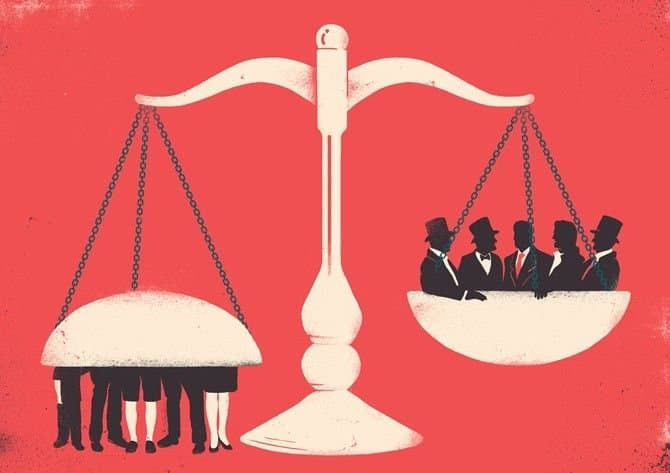







Responses (0 )